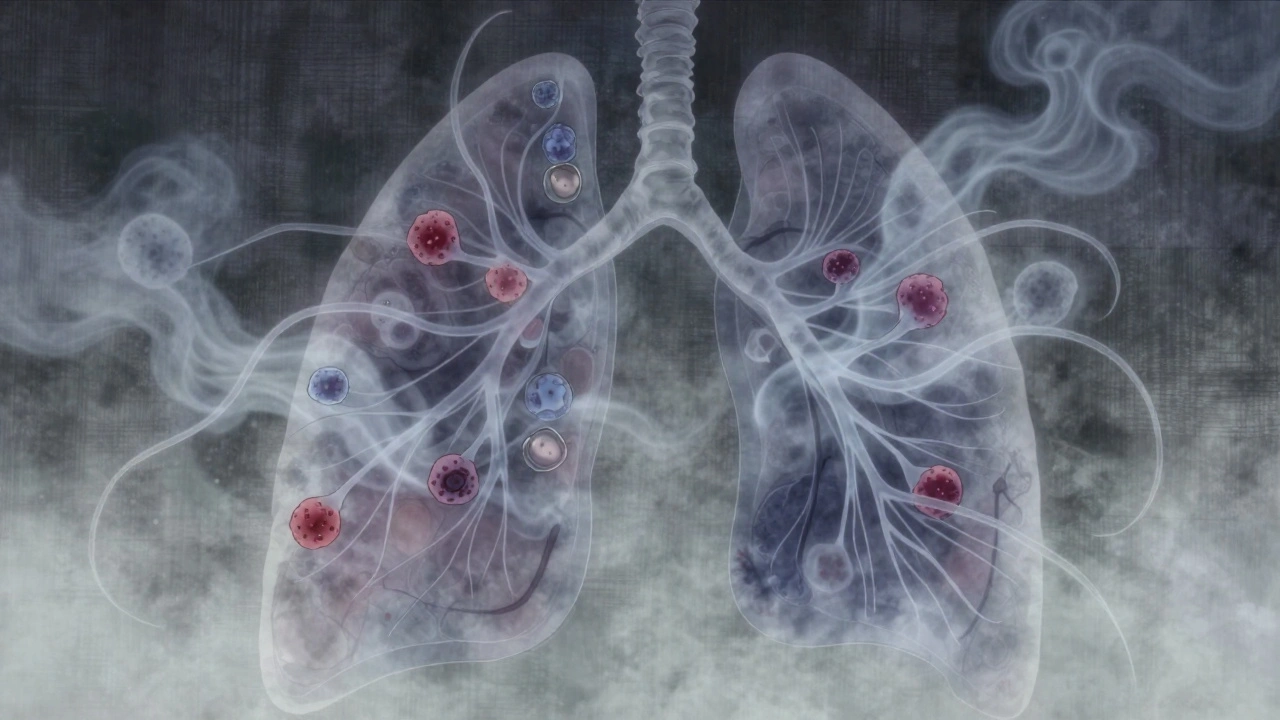
When your immune system is weak, a tiny fungus called Pneumocystis jirovecii, a fungus that causes a severe lung infection known as PCP pneumonia. Also known as Pneumocystis carinii, it doesn’t harm healthy people—but it can be deadly if you’re on chemotherapy, have HIV, or take long-term steroids. This isn’t a common cold. It’s a silent threat that shows up as persistent cough, fever, and trouble breathing—often mistaken for bronchitis until it’s too late.
Pneumocystis jirovecii thrives in people with low CD4 counts, especially those with untreated HIV. But it’s not just HIV patients. People on immunosuppressants, drugs that weaken the immune system to treat autoimmune diseases or prevent organ rejection are also at risk. Even those taking long-term corticosteroids, like prednisone for asthma or rheumatoid arthritis, can develop this infection. And here’s the catch: you don’t need to be sick to carry it. Many people breathe it in without symptoms, but if your defenses drop, it wakes up and attacks your lungs.
Prevention is simpler than treatment. Doctors often prescribe trimethoprim-sulfamethoxazole, a common antibiotic also known as Bactrim or Septra to high-risk patients as a daily pill to stop PCP before it starts. That’s why you’ll see posts here about how this drug interacts with warfarin—it’s not just about blood thinning. The same antibiotic that protects you from Pneumocystis jirovecii can dangerously raise your INR. It’s a balancing act: one pill prevents infection, another prevents bleeding. And if you can’t take that antibiotic? Alternatives like pentamidine or atovaquone are used, but they’re harder on the body.
What’s clear from the posts here is that medication timing, interactions, and immune status are deeply connected. If you’re on antibiotics, blood thinners, or steroids, your body’s response to Pneumocystis jirovecii isn’t just about the fungus—it’s about how all your drugs work together. One wrong combination can turn a preventable infection into an emergency. That’s why knowing your risk matters. Are you on long-term steroids? Did you just finish chemo? Are you taking daily antibiotics for another reason? These aren’t random questions—they’re life-saving ones.
Below, you’ll find real-world advice on how these drugs interact, how to spot early signs of trouble, and what to do if you’re at risk. No fluff. No theory. Just what you need to know to stay safe while managing your health.