
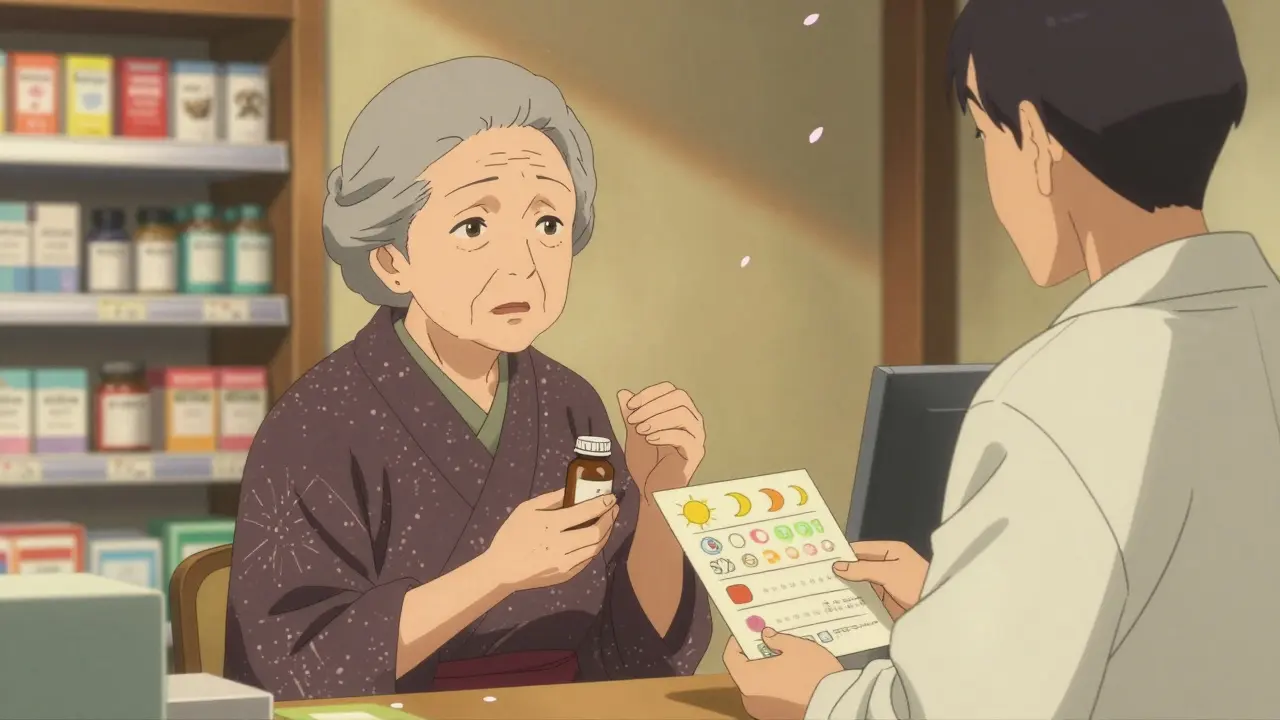
Getting your prescription filled shouldn’t leave you more confused than when you walked in. Yet every year, millions of people in the U.S. leave the pharmacy with a pill bottle and a tiny piece of paper full of medical jargon they can’t read-or worse, don’t even realize they don’t understand. You don’t have to accept that. You have the right to written medication instructions you can actually use.
It’s not just about reading small print. It’s about knowing what to take, when, why, and what to watch out for. If you’ve ever stared at a label and thought, “I have no idea what this means,” you’re not alone. And more importantly, you’re not powerless.
What You’re Entitled To
You have a legal and ethical right to clear, written medication instructions. This isn’t a favor pharmacies give you-it’s a requirement under multiple patient rights frameworks. The American Medical Association’s Code of Medical Ethics (2023) states you have the right to ask questions and get answers you understand. The same goes for the Patient Bill of Rights adopted by hospitals and pharmacies nationwide.
Specifically, you’re entitled to:
- Instructions written in plain language, not medical terms
- Instructions in your preferred language
- Visual aids like pictures or charts if you need them
- A chance to speak directly with a pharmacist, not just a technician
- Verification that you understand what you’ve been told
These aren’t vague suggestions. They’re part of formal policies from major pharmacy chains, state health departments, and federal guidelines. For example, Tennessee Oncology’s Patient Bill of Rights (2024) explicitly says you have the right to receive information “in a manner, format, and/or language that is easily understood.” AmerisourceBergen’s patient rights document says you can ask for education “in a language you understand.” And under Title VI of the Civil Rights Act, pharmacies must provide translation services if you need them.
Why Most Instructions Are Still Confusing
Here’s the problem: there’s no federal law requiring pharmacies to give you clear instructions. That means it’s up to each pharmacy-and sometimes each pharmacist-to decide what to print. Some use simple templates. Others just print the manufacturer’s label, which is often written for doctors, not patients.
A 2023 survey by the National Community Pharmacists Association found that while 78% of pharmacies include written instructions, only 42% use templates that meet basic health literacy standards. That means over half are giving you material that’s too complex. Some labels have a reading level as high as 11th grade. If you’re not a medical professional, that’s not helpful-it’s a barrier.
Compare that to Canada or the UK, where laws require all prescription labels to be written at a 6th-grade reading level. In the U.S., you’re stuck with a patchwork system. Your access to clear instructions depends on where you live, which pharmacy you use, and who’s working that day.
How to Ask for What You Need
Asking for better instructions works-but only if you ask the right way. Most people say something like, “Can you make this easier to read?” That rarely leads to change. Here’s what does:
- Ask to speak with the pharmacist. Technicians can’t always override standard printouts. Pharmacists can. In fact, 73% of chain pharmacies have policies requiring technicians to escalate these requests to a pharmacist.
- Use exact language from official sources. Say: “I’m exercising my right under the AmerisourceBergen Patient Rights document to receive education in a language I understand.” Or: “I need instructions in plain language, as required by my rights under the AMA Code of Medical Ethics.” Studies show patients who cite these exact phrases are 3.7 times more likely to get what they need.
- Request a specific format. Don’t just ask for “clearer” instructions. Ask for: a one-page summary, a visual schedule with pictures, or a checklist. Research shows visual schedules improve adherence by 42% for complex regimens.
- Ask for a read-back. After they explain it, say: “Can I repeat it back to you to make sure I got it right?” This simple step reduces errors by 63%, according to Johns Hopkins Medicine.
- Say you’re documenting it. Tell them: “I’m writing this down for my medical records.” This triggers a response in 58% of pharmacies, because they know it’s being recorded.
Timing matters too. Ask when you’re getting a new prescription, not during a refill. Pharmacists have more time to explain at first fill-87% report this, according to a 2022 National Pharmacist Workload Study.
What to Do If They Say No
If the pharmacist refuses, don’t walk away. You have options:
- Ask for a supervisor. Many pharmacies have a policy to involve a manager if a patient has concerns about understanding their meds.
- Request a phone consultation. Some pharmacies offer free calls with a pharmacist for follow-up questions.
- Use digital tools. Apps like Meds 2.0 and MyTherapy generate personalized, plain-language guides you can print or save. These are FDA-cleared and used by over 1,200 pharmacies as of 2024.
- File a complaint. If you’re at a chain pharmacy, ask for their patient advocacy contact. If you’re on Medicare, call 1-800-MEDICARE. CMS requires all Part D plans to provide “culturally and linguistically appropriate” information.
One patient in Tennessee told her pharmacist she was citing the Tennessee Oncology Patient Bill of Rights. The pharmacist immediately pulled up a visual schedule with pictures of pills and times of day. That’s the power of naming your rights.
What Clear Instructions Look Like
Good instructions don’t say “Take 1 tablet by mouth twice daily.” They say:
- “Take one pill every morning with breakfast.”
- “Take one pill every night before bed.”
- “Don’t drink alcohol while taking this.”
- “Call your doctor if you feel dizzy or have a rash.”
They include:
- Simple icons: a sun for morning, a moon for night
- Color-coded boxes: red for warnings, green for instructions
- Real-time examples: “This is like taking your daily vitamin, but stronger.”
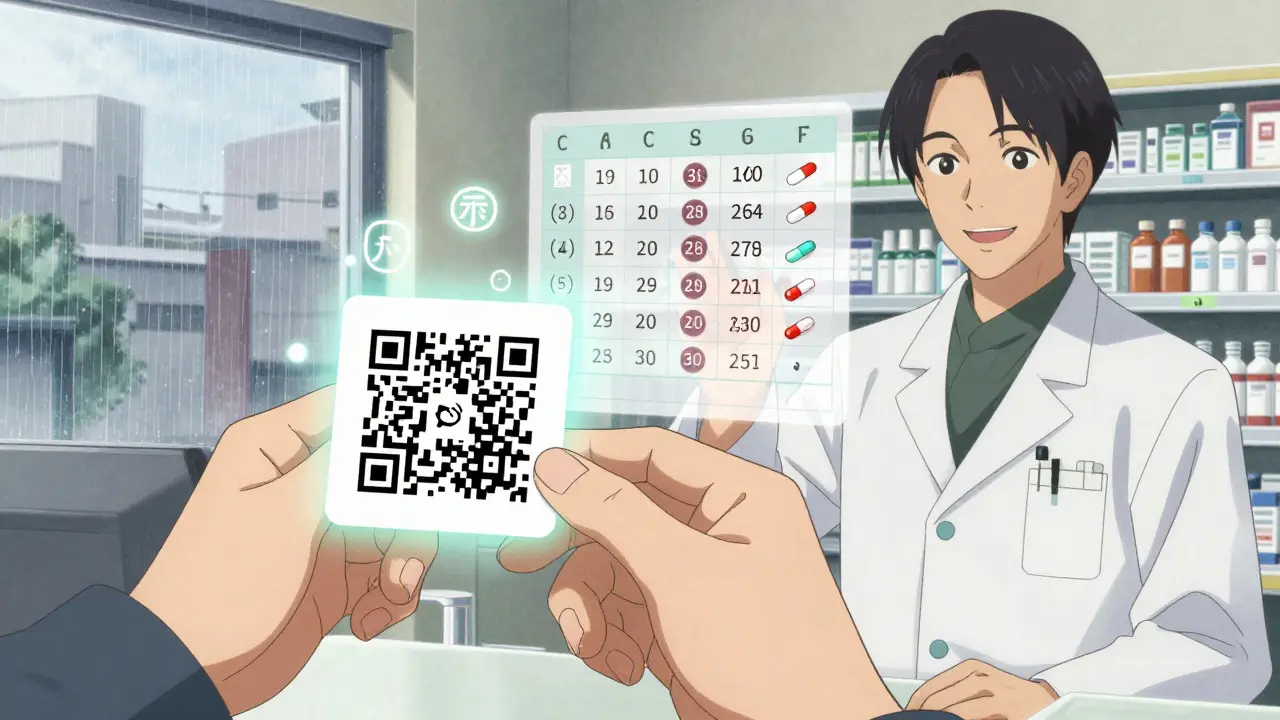
Some pharmacies now use scannable QR codes that link to short videos in 20 languages. CVS and Walgreens are rolling these out by late 2024. You can ask for one now-even if they don’t have it yet.
What’s Changing in 2026
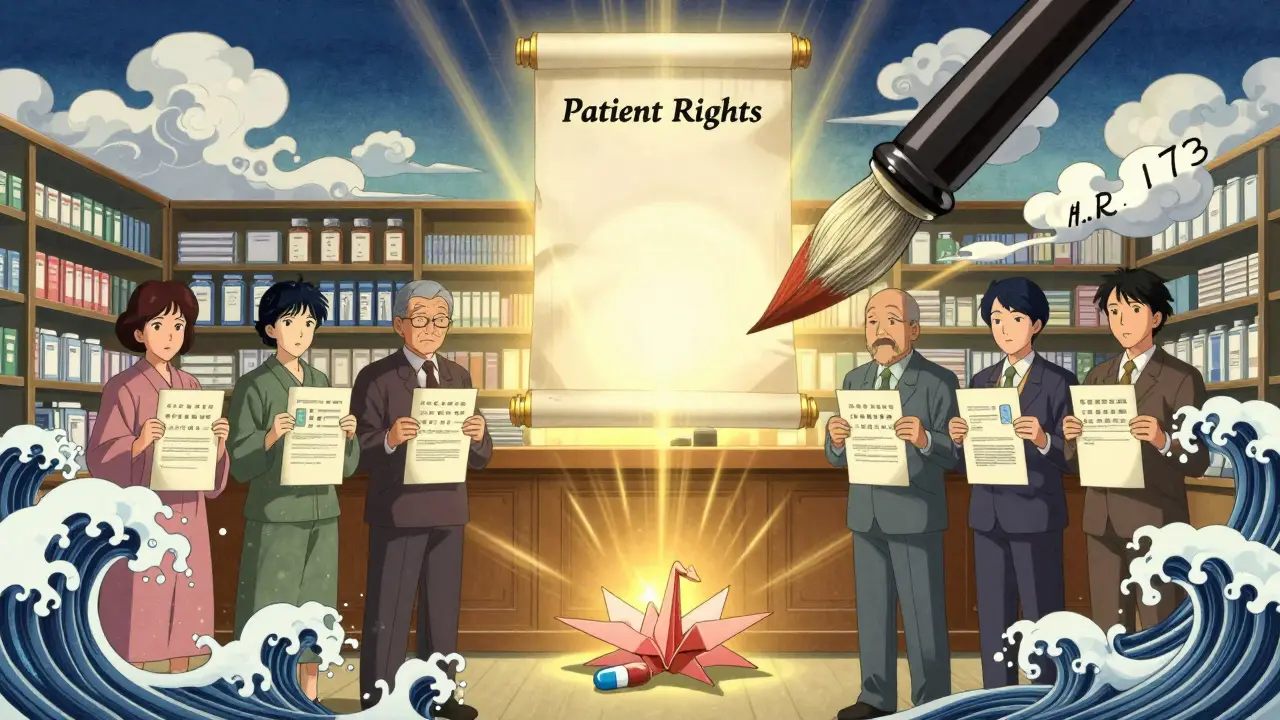
The system is shifting. The FDA’s draft guidance from April 2024 proposes mandatory plain-language elements on all prescription labels, including standardized icons. Congress is also considering the Patients’ Right to Know Their Medication Act (H.R. 1173), which would require every prescription to come with a one-page, easy-to-read guide.
Right now, 32 states have introduced similar bills, and 12 have passed them. States like California already require instructions to be “understandable to the patient.” Hospitals are ahead of the curve: 89% use standardized templates. Community pharmacies are catching up, slowly.
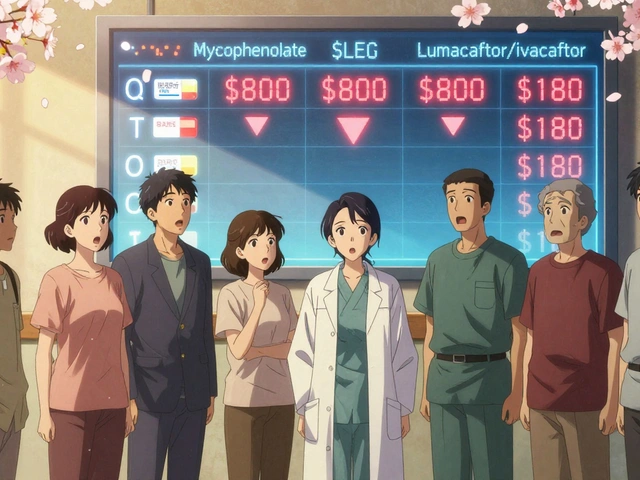
Meanwhile, the cost of confusion is huge. Poor medication understanding causes 30% of medication-related hospitalizations in the U.S.-that’s $158 billion a year. Companies and regulators are realizing: clear instructions aren’t just nice-they’re cheaper and safer.
Final Steps: What to Do Today
You don’t need to wait for laws to change. You can act now:
- When you get a new prescription, ask the pharmacist for a plain-language summary.
- Use the exact phrase: “I have the right to understand my medication instructions.”
- Ask for a visual schedule or pictogram if you have multiple pills.
- Repeat the instructions back to them to confirm.
- Take a photo of the instructions they give you. If they’re still unclear, call the pharmacy back or ask for a follow-up call.
Every time you ask, you push the system forward. Pharmacists want to help. They just need you to speak up clearly-and know your rights.



I literally cried when I finally asked for plain-language instructions after my chemo script. The pharmacist pulled up a color-coded chart with pictures of pills and times. I felt seen for the first time. You’re not asking for special treatment-you’re asking for basic human dignity. Do it.
And yes, it works. Every. Single. Time.
The AMA and Patient Bill of Rights stuff is legit, but here’s the real kicker: pharmacists are overworked. Most of them want to help but are drowning in scripts. If you show up calm, specific, and with a printed copy of the rights you’re citing? You’re not a hassle-you’re a solution.
Pro tip: Bring a notebook. Write down what they say. They’ll respect you more.
I used to think I was just bad at remembering meds... until I asked for a visual schedule.
Turns out I’m not dumb-I was just handed a ransom note written in Latin. Now I get a QR code that plays a 30-second video in Spanish (my mom’s language) showing exactly when to take my pills.
It’s 2024. Why are we still using tiny text? 😭
This is what happens when you let patients dictate healthcare policy... instead of trained professionals. You think a 6th-grade reading level is enough for warfarin? Or insulin? You’re not protecting people-you’re dumbing down life-saving science.
And don’t get me started on ‘visual aids’-next you’ll want a cartoon of a heart with a smiley face explaining beta-blockers. Pathetic.
You think this is about medication? Nah. This is a gateway. Once you start demanding plain language for pills, what’s next? Demanding the government rewrite the Bible in emojis? Or make the Constitution a TikTok video?
They’re already testing ‘medication QR codes’ on Medicaid patients. Next thing you know, your thyroid med will come with a dance tutorial. This is how they control us.
In Nigeria, we don’t even get printed instructions. You get a verbal rundown and a pill bottle. If you’re lucky.
But here’s the thing: the *same* people who say ‘just ask’ in the U.S. would never survive a pharmacy in Lagos.
So maybe this isn’t about rights. Maybe it’s about privilege. And if you have it? Use it.
Oh sweetie, you ‘have the right’? Honey, you have the *audacity* to be alive in a system that treats you like a puzzle piece that doesn’t fit.
Go ahead. Ask for the pictogram. Ask for the read-back. Ask for the damn QR code.
And if they roll their eyes? Smile and say, ‘I’ll be filing this with CMS.’ Watch them turn into human emergency responders.
Stop being polite. You’re not asking for a favor. You’re enforcing a legal right. Say: ‘I’m not leaving until I get this in plain English.’ If they hesitate? ‘I’m recording this.’ They’ll hand you a gold-plated instruction manual.
Pharmacists hate confrontation. Use it.
The efficacy of medication adherence is directly proportional to the clarity of instruction. In India, we rely on community health workers who translate and demonstrate. No QR codes. No pictograms. Just human connection.
Perhaps the real solution isn’t simplifying language-it’s restoring trust in human interaction.
i asked for clear instructions once and the pharmacist started crying. i think she thought i was gonna sue her. i just wanted to know if i could eat pizza. turns out i could. but now i feel bad. i think i broke her. she looked at me like i was a ghost. i just wanted to take my meds without panic. now i dont go to pharmacies anymore. i just stare at the bottle. sometimes i whisper to it. it whispers back. i think its scared too.
You’re all so naive. Clear instructions? Please. The system doesn’t care if you understand. It cares if you pay. That’s why they make labels unreadable-so you’ll take them wrong, get sick, and come back for more.
And those ‘FDA-cleared apps’? They’re owned by Big Pharma. They’re not helping you. They’re tracking you.
Actually, the real problem is that people think they ‘have a right’ to anything. You don’t have a right to be spoon-fed. You have a right to ask. And if you can’t ask? Maybe you shouldn’t be taking meds at all.
I’m from the Midwest and I’ve done this twice. First time: I asked for a visual schedule. Got it. Second time: I asked for the same thing and the pharmacist said, ‘Oh yeah, you’re the one who asked last month.’
They remember. They care. You’re not just a customer. You’re a person who shows up. And that changes things.
I’ve been doing this for years. I ask for the plain-language sheet, then I ask if they’ve ever been trained in health literacy. Most say no. So I hand them a free CDC pamphlet I printed.
Now I get called ‘the guy who brings the papers.’
But here’s the thing-I’m not trying to win. I’m trying to shift the culture. One pharmacy at a time.