
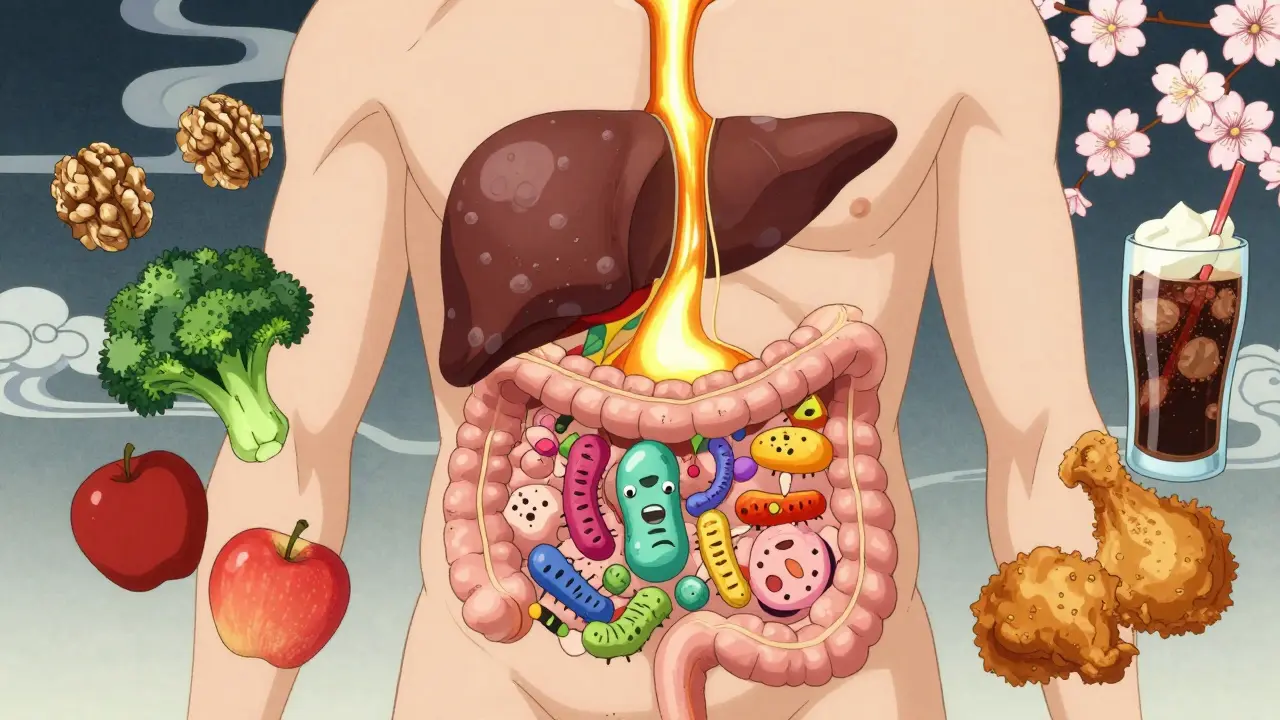
Nonalcoholic fatty liver disease (NAFLD) isn’t just about your liver. It’s deeply tied to what’s happening in your gut. If you’ve been told you have excess fat in your liver but don’t drink alcohol, you’re not alone. About one in three adults worldwide has this condition, and it’s the most common liver disease in countries like Australia, the US, and the UK. The real kicker? The root cause isn’t just eating too much sugar or sitting too long. It’s your gut bacteria - and what you eat every day.
What’s Really Going On Between Your Gut and Liver?
Your liver and gut are connected by a highway called the gut-liver axis. Everything you digest - from fiber to fried food - gets processed by gut bacteria before it heads straight to your liver through the portal vein. When your gut microbiome is out of balance, harmful substances like lipopolysaccharides (LPS) leak into your bloodstream. In people with NAFLD, these toxins are 2.3 times higher than in healthy people. That’s not a coincidence. This leak triggers inflammation in the liver, turning simple fat buildup into something more dangerous: steatohepatitis, fibrosis, even cirrhosis.
Studies show 90% of NAFLD patients have a damaged gut lining. That’s why bloating, gas, and irregular digestion often go hand-in-hand with fatty liver. The gut doesn’t just digest food - it talks to your liver. And when that conversation turns toxic, your liver pays the price.
How Your Gut Bacteria Are Changing
Your gut is home to trillions of bacteria. In a healthy person, you’ve got a diverse mix - hundreds of different types living in balance. In NAFLD, that diversity drops. You lose the good guys. Bacteria like Bacteroides vulgatus, which help keep your gut lining strong, drop by up to 40%. Meanwhile, harmful types like Lachnospiraceae bacterium 609 and Barnesiella intestinihominis take over.
One surprising finding? The old idea that NAFLD means more Firmicutes and fewer Bacteroidetes isn’t always true. In some populations - like in South Korea - it’s the opposite. This tells us one thing: there’s no single "NAFLD gut profile." But one thing stays consistent across all studies: people with NAFLD have far fewer short-chain fatty acids (SCFAs). Butyrate, a key SCFA, is 58% lower in NAFLD patients. Why does that matter? Butyrate is the fuel your gut cells need to stay tight. No butyrate? Leaky gut. Leaky gut? Liver inflammation.
Diet Is the First Line of Defense
If you want to reverse fatty liver, losing weight is non-negotiable. But not all weight loss is equal. Losing 5-7% of your body weight improves liver fat in 81% of people. Lose 10%, and nearly half of those with NASH (the more serious form) see their liver inflammation disappear.
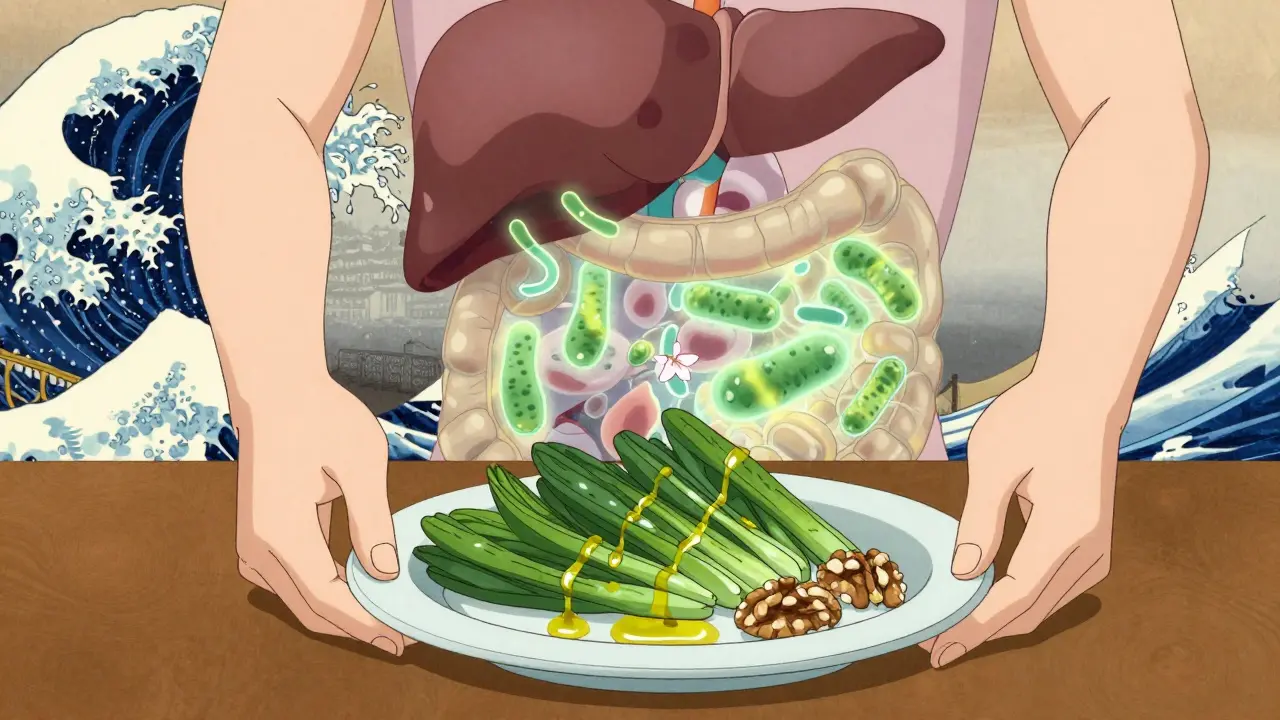
But how you lose it matters just as much as how much you lose. The Mediterranean diet isn’t just trendy - it’s backed by science. A 6-month trial with 70 NAFLD patients showed a 32% drop in liver fat when they ate 30g of walnuts daily, swapped out processed oils for olive oil, and ate plenty of vegetables, legumes, and whole grains. Why? Walnuts are rich in polyunsaturated fats and fiber - both feed good gut bacteria and reduce liver fat.
Here’s what works:
- Get 25-30g of fiber every day - from oats, lentils, broccoli, apples, and flaxseeds.
- Replace sugar and high-fructose corn syrup with whole fruits. Limit fructose to under 25g per day.
- Use olive oil, avocado, and nuts for fats. Avoid seed oils and trans fats.
- Choose whole grains over refined carbs. White bread and pasta spike blood sugar, which your liver turns into fat.
- Drink water. Skip sugary drinks and alcohol - even small amounts worsen liver damage.
One of the most effective strategies? Eating within an 8-hour window. Intermittent fasting (like 16:8 or 5:2) isn’t about starving - it’s about giving your liver a break. People on Reddit who tried 5:2 fasting reported less fatigue and better digestion within weeks. It’s not magic - it’s biology. Fasting lowers insulin, reduces liver fat, and lets your gut repair itself.

Probiotics and Prebiotics: Do They Help?
Probiotics aren’t a cure - but they can be a powerful tool. A double-blind study with 100 NAFLD patients found that taking a daily mix of Lactobacillus rhamnosus GG, Bifidobacterium longum, and Streptococcus thermophilus for 24 weeks cut liver fat by 23% and lowered liver enzyme levels (ALT) by 31%. That’s as good as some medications - and without the side effects.
Prebiotics are even simpler. Just eat more fiber-rich foods. Inulin (found in chicory root, onions, garlic) and fructo-oligosaccharides (FOS) boost butyrate production. In one 12-week trial, taking 10g of inulin daily raised fecal butyrate by 47% and lowered liver stiffness - a sign of less scarring.
Not all probiotics are created equal. Look for strains with proven results: Lactobacillus reuteri NCIMB 30242 for bile acid regulation, or multi-strain formulas with at least 10 billion CFUs per day. Take them consistently for at least 12 weeks. Don’t expect quick fixes.
Weight Loss That Lasts
Most people try to lose weight and fail. Why? Because they focus only on calories. But NAFLD isn’t just about energy balance - it’s about metabolic health. A structured program that combines diet, exercise, and behavior coaching helps 68% of people maintain remission after two years. Self-directed attempts? Only 29% succeed.
Here’s what actually works:
- Start with a 500-750 calorie daily deficit. That means losing 0.5-1kg per week - slow and steady.
- Move every day. Even 30 minutes of brisk walking cuts liver fat. Combine it with resistance training twice a week - muscle burns more fat than fat does.
- Track your food for 2 weeks. You’ll be shocked at how much sugar hides in "healthy" foods.
- Build meals around plants. Fill half your plate with vegetables. The rest? Lean protein and healthy fats.
- Sleep 7-8 hours. Poor sleep raises cortisol, which increases belly fat and liver fat.
People who stick with this approach don’t just lose weight - their gut bacteria change. Their inflammation drops. Their liver fat shrinks. And they feel better - more energy, less brain fog, fewer cravings.
What Doesn’t Work (And Why)
Detox teas? Juice cleanses? Keto diets? None of these are backed by solid science for NAFLD. In fact, very-low-carb diets can raise liver fat in some people because they increase free fatty acid release from fat stores.
And while fecal microbiota transplants (FMT) sound futuristic, they’re still experimental. One small study showed minor liver enzyme improvements - but no change in actual liver damage. Not ready for prime time.
Even probiotics have limits. In one trial, 22% of people stopped taking them because of bloating or gas. If you feel worse after starting a probiotic, it’s not working for you. Try a different strain, or focus on food first.
The Bottom Line
NAFLD is reversible. Not with a pill. Not with a miracle supplement. But with your fork and your daily choices. The gut-liver connection is real. And the science is clear: improving your gut health through diet and weight loss is the most effective way to heal your liver.
You don’t need to eat perfectly. You don’t need to be vegan. You don’t need to spend $200 a week on organic food. Just cut out the junk. Eat more plants. Move more. Lose 5-10% of your weight. Your liver will thank you.
The future of NAFLD treatment is here - and it’s not in a lab. It’s on your plate.
Can you reverse NAFLD without losing weight?
No - weight loss is the only proven way to reverse fatty liver. Even small losses (5-7% of body weight) improve liver fat, and 10% can resolve inflammation. Without weight loss, dietary changes alone may help a little, but they won’t fully reverse the condition. The liver stores fat because your body is in metabolic overload. Reducing that overload requires losing fat - especially around the abdomen.
What foods should I avoid with NAFLD?
Avoid foods high in added sugar, especially fructose: sodas, fruit juices, candy, pastries, and processed snacks. Also limit refined carbs like white bread, pasta, and rice. Trans fats and industrial seed oils (soybean, corn, canola) increase inflammation. Alcohol, even in small amounts, worsens liver damage. Stick to whole, unprocessed foods - if it comes in a bag with a long ingredient list, skip it.
Are probiotics safe for NAFLD?
Yes, probiotics are generally safe for NAFLD, especially multi-strain formulas with at least 10 billion CFUs per day. Common strains like Lactobacillus rhamnosus GG and Bifidobacterium longum have been tested in clinical trials and show benefit. Some people experience temporary bloating or gas when starting - this usually passes in a few days. If symptoms persist, try a different strain or reduce the dose. Always choose reputable brands with third-party testing.
How long does it take to see improvements in NAFLD?
You can see improvements in liver enzymes and gut symptoms within 4-8 weeks of dietary changes and weight loss. Studies show liver fat reduction after 6 months. For lasting results, aim for 12-24 months of consistent habits. The liver regenerates slowly - patience is key. Don’t wait for a scan to tell you you’re improving. Better sleep, less bloating, more energy - those are early signs your liver is healing.
Can I still eat fruit if I have NAFLD?
Yes - whole fruit is fine. The fiber in apples, berries, and pears slows sugar absorption and feeds good gut bacteria. Stick to 2-3 servings per day. Avoid fruit juice, dried fruit, and smoothies - they concentrate sugar without the fiber. A banana or a handful of berries is fine. A whole watermelon? That’s a lot of fructose in one sitting. Moderation matters.
Is NAFLD the same as MASLD?
Yes - MASLD (Metabolic Dysfunction-Associated Steatotic Liver Disease) is the new name for NAFLD, adopted in January 2024. The change reflects that the condition is driven by metabolic issues - like insulin resistance, obesity, and high blood sugar - not just by avoiding alcohol. The name change doesn’t change how you treat it. Diet, weight loss, and gut health remain the core strategies.




Look, I get that this is all very scientific and stuff, but let’s be real - most people with NAFLD aren’t sitting around reading peer-reviewed journals. They’re eating ramen at 2 a.m. while scrolling TikTok. The real fix? Stop treating your liver like a trash compactor. I went from 220 to 175 by ditching soda, eating a damn avocado for breakfast, and sleeping like a human being. No supplements. No fasting cults. Just stop poisoning yourself. Your liver doesn’t need a PhD - it needs a break.
The gut-liver axis is one of the most underappreciated pathways in modern medicine. The data is overwhelming: microbial dysbiosis drives inflammation, which drives fibrosis. Fiber intake above 30g/day consistently correlates with reduced hepatic fat. It’s not anecdotal - it’s mechanistic. If you’re not addressing microbial ecology, you’re treating symptoms, not the disease.
I love how this post breaks it down without sugarcoating (pun intended 😅). As someone from South Africa where sugary drinks are basically currency, I can attest - switching to herbal teas and whole fruits changed my energy levels faster than any supplement ever did. Also, 16:8 fasting? Game changer. My bloating vanished in 11 days. 🌿💧
I appreciate the thoroughness, but I’m skeptical about the ‘Mediterranean diet’ framing. It’s been commodified into a $12 salad bowl at Whole Foods. The real core is home-cooked, seasonal, unprocessed food - not kale smoothies with chia seeds and artisanal olive oil. The science doesn’t care about your Instagram aesthetic. It cares about fiber density and glycemic load. Also, probiotics? Only useful if your microbiome is truly depleted. Most people just need to stop eating high-fructose corn syrup. That’s it.
This is one of the clearest summaries I’ve read. I’ve been managing NAFLD for 4 years. The biggest shift? I stopped obsessing over calories and started obsessing over food quality. Walking after dinner, eating veggies first, sleeping 7+ hours - these are the quiet heroes. No magic pills. Just consistency. And yeah, I still have a slice of pizza sometimes. Life’s too short to be perfect.
Let me be blunt - this is yet another Western medical narrative disguised as holistic wisdom. In India, we’ve been managing metabolic disorders for millennia with turmeric, fenugreek, and intermittent fasting rooted in Ayurveda. Why is the only ‘evidence’ cited from randomized trials conducted in the US? The gut microbiome is not a Western invention. The cultural erasure of traditional dietary wisdom in favor of ‘scientific’ diets is not just reductive - it’s colonial.
I had NAFLD diagnosed 3 years ago. I didn’t lose weight fast. I just stopped eating out. Started cooking. Ate the same thing for lunch every day: lentils, spinach, brown rice, olive oil. No drama. No keto. No fasting. Just… less junk. Now my liver enzymes are normal. I didn’t even notice I was healing until I stopped feeling tired all the time. It’s not sexy. But it works.
As someone who grew up in Indonesia with a diet heavy in fried tempeh and sweetened tea, this resonates. We don’t need to become ‘Mediterranean’ to heal. We just need to stop treating our bodies like vending machines. My mom made us eat bitter melon as kids - turns out, it’s a natural insulin sensitizer. Maybe the answer isn’t new science… but remembering old wisdom.
I tried probiotics for 3 months. Felt worse. Then I just ate more oats, apples, and garlic. My bloating disappeared. My skin cleared. My energy came back. No fancy supplements. Just food. Sometimes the simplest things are the most powerful.
Lmao @8078 - I did the exact same thing. Started with garlic. Ended up making garlic butter on everything. My wife thought I’d lost my mind. Turns out, allicin is a prebiotic powerhouse. Who knew? Now I’m the garlic king of the household. And my liver? Thank you, allicin.