
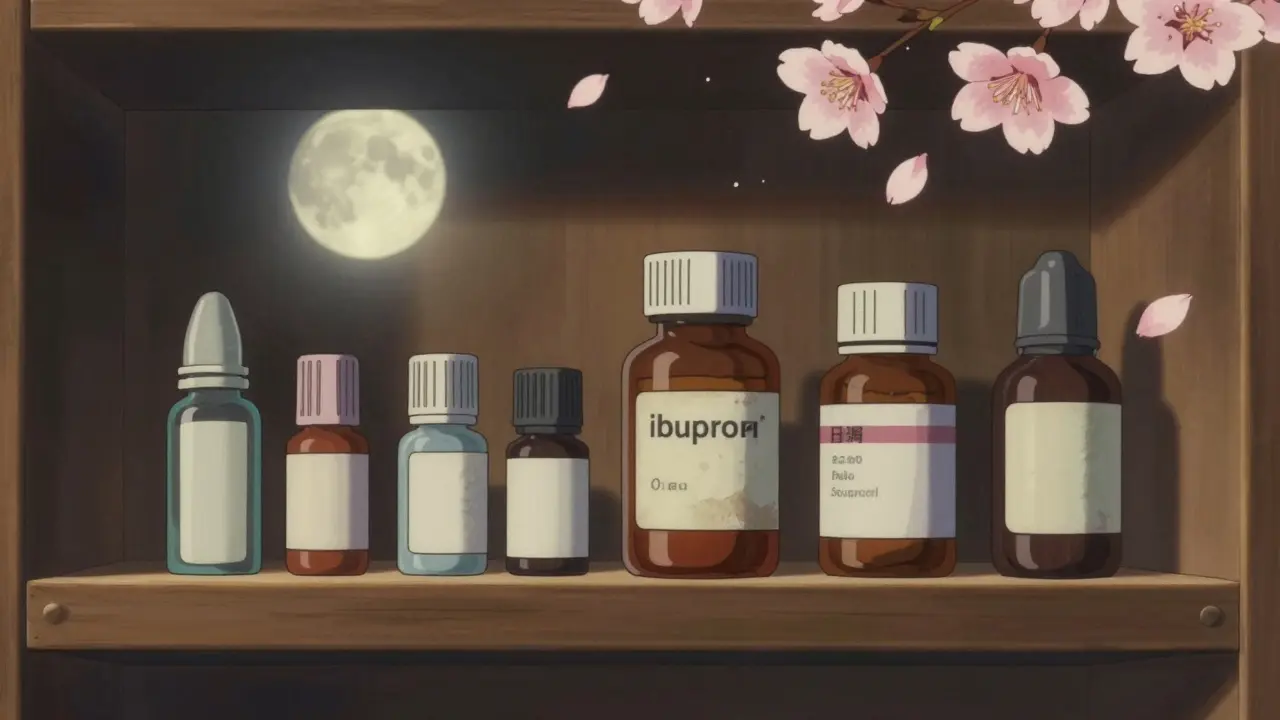
You open your medicine cabinet and find a bottle of ibuprofen from two years ago. The label says it expired last June. Should you take it? Is it dangerous? Or are you just wasting money by throwing it out?
Expiration dates on medications aren’t random. They’re not just there to make you buy new bottles. But they also don’t mean your pills turn into poison the moment the date passes. The truth is more complicated-and more important-than most people realize.
What an Expiration Date Actually Guarantees
An expiration date is the last day the manufacturer promises the drug will work exactly as labeled and stay safe to use, assuming it was stored properly. This isn’t a guess. It’s based on real lab testing. Companies put pills, capsules, and liquids through extreme conditions-heat, humidity, light-to see how fast they break down. The FDA requires this testing under guidelines from the International Council for Harmonisation (ICH Q1A(R2)).
Most expiration dates are set between 12 and 60 months after the drug was made. That’s not because the medicine stops working after that time. It’s because manufacturers don’t test beyond that point. Why? Because there’s no financial incentive to prove a pill lasts longer than five years. So the date you see is a conservative estimate, not a death sentence for the drug.
The FDA’s own data shows that 90% of medications tested in the Shelf Life Extension Program (SLEP)-a military-funded study that looked at over 3,000 lots of drugs-were still effective 15 years after their expiration date. Ciprofloxacin kept 97% of its strength. Amoxicillin stayed at 94%. Even aspirin from 2000 still worked in 2015.
When Expired Medications Are Actually Dangerous
But here’s the catch: not all drugs are created equal. Some break down fast, and when they do, they can hurt you.
Nitroglycerin, used for heart attacks, loses half its potency within just 3 to 6 months after opening-even before it expires. If you’re having chest pain and your nitro spray is old, you might not get the dose you need. That’s not a risk you can afford.
Insulin is another big one. Once opened, it starts degrading at 1.5% to 2.5% per month if it’s above 8°C (46°F). A weakened insulin dose won’t control your blood sugar. That can lead to diabetic ketoacidosis, hospitalization, or worse.
Liquid antibiotics like amoxicillin-clavulanate suspension become useless after 14 days, no matter what the bottle says. Bacteria can grow in the liquid, and the active ingredients break down fast. Taking expired liquid antibiotics doesn’t just mean your infection won’t clear-it might make it worse by exposing bacteria to low doses of the drug, helping them become resistant.
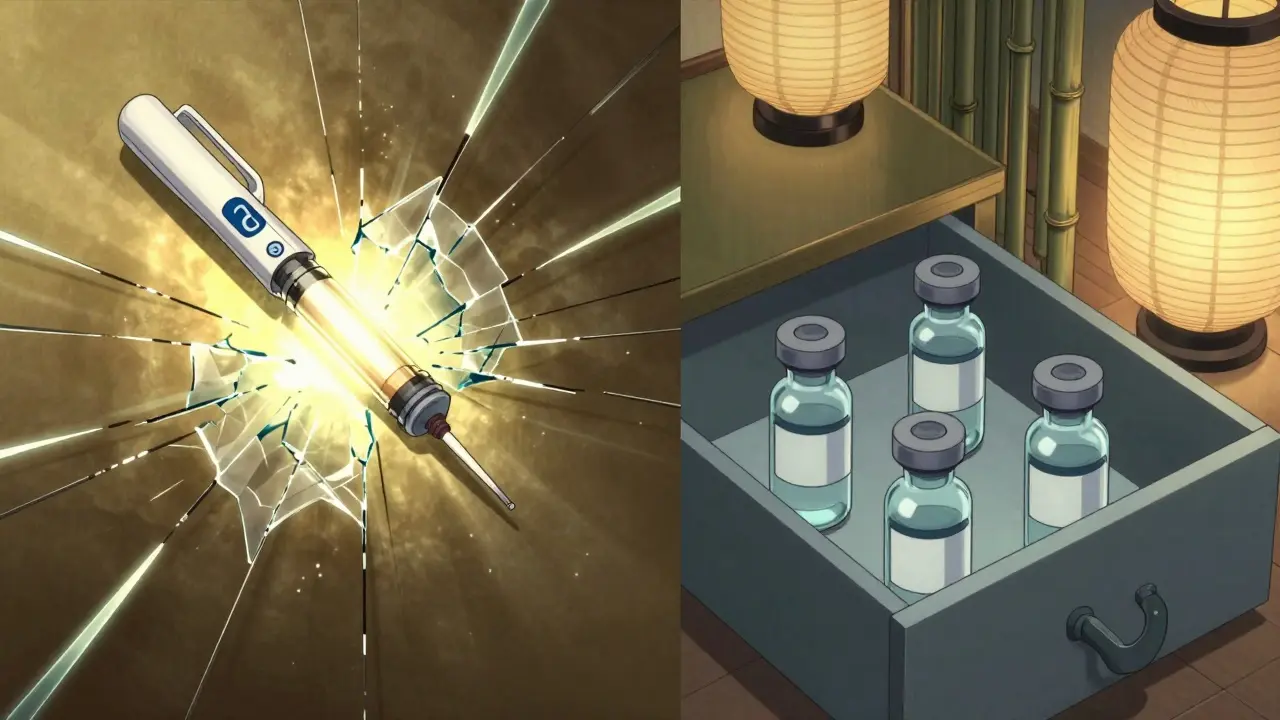
Epinephrine auto-injectors (EpiPens) lose 15% to 20% of their strength each year after expiration. In a severe allergic reaction, that could mean the difference between life and death. If your EpiPen is expired, replace it. No exceptions.
Warfarin, a blood thinner, is tricky. Its potency can shift unpredictably as it ages. A small drop in strength could mean a dangerous clot. A small increase could cause internal bleeding. Neither outcome is worth the gamble.
What’s Safe to Use After the Date?
For many common medications, the risk is low-if they’ve been stored right.
Most solid pills like statins (atorvastatin), antidepressants (sertraline), blood pressure meds (lisinopril), and pain relievers (acetaminophen, ibuprofen) degrade very slowly. If they’ve been kept in a cool, dry place, in their original bottle, and show no signs of damage, they’re likely still effective years after expiration.
Dr. Joel Davis, chief pharmacist at Johns Hopkins, says for chronic conditions like high blood pressure or high cholesterol, using an expired pill for a few weeks during a shortage might be acceptable-if it’s been stored properly and looks normal. But never use expired meds for infections, emergencies, or life-sustaining treatments.
The Institute for Safe Medication Practices (ISMP) breaks this down into three risk levels:
- High risk: Nitroglycerin, insulin, liquid antibiotics, epinephrine, and seizure meds like phenytoin. Don’t use these past expiration.
- Moderate risk: Antibiotics, anticoagulants, thyroid meds, and birth control. Potency loss could lead to treatment failure.
- Low risk: Most pain relievers, statins, antihistamines, and antidepressants. Degradation is slow and predictable.
How Storage Changes Everything
Where you keep your meds matters more than the date on the bottle.
Bathrooms are the worst place. Humidity from showers can reach 75% to 85%-way above the 60% recommended by manufacturers. Heat from radiators or sunlight through windows speeds up chemical breakdown. The FDA says most drugs are tested at 25°C (77°F) and 60% humidity. At 30°C (86°F), degradation can be 40% to 60% faster.
Keep medications in their original bottles. The child-resistant caps help seal out moisture. Don’t transfer pills to pill organizers unless you’re using them right away. Those plastic boxes don’t protect against humidity or light.
Look for signs of damage: pills that are cracked, discolored (white turning yellow), sticky, or smell weird. Liquids that are cloudy, have particles, or smell off should be tossed. If it looks wrong, it probably is.
What to Do With Expired Medications
Don’t flush them unless they’re on the FDA’s Flush List-drugs like fentanyl patches and oxycodone tablets that are deadly if accidentally ingested by kids or pets.
The safest way to dispose of expired meds is through National Prescription Drug Take-Back Days. In 2023, over 5,800 sites collected 900,000 pounds of unused drugs. Many pharmacies also have drop-off bins year-round. Check with your local pharmacy.
Pharmacies use what’s called “beyond-use” dating. For solid pills, they often set an expiration of one year after dispensing-even if the original bottle says five years. That’s because once you open the bottle, you’re exposing it to air and moisture. Pharmacists know this better than anyone.
The Bigger Picture: Waste vs. Safety
The U.S. throws away $765 billion in medications every year because of expiration dates. That’s 13% to 15% of total drug spending. The military saves $1.2 billion a year by extending the life of stockpiled drugs through real stability testing.
Now, new tech is emerging. Smart packaging with time-temperature indicators (TTIs) can show if a drug has been exposed to too much heat. Bluetooth sensors are being tested to update expiration dates based on actual storage conditions. Early results show insulin waste dropped by 22% in pilot programs.
By 2030, experts predict we could extend average drug shelf lives by nearly half-saving billions without risking safety. But until then, the rules are simple:
- Never use expired nitroglycerin, insulin, EpiPens, or liquid antibiotics.
- For most pills, if stored well and looking normal, they’re probably fine for a few extra months or even years.
- When in doubt, toss it-or ask your pharmacist.
When to Call Your Pharmacist
If you’re unsure about an expired medication, don’t guess. Call your pharmacy. They have access to stability data, storage records, and can tell you if it’s safe to use.
Pharmacists are trained to spot degradation, understand drug chemistry, and know the real risks. They’ve seen what happens when people take expired antibiotics or skip insulin. They’re your best resource-not Google or a friend’s opinion.
And if you’re running low on meds and can’t afford a refill? Talk to your pharmacist. Many offer low-cost generics, patient assistance programs, or can help you get samples. You don’t have to risk your health with old pills.
Are expired medications dangerous to take?
Most expired medications aren’t toxic, but they may not work as well. For some drugs-like insulin, epinephrine, nitroglycerin, and liquid antibiotics-using them past expiration can be life-threatening. For others, like pain relievers or statins, they’re likely still effective if stored properly. The risk depends on the drug, how it was stored, and why you need it.
Why do expiration dates exist if drugs last longer?
Expiration dates are set by manufacturers based on FDA-mandated testing that only needs to prove potency for a certain time-usually 1 to 5 years. Companies don’t test beyond that because there’s no financial benefit. The date is a guarantee, not a limit. Many drugs remain effective for years after, but the manufacturer won’t promise it.
Can I use expired antibiotics?
Avoid expired antibiotics. If they’ve lost potency, they won’t kill the infection-and may cause bacteria to become resistant. Liquid antibiotics degrade quickly after mixing. Solid antibiotics like doxycycline or amoxicillin capsules may still work if stored well, but using them for serious infections is risky. Always finish a full course with fresh meds if possible.
Where should I store my medications?
Keep them in a cool, dry place away from sunlight and moisture. A bedroom drawer or kitchen cabinet (away from the stove) is better than the bathroom. Always keep them in their original bottle with the child-resistant cap sealed. Avoid pill organizers for long-term storage-they don’t protect against humidity.
What should I do if I accidentally took an expired medication?
If it was a common pain reliever or vitamin and you feel fine, you’re likely okay. If it was insulin, epinephrine, nitroglycerin, or an antibiotic and you’re not feeling better-or you’re worse-seek medical help immediately. Call Poison Control at 1-800-222-1222 if you’re unsure. Don’t wait for symptoms to appear.

I used to toss all my expired meds until I read the FDA’s SLEP data. Turns out my 5-year-old ibuprofen is still 95% potent if stored in a dark drawer. My pharmacist confirmed it last month. No need to waste money on stuff that’s perfectly fine.
THIS IS WHY AMERICA IS BROKE 😭
People are hoarding expired pills like they’re gold while the government pays for new ones. We’re literally throwing away billions because nobody reads the science. 🤦♂️
Also, why is the FDA letting companies get away with 5-year expiration dates? They could extend it to 10+ with minimal testing. Lazy corporations.
lol people still think expiration dates = poison clock? 😅
My grandpa took 12-year-old aspirin during the 2020 shortage and didn’t die. He also didn’t get a headache. The real danger? Taking expired liquid antibiotics or insulin. Everything else? If it looks and smells fine, you’re probably fine.
Also, storing meds in the bathroom is like putting your phone in a sauna. No wonder they go bad. Keep ’em in your bedroom. Simple.
And yeah, the military’s been using this data for decades. We’re just slow to catch up. Pharma doesn’t want you to know your pills last longer - they want you to buy more.
Don’t be scared. Be informed. And stop flushing your meds unless they’re fentanyl. That’s just dumb.
Biggest takeaway? Your pharmacist is your best friend. Seriously. I called mine last week about an expired blood pressure med - she told me it was fine for another 6 months and even gave me a coupon for a new bottle. Pharmacists are the real MVPs.
Also, if your pills are discolored or smell weird? Toss them. But if they look normal? You’re probably good. Don’t panic.
Good info. I’m going to check my cabinet tonight. I’ve got a few bottles that are past date but look perfect. Feels good to know I don’t have to throw them out.
Interesting how the FDA mandates testing only up to 5 years. But let’s not pretend this is about safety - it’s about liability and profit. The pharmaceutical industry doesn’t want you to know that a $100 bottle of statin could last 15 years. That’s not a public health policy. That’s a business model.
Also, the military’s SLEP program is a joke. They’re testing drugs in controlled environments. Real-world storage? Most people keep meds in hot cars or humid bathrooms. So yes, your ibuprofen might be fine - but yours probably isn’t.
Y’all need to stop treating meds like snacks. I get it - we’re all broke. But if you’re taking expired insulin or epinephrine because you can’t afford a refill, that’s not frugal. That’s dangerous.
And if you’re taking expired antibiotics because you’re too lazy to go to the doctor? You’re not saving money. You’re creating superbugs.
For painkillers and statins? Fine. But don’t risk your life because you didn’t want to spend $15. Talk to your pharmacist. They’ve got programs. They’ve got samples. They care.
And for the love of god, stop storing meds in the bathroom. It’s not a spa. It’s a death trap for your pills.
Let’s be honest - most people don’t have the cognitive capacity to parse FDA stability data. The expiration date exists precisely because the average person cannot distinguish between 94% potency and 87%. The system is designed to protect the incompetent. And that’s not a flaw - it’s a feature.
Also, the notion that ‘if it looks fine, it’s fine’ is dangerously naive. You can’t see degradation in a pill. You can’t smell potency loss. That’s why we have standards.
Don’t romanticize the ‘grandpa’s aspirin’ myth. That’s anecdotal nonsense wrapped in pseudo-science.
Ah, the neoliberal pharmacopeia - where expiration dates are not markers of chemical decay but ideological artifacts of capitalist obsolescence. The drug industry, in its infinite wisdom, has weaponized temporality to commodify health itself. Your ibuprofen isn’t expired - it’s been alienated from its true potential by a system that profits from your fear.
And yet, we are told to trust the FDA, whose regulatory framework is co-opted by corporate lobbying. The SLEP program? A mere performative gesture. The real solution lies in decentralized, community-based pharmacological stewardship - not in pill organizers or pharmacy bins.
Perhaps we should return to the pre-industrial practice of herbal tinctures and ancestral wisdom. Or at least, stop flushing our meds and start composting them.
My mom took expired blood pressure meds for 2 years and never had an issue. She stores them in a drawer. No weird smell. No discoloration. Just fine.
So let me get this straight - we’re being told to trust the FDA’s 5-year limit because manufacturers didn’t bother testing further… but then we’re supposed to trust the FDA’s data on 15-year-old drugs from a military study?
Either the system is broken or we’re being gaslit. Pick one.
USA still thinkin’ expiration dates = death? 😂
In Nigeria, we take expired meds all the time - we don’t have money to buy new ones every year. We look at the pill, smell it, taste a tiny bit. If it don’t taste like metal or smell like mold, we take it.
My cousin took 8-year-old malaria pills and survived. He’s still alive. Your ‘safety’ is a luxury. We just survive.
Stop acting like you’re the only ones with medicine. 🌍💊