| Method | Typical Accuracy | Common Risks | Estimated Cost per Label |
|---|---|---|---|
| Automated Systems | 65-75% | False cognates, "Spanglish", dosing errors | $0.02 - $0.05 |
| Staff Member Translation | Variable | Lack of medical certification, inconsistency | Low (Internal) |
| Certified Medical Translators | 98-99% | Slower turnaround time | $0.15 - $0.30 |
Why Prescription Labels Get It Wrong
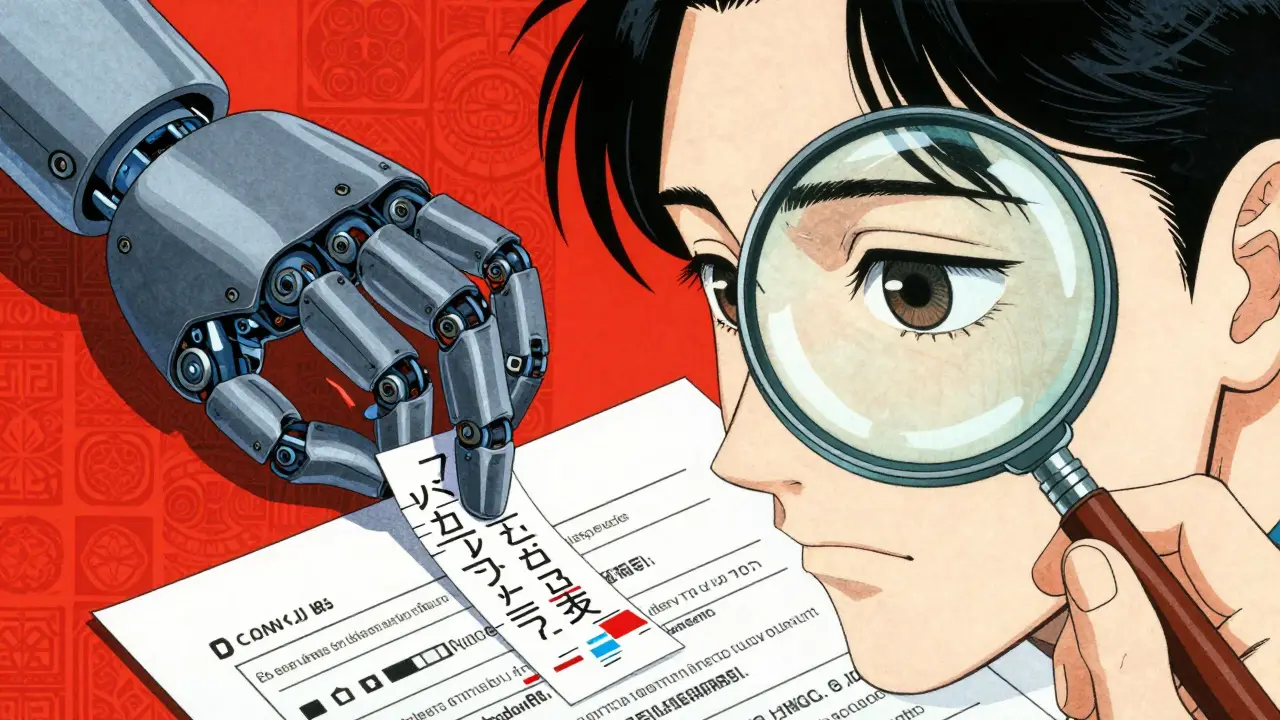
Most translation failures happen because pharmacies use third-party aggregators and automated software rather than humans. These systems often struggle with the nuance of medical language. For example, the English word "once" (meaning one time) can be mistranslated into Spanish as "once," which actually means the number eleven. If a patient sees this on their bottle, they might take a medication eleven times a day instead of once, leading to a massive overdose. There is also the problem of regional dialects. In a 2023 analysis by Freyr Solutions, it was noted that a term like "alcohol" can mean rubbing alcohol in Latin America but drinking alcohol in Spain. When a computer program doesn't know which dialect the patient speaks, the instructions become ambiguous. This "patchwork" of translation means the same English phrase might be written three different ways across three different pharmacy chains, leaving the patient guessing which one is correct.The Danger of "Spanglish" and Machine Errors
When a pharmacy uses a basic computer program without human oversight, the result is often a linguistic mess. A study in Pediatrics found that in some high-diversity areas, up to 50% of Spanish-language labels contained errors. These aren't just spelling mistakes; they are critical failures in frequency and dosage. Common errors include:- Frequency Flips: Translating "twice daily" as "twice weekly," which causes the medication to fail because the patient isn't getting enough of the drug.
- Dosage Misunderstandings: Misinterpreting "two tablets" as a different quantity due to poor phrasing.
- Purpose Errors: Incorrectly translating what the drug is for, leading patients to take the wrong medication for their symptoms.
Who Is Most at Risk?
While Spanish speakers are the largest group affected-with roughly 15.8 million people in the U.S. facing these challenges-the risk is even higher for those who speak less common languages. According to a 2022 survey by the National Council for Prescription Drug Programs, while most major chains offer Spanish labels, only about 23% provide translations for languages like Chinese, Vietnamese, or Arabic. This creates a massive gap in care. If you don't speak English fluently and your language isn't Spanish, you are far more likely to receive a label that is either untranslated or processed through a low-quality automated system. This is a systemic issue where the most vulnerable patients are given the least reliable instructions.How to Get Help and Ensure Your Safety
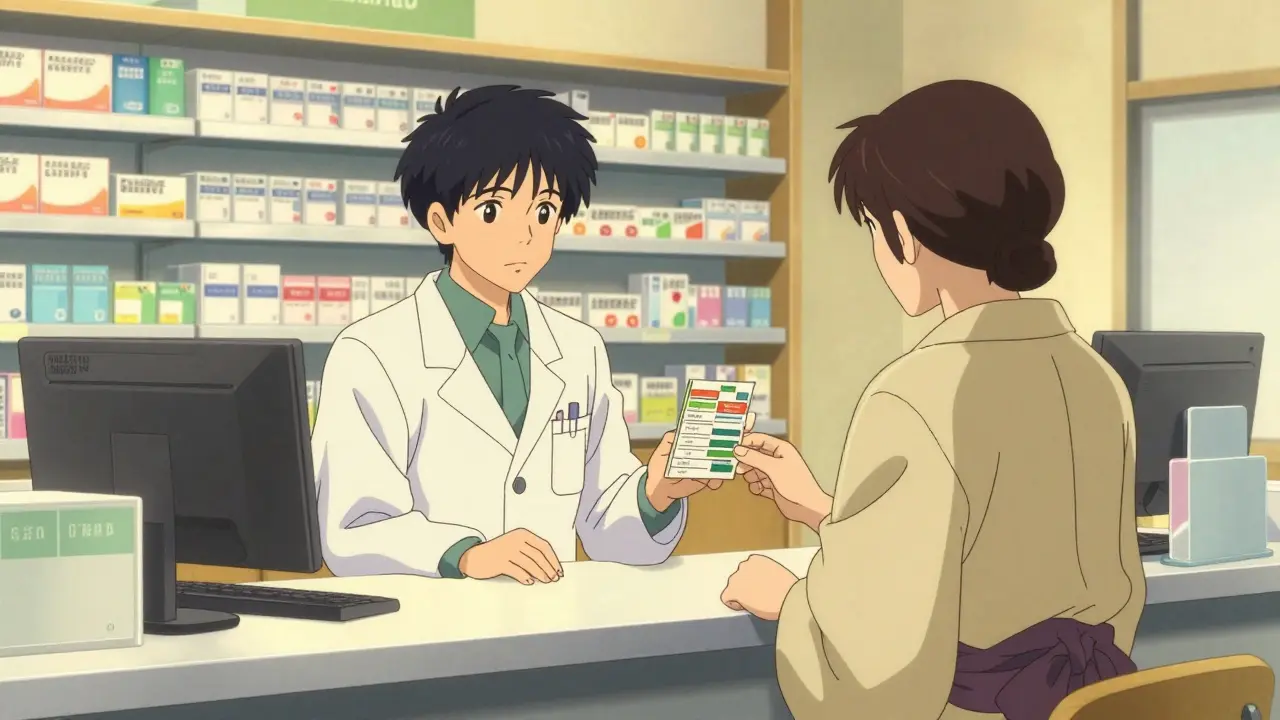
Since you can't always trust the printed label, you need to take an active role in verifying your medication. Don't be afraid to slow down the process at the pharmacy counter. If the instructions look strange or don't match what your doctor told you, ask questions immediately. Here are a few concrete steps you can take:- Ask for a Certified Translator: Ask the pharmacist if they have a certified medical translator on staff. Some pharmacies use professional services that verify translations, which reduces error rates to less than 5%.
- Request a Bilingual Label: Whenever possible, ask for the label to be printed in both English and your native language. This allows a bilingual friend or family member to double-check the translation for accuracy.
- Use a Translation App for Verification: While not a replacement for a professional, using a reputable translation app to check a specific word (like "daily" vs "weekly") can provide a second opinion.
- Confirm the "Once" Rule: If you speak Spanish, specifically double-check any instance of the word "once" to ensure it means "one time" and not "eleven."
- Verify with the Doctor: If the pharmacy label seems confusing, call your doctor's office. Ask them to clarify the dosage in plain language before you take the first dose.
Signs a Pharmacy is Doing it Right
Not all pharmacies are the same. Some are investing in better technology and human oversight. For instance, some major chains have started using neural machine translation and pharmacist verification checkpoints to catch errors before the bottle ever leaves the store. Look for pharmacies that:- Have a clear language access plan.
- Employ staff who are certified in medical translation.
- Allow you enough time to review the instructions with a translator before you pay.
- Provide clear, plain-language summaries of your medication.
Why can't pharmacies just use Google Translate for labels?
General translation tools are designed for conversation, not clinical precision. They often miss medical nuances and can confuse "false cognates" (words that look the same but mean different things), which can lead to dangerous dosing errors. Medical translation requires a certified professional who understands pharmaceutical terminology.
What should I do if I find a mistake on my label?
Stop taking the medication immediately and call your pharmacist or doctor. Do not try to guess what the correct dose is. Bring the bottle back to the pharmacy and ask them to provide a verified translation from a certified medical professional.
Are there laws that protect patients who don't speak English?
Yes, under Title VI of the Civil Rights Act, many healthcare providers receiving federal funds must provide meaningful access to LEP patients. Additionally, states like California and New York have specific laws mandating the translation of prescription labels.
How do I know if a translator is "certified"?
A certified medical translator has undergone specific training in healthcare terminology and has passed a certification exam. You can ask the pharmacist if their translation service follows FDA guidance, which recommends translators with at least five years of pharmaceutical experience.
Is it common for translation errors to happen?
Unfortunately, yes. Studies have shown that up to 50% of computer-translated Spanish labels in some regions contained errors. This is why it is critical to verify your instructions with a human professional.