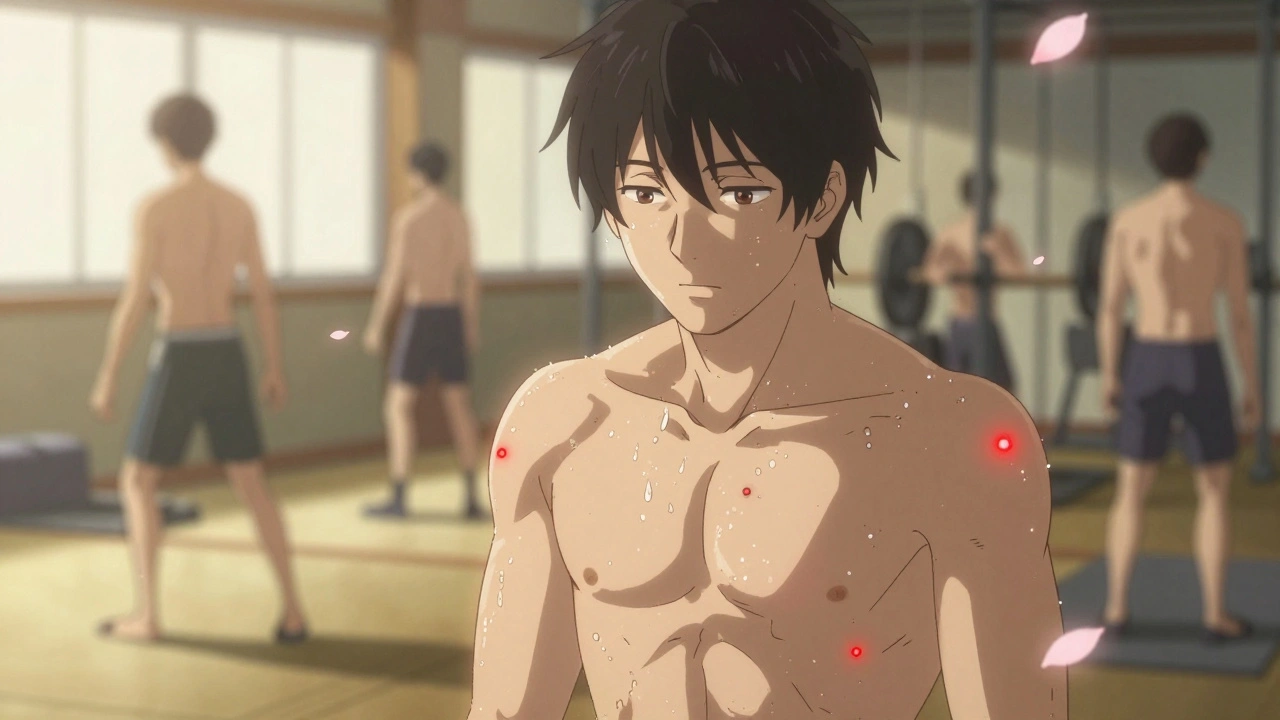
When your skin gets too hot and sweaty, it can develop a sweat rash, a red, itchy bump or patch caused by blocked sweat glands. Also known as prickly heat, it’s not contagious, but it can be uncomfortable—especially in summer or during exercise. This isn’t just a minor annoyance. For some people, it turns into a cycle: sweat builds up, skin gets irritated, and the itch makes you rub or scratch, which makes it worse.
Sweat rash often shows up where skin rubs against skin or clothes—under the breasts, in the groin, behind the knees, or on the neck. It’s common in babies, athletes, and anyone who works outdoors or in hot environments. The real issue isn’t the sweat itself, but what happens when it can’t evaporate. Blocked ducts trap sweat under the skin, triggering inflammation. That’s why tight clothing, heavy lotions, or not drying off after sweating can make it worse. heat rash, a direct result of overheating and poor sweat drainage is the same condition, just another name for it. And chafing, skin irritation from friction, often overlaps with sweat rash because both happen in moist, rubbing areas.
You don’t need fancy products to fix it. Keep the area cool and dry. Wear loose, breathable fabrics like cotton. Skip the thick creams—they seal in moisture. A light dusting of cornstarch or zinc oxide can help absorb sweat and calm the skin. If it doesn’t clear up in a few days, or if you see pus, swelling, or fever, that’s not just a rash anymore—it could be infected. That’s when you need to see a doctor. Most cases are simple, but if you’re on medications that affect sweating (like some antidepressants or blood pressure drugs), you might be more prone to it. And if you’ve had this happen repeatedly, it’s worth checking whether your environment, hygiene routine, or even your laundry detergent is contributing.
The posts below cover everything from how to treat skin irritation caused by sweat to what to avoid when your skin is sensitive. You’ll find real advice on managing heat-related rashes, preventing flare-ups during workouts, and understanding when a rash is more than just sweat. Whether you’re dealing with this for the first time or it keeps coming back, you’ll find practical steps that actually work.