

Dry Mouth Product Checker
Why Dry Mouth Is More Than Just an Annoyance
Feeling like your mouth is full of cotton? You’re not imagining it. Dry mouth, or xerostomia, isn’t just uncomfortable-it’s a silent threat to your teeth and gums. Over 500 common medications, from blood pressure pills to antidepressants, can cut your saliva flow in half. That’s why nearly 30% of adults over 65 deal with it regularly, and about 1 in 10 people overall. Saliva isn’t just there to help you swallow. It washes away food, neutralizes acids, and fights off bacteria. Without it, cavities form faster, gums swell, and bad breath sticks around no matter how much you brush.
What Makes a Dry Mouth Product Actually Work?
Not all mouthwashes or gels are created equal. The best ones don’t just wet your mouth-they mimic real saliva. Look for two key ingredients: xylitol and carboxymethylcellulose (or hydroxyethyl cellulose). Xylitol is a natural sweetener that doesn’t feed cavity-causing bacteria. In fact, studies show it helps rebuild enamel and reduces plaque. Carboxymethylcellulose thickens the liquid to stick to your mouth longer, giving you relief for up to 4 hours. Avoid anything with alcohol, sodium lauryl sulfate, or sugar. These ingredients dry you out further or feed decay.
The Top Products Dentists Actually Recommend
Biotène is the #1 brand recommended by dentists, pharmacists, and hygienists for dry mouth. Why? Their products are designed around saliva’s natural pH and don’t irritate sensitive tissue. Their Oralbalance Moisturizing Gel is the go-to for nighttime use-it’s thick, stays put, and lasts up to 4 hours. If you’re on the move, their Mouth Spray fits in your purse or car door. For daily rinsing, the Dry Mouth Oral Rinse is alcohol-free and contains xylitol to protect your teeth.
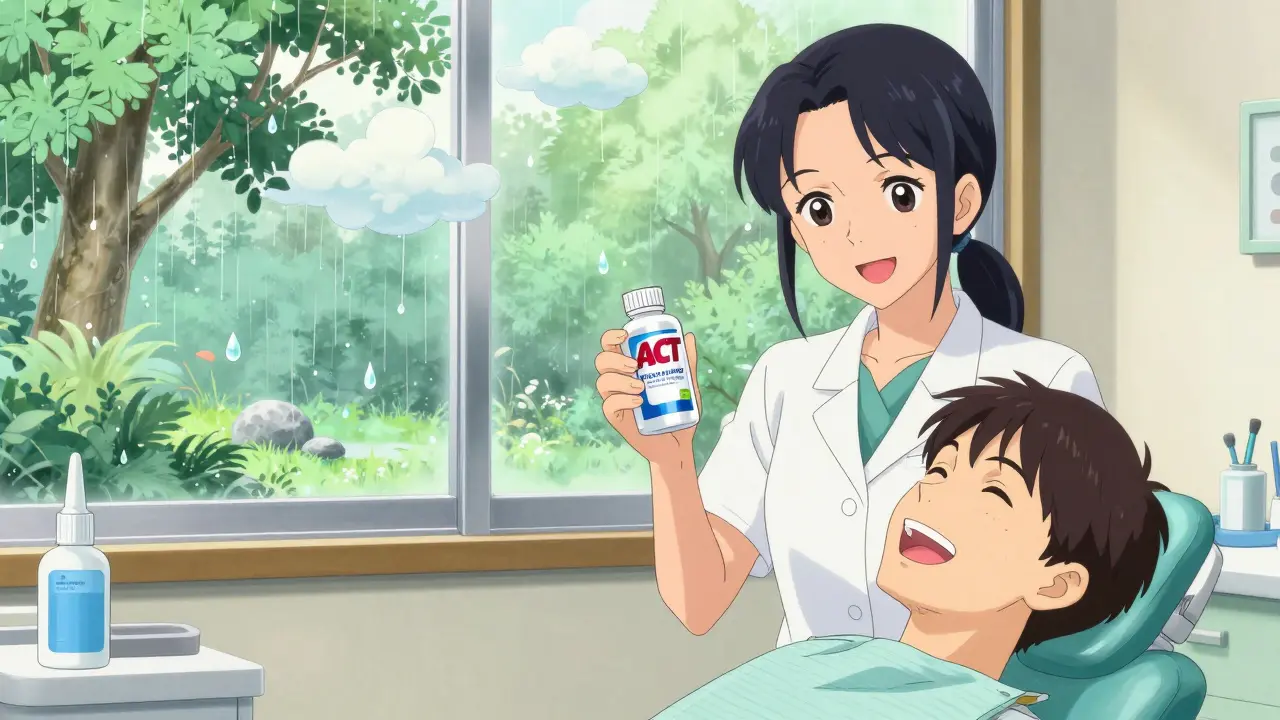
ACT Dry Mouth Moisturizing Lozenges are another solid pick. They’re sweetened with xylitol, dissolve slowly, and come in packs of 36. Each one costs less than 20 cents, making them budget-friendly. XyliMelts are different-they’re adhesive discs you stick to your gums or inner cheek. They release moisture slowly over hours, which is great for sleeping or long drives. TheraBreath offers flavored options like Mandarin Mint and Tart Berry, which help with both dryness and bad breath.
What to Avoid-Even If It Seems Helpful
Drinking soda or citrus juice to “freshen up”? That’s a trap. Acidic and sugary drinks attack enamel already weakened by lack of saliva. Coffee and alcohol? They’re diuretics-they make you lose more fluid. Even some over-the-counter antihistamines and decongestants worsen dry mouth. Stick to water, sugar-free herbal teas, or ice chips. If you need flavor, try adding a slice of lemon or cucumber to your water-it stimulates saliva without sugar or acid.

Daily Habits That Make a Real Difference
Products help, but habits keep your mouth healthy long-term. Sip water all day-not just when you’re thirsty. Keep a bottle at your desk, in the car, and by your bed. Chew sugar-free gum or suck on xylitol lozenges after meals. This tricks your body into making more saliva. Breathe through your nose, not your mouth. If you snore or sleep with your mouth open, try a chin strap or nasal strips. Use a humidifier in your bedroom at night. Even a small one can add enough moisture to reduce morning dryness.
Brushing and Flossing the Right Way
Brushing twice a day is non-negotiable, but you need the right toothpaste. Use fluoride toothpaste made for dry mouth. Colgate, Sensodyne, and Biotène all make versions with extra fluoride and no SLS. Floss daily-even if your mouth feels dry, plaque builds up faster without saliva to wash it away. At night, after brushing, use a fluoride rinse or apply a fluoride gel with a custom tray if your dentist gave you one. This helps seal your teeth against decay.
When to See Your Dentist (And How Often)
If you’ve been dealing with dry mouth for more than a few weeks, it’s time to talk to your dentist. They can check for early signs of decay, gum disease, or oral infections. Most people with dry mouth should visit every 3 to 6 months-not just once a year. Your dentist might also suggest a prescription-strength fluoride gel or a saliva-stimulating medication like pilocarpine if your dryness is severe. Don’t wait until you have pain. Cavities in dry mouth can spread fast and often go unnoticed until they’re deep.
Putting It All Together: A Simple Daily Routine
- Morning: Brush with fluoride toothpaste. Rinse with Biotène or ACT dry mouth mouthwash. Sip water through the day.
- After meals: Chew xylitol gum or suck on a lozenge. Rinse with water if you can’t chew.
- Evening: Brush again. Floss. Apply Biotène Oralbalance Gel to gums and tongue. Use a humidifier.
- At night: If you have a custom fluoride tray, use it before bed. Otherwise, swish with fluoride rinse for 30 seconds and spit.
Real People, Real Results
One woman in her late 60s started dry mouth after switching to a new blood pressure med. She tried sipping water, but it didn’t last. She switched to Biotène gel at night and ACT lozenges during the day. Within two weeks, her bad breath faded. Three months later, her dentist said her cavity risk had dropped by 60%. Another man, a truck driver, used XyliMelts on long hauls. He said it was the first thing that kept his mouth moist without having to stop for water every hour.
What’s Next for Dry Mouth Care?
More brands are launching gentle formulas for sensitive mouths. Biotène now has a “Gentle Oral Rinse” with no menthol or strong flavors. TheraBreath is testing new delivery systems like dissolvable strips. Researchers are exploring saliva-stimulating technologies, including low-level electrical stimulation devices. But for now, the best approach stays simple: use the right products, change your habits, and see your dentist regularly. Dry mouth won’t disappear overnight-but with the right plan, it doesn’t have to control your life.
Can dry mouth go away on its own?
Sometimes, yes-if it’s caused by temporary dehydration or breathing through your mouth while sick. But if it’s from medication, aging, or an autoimmune condition like Sjögren’s syndrome, it won’t fix itself. You need active management with products and habits to prevent damage.
Is xylitol safe for daily use?
Yes, for most people. Xylitol is approved by the FDA and ADA for daily use in dry mouth products. But consuming more than 40-50 grams a day (about 20 lozenges) can cause gas, bloating, or diarrhea. Stick to the recommended dose on the label.
Can I use regular mouthwash if I have dry mouth?
No. Most regular mouthwashes contain alcohol, which dries out your mouth even more. They also often have strong flavors and sodium lauryl sulfate, which can irritate sensitive tissue. Always choose a product labeled specifically for dry mouth.
Do I need to see a dentist if I only have mild dry mouth?
Yes. Even mild dry mouth increases your risk of cavities and gum disease. Dentists can spot early signs of decay you can’t see. They can also recommend preventive treatments like fluoride varnish or custom trays that reduce long-term damage.
Are dry mouth products covered by insurance?
Most over-the-counter products aren’t covered. But if your dry mouth is caused by a medical condition, your doctor might prescribe a saliva stimulant like pilocarpine, which could be covered. Always ask your dentist or doctor for a letter of medical necessity if you need help getting reimbursement.


I started using Biotène spray after chemo and it's been a game changer. No more waking up with a mouth like sandpaper. Just keep it in your bag and use it when you feel that cotton feeling coming on.
Best $12 I ever spent.
I used to think drinking more water was enough. Turns out it’s not. I tried the XyliMelts last winter and honestly didn’t expect much. Now I’m hooked. They don’t taste like medicine and they last forever. My dentist noticed my teeth looked better too.
The science behind xylitol is solid but let’s be real most people don’t know what carboxymethylcellulose even is. It’s not marketing fluff. It’s a viscosity modifier that mimics mucin glycoproteins in natural saliva. If you want real relief you need to understand the biomechanics not just the brand names.
In India we use neem sticks for cleaning teeth for centuries. No chemicals. No alcohol. Just natural antibacterial. I tried Biotène out of curiosity but honestly the taste felt artificial. Maybe it works for others but I stick with chewing neem twigs after meals. Simple. Free. Effective.
You mentioned fluoride gel with custom trays. That’s critical for high-risk patients. Most over-the-counter rinses contain 0.05% sodium fluoride. Prescription gels like GelKam or Prevident have 1.1% or higher. That’s a 20x concentration difference. If you’re on multiple meds that cause xerostomia, ask your dentist for a prescription. It’s not optional. It’s preventive dentistry.
Honestly the entire dry mouth industry is a scam perpetuated by Big Saliva. Xylitol is just a sugar alcohol that’s been repackaged as a miracle. The real solution is addressing the root cause: polypharmacy in aging populations. We’re medicating ourselves into dehydration and then selling $40 gels to fix it. The real innovation isn’t in the bottle-it’s in the prescription pad.
My uncle had Sjögren’s. He used to say his mouth felt like a desert after a sandstorm. He tried everything. The one thing that finally helped? A humidifier in his bedroom and chewing sugar-free gum while watching TV. He didn’t need fancy products. Just consistency. And water. Always water.
Biotène is overrated. American corporate junk. I’ve been using a homemade rinse with baking soda and sea salt since 2018. Works better than anything you buy. Stop buying into marketing. Go back to basics.
I appreciate the thoroughness of this guide. The distinction between temporary and chronic dry mouth is essential. Many individuals self-diagnose and overlook systemic contributors such as autoimmune etiologies or medication interactions. A multidisciplinary approach involving both dental and medical professionals is recommended for persistent cases. Thank you for emphasizing the necessity of regular dental surveillance.