

It’s easy to think that because supplements are sold over the counter, they’re harmless. But if you’re taking prescription meds, that’s a dangerous assumption. A 2025 study showed that only 12.89% of pharmacists caught a serious interaction between warfarin and avocado-soybean unsaponifiables - until the patient gave full details. That’s not because pharmacists aren’t trained. It’s because most people don’t tell them what they’re taking.
Why This Conversation Matters
You might be taking vitamin D, fish oil, or magnesium because your doctor said so - or because you read it online. But here’s the truth: supplements aren’t regulated like drugs. The FDA doesn’t test them before they hit shelves. That means what’s on the label might not be what’s inside. And when those unlabeled ingredients mix with your blood pressure pill, antidepressant, or cholesterol med? Problems can happen fast.St. John’s wort, for example, can make birth control fail. It can also cause serotonin syndrome when mixed with SSRIs - a condition so dangerous it can kill. Goldenseal can interfere with liver enzymes that break down over 50% of common medications. Even grapefruit - something you think of as healthy - can turn a heart medication into a toxin.
And it’s not just herbs. Foods matter too. Dairy products can block antibiotics like tetracycline. Calcium supplements can reduce the absorption of thyroid meds. If you drink a glass of milk with your levothyroxine, it won’t work. You’ll keep feeling tired, even though you’re doing everything right.
What Your Pharmacist Needs to Know
Your pharmacist isn’t just there to fill prescriptions. They’re the most accessible expert on how everything you take - pills, powders, teas, even juice - affects your body. But they can’t help if they don’t know the full picture.Bring a list. Not just the names. Include:
- Brand names and generic names of all supplements
- Dosage and how often you take them
- When you take them (morning, night, with food)
- Any new foods you’ve added to your diet - especially citrus, grapefruit, leafy greens, or dairy
- Any side effects you’ve noticed - headaches, dizziness, stomach upset, weird fatigue
Don’t say, “I take some vitamins.” Say, “I take 1,000 mg of vitamin C daily, 500 mg of magnesium glycinate at night, and 1,200 mg of fish oil with breakfast.” Be specific. The more detail you give, the better they can protect you.
High-Risk Supplements to Mention
Some supplements are known troublemakers. If you’re taking any of these, make sure your pharmacist knows:- St. John’s wort - interacts with antidepressants, birth control, blood thinners, and heart meds
- Goldenseal - affects liver enzymes that process most drugs
- Ginkgo biloba - increases bleeding risk with warfarin or aspirin
- Milk thistle - can interfere with liver-metabolized drugs like statins
- Black cohosh - may affect hormone-sensitive conditions or interact with hormone therapies
- Cranberry - can boost warfarin’s effect, raising bleeding risk
And don’t forget the ones people assume are safe: American ginseng, saw palmetto, valerian. They’re usually low-risk - but not always. If you’re on a blood thinner or antidepressant, even “safe” supplements can flip into dangerous.
Food Interactions You Can’t Ignore
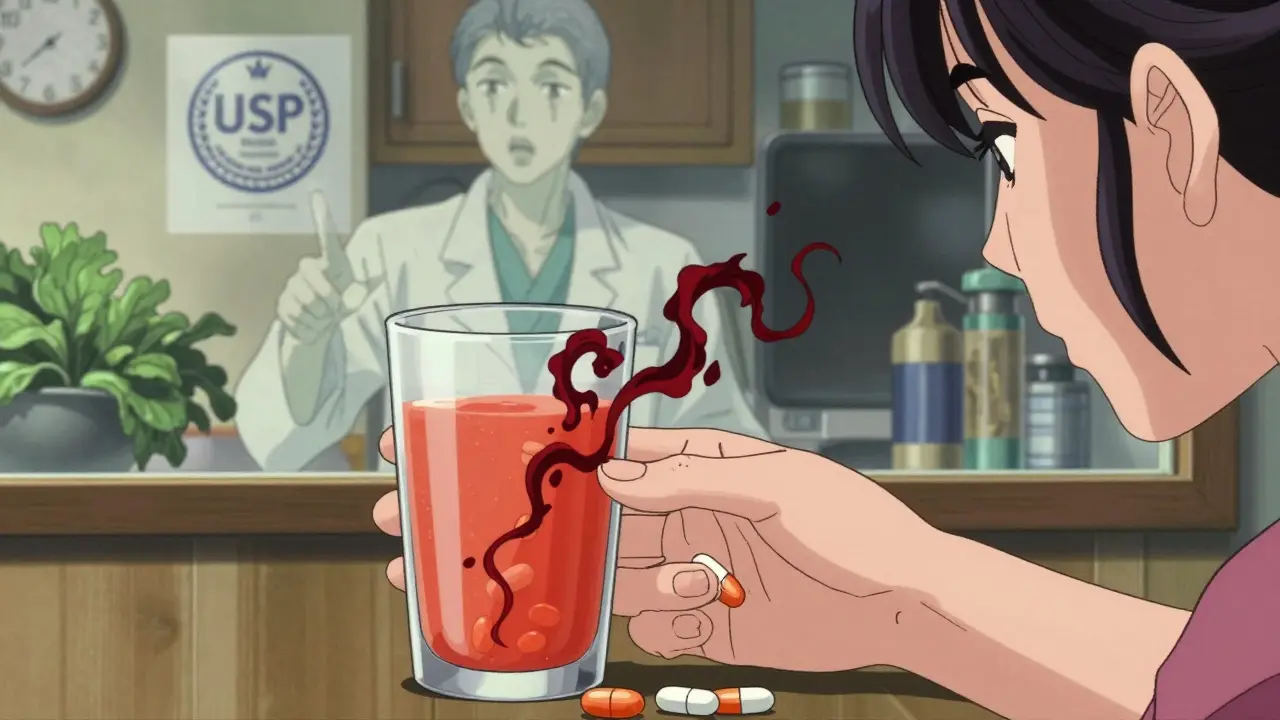
Food isn’t just fuel. It’s chemistry.Calcium and iron supplements - and even milk - should be taken at least 2 to 4 hours apart from antibiotics like ciprofloxacin or thyroid meds like levothyroxine. If you take them together, your body won’t absorb the drug. You might as well not take it.
Grapefruit and Seville oranges? They shut down enzymes that break down statins, blood pressure meds, and some anti-anxiety drugs. One glass can raise drug levels to toxic levels. It doesn’t matter if you drink it once a week. The effect lasts 72 hours.
Leafy greens like spinach and kale are full of vitamin K. If you’re on warfarin, your intake needs to be steady. One week you eat salads daily, the next you skip them? Your INR levels will swing. That’s why your pharmacist asks if you’ve changed your diet - not to judge, but to keep your blood thinning safe.
Medications That Drain Your Nutrients
Some drugs don’t just interact with supplements - they strip your body of essential nutrients. And you might not even realize it.- Proton pump inhibitors (PPIs) like omeprazole - lower vitamin B12, magnesium, and calcium. Long-term use can lead to bone loss and nerve damage.
- Metformin - depletes B12 and folate. That’s why some people on metformin feel numb in their feet or get confused - it’s not just diabetes, it’s deficiency.
- Statins - reduce coenzyme Q10. That’s why many people on statins report muscle pain and exhaustion. CoQ10 supplements can help, but only if your pharmacist knows you’re taking both.
- Diuretics - flush out potassium and magnesium. That can cause cramps, irregular heartbeat, or dizziness.
- Oral contraceptives - lower B vitamins and magnesium. This might explain mood swings or headaches you thought were just PMS.
If you’re on any of these drugs, ask your pharmacist: “Am I at risk for nutrient depletion? Should I take a supplement to balance it out?”
How to Start the Conversation
You don’t need to wait for your annual checkup. Walk into any pharmacy and say:“I’m on [list your meds]. I also take [list your supplements]. I’ve been eating more [mention food, e.g., grapefruit or kale]. I want to make sure everything’s safe together.”
That’s it. No jargon. No apology. You’re not being difficult - you’re being smart.
Pharmacists are trained to handle this. In fact, the Accreditation Council for Pharmacy Education now requires all pharmacy schools to teach supplement interactions. CVS and Walgreens have updated their systems to flag dangerous combos in real time. By 2027, 85% of community pharmacies will offer structured supplement reviews - but you don’t have to wait. Ask now.

What to Do If They Don’t Know
Sometimes, even pharmacists miss something. If you get a vague answer like, “I don’t think there’s a problem,” don’t walk away. Say:“Can you check the USP or NSF label on my supplement? I want to make sure it’s verified.”
Or:
“Can you look up the interaction between [supplement] and [medication] in your drug database?”
Pharmacists have access to tools like Micromedex, Lexicomp, and Clinical Pharmacology. If they don’t pull them up, ask why. You’re paying for their expertise - use it.
And if you’re still unsure? Ask for a referral to a clinical pharmacist or medication therapy management (MTM) program. Many insurers cover it for free.
What Not to Do
Don’t stop your meds or supplements because you’re worried. That’s how people end up in the ER. Don’t assume “natural” means safe. Don’t rely on Amazon reviews. Don’t wait until you feel bad to ask.And never, ever take someone else’s supplement - even if they have the same condition. What works for them might be toxic for you.
Final Tip: Make It Routine
Every time you refill a prescription, ask: “Any new interactions I should know about?”Keep your list updated. Add new supplements. Note changes in diet. Jot down side effects. Bring it every visit. You’re not being annoying - you’re the most important part of your own healthcare team.
The system isn’t perfect. But your pharmacist is the best line of defense you’ve got. And if you don’t speak up, no one else will.
Do I really need to tell my pharmacist about vitamins and supplements?
Yes. Even if you think they’re harmless, supplements can interfere with prescription drugs. St. John’s wort can make birth control fail. Grapefruit can turn heart meds toxic. Pharmacists need the full picture to keep you safe.
Can I take supplements at the same time as my medications?
Sometimes, but not always. Calcium and iron can block antibiotics and thyroid meds. Dairy can reduce absorption of some drugs. Always ask your pharmacist about timing. When in doubt, space them 2 to 4 hours apart.
Are natural supplements safer than prescription drugs?
No. “Natural” doesn’t mean safe. St. John’s wort and goldenseal are plant-based but can cause serious, even life-threatening interactions. Supplements aren’t tested by the FDA before sale, so quality and safety aren’t guaranteed.
What if my pharmacist says there’s no interaction?
Ask them to check a trusted database like USP, NSF, or Clinical Pharmacology. If they hesitate, request a referral to a clinical pharmacist. You have the right to a second opinion - especially when your health is involved.
Should I stop taking a supplement if I start a new medication?
Don’t stop anything without talking to your pharmacist first. Stopping suddenly can cause withdrawal or make your condition worse. Instead, bring your list and ask: “Is this still safe with my new drug?”
Can my pharmacist help me choose which supplements to take?
Yes. Many pharmacists now offer personalized supplement advice based on your meds, diet, and health goals. They can tell you which ones are backed by science, which are waste, and which might even be harmful with your current regimen.
Is it okay to use supplements from big brands or Amazon?
Be careful. Many brands don’t contain what they claim. Look for third-party verification labels like USP, NSF, or ConsumerLab. These mean the product was independently tested for ingredients and purity. If it doesn’t have one, ask your pharmacist if they trust it.
How often should I review my supplements with my pharmacist?
Every time you get a new prescription, or every 6 months if nothing’s changed. Your body and meds change over time. What was safe last year might not be safe now.



Just started taking magnesium for cramps and didn’t realize it could mess with my thyroid med... thanks for this. I’m bringing my whole supplement list to my next refill.
My pharmacist flagged my fish oil + warfarin combo last month. Said I was lucky I didn’t bleed out. Now I keep a printed list in my wallet. Seriously, do this. It’s not annoying-it’s life-saving.
Love that this post doesn’t shame people for taking supplements. We’re not all idiots. We’re just trying to feel better. But yeah, tell your pharmacist everything. Even that ‘harmless’ ashwagandha.
St. John’s wort + birth control? 😳 I had no idea… I’ve been taking it for ‘mood support’ since 2021. I’m going to the pharmacy right now. Also, why is no one talking about how many supplements are just sugar pills with a fancy label? 🤔
Of course the FDA doesn’t regulate supplements. They’re in bed with Big Herb. You think they want you healthy? No. They want you on more pills. And now they’re pushing ‘wellness’ so you’ll keep buying overpriced powders. 🤡
They’re tracking what you take. Every pill. Every leaf. Every drop of grapefruit juice. They’re building a profile. Next thing you know, your insurance will deny your statin because you took ‘too many herbs.’
Let’s be clear: supplement use is a form of medical self-harm disguised as self-care. You’re not ‘optimizing’ your health-you’re gambling with pharmacokinetics. If you can’t follow basic drug interaction protocols, you shouldn’t be taking anything beyond a multivitamin. Period.
Why are we letting foreigners sell us this junk? In America, we used to trust our doctors-not some guy in India selling ‘ancient wisdom’ in a jar. This is why our healthcare is broken.
STOP waiting for your annual checkup. Walk into any pharmacy tomorrow. Say: ‘I take this, this, and this-what am I missing?’ That’s it. No apology. No ‘sorry to bother you.’ You’re not a bother-you’re the patient. They’re paid to know this stuff.
My pharmacist told me ginkgo was fine with my blood thinner. I didn’t push. Two weeks later, I had a subdural hematoma. Turns out, she didn’t check the database. Just nodded and smiled. Don’t trust the smile. Ask for the tool.
‘Natural’ doesn’t mean safe. But ‘FDA-approved’ doesn’t mean safe either. The whole system is rigged. You think they care if you live or die? They care if you pay your premiums. This post is just a distraction. Go read about the real villains: Big Pharma.
They want you to think you need to ‘manage’ your supplements. But what if you don’t need any of it? What if your body’s fine? What if the whole wellness industry is just capitalism dressed in yoga pants? I stopped everything last year. I feel better. Coincidence? Maybe. Or maybe I just stopped buying lies.
Interesting that the post mentions USP and NSF but doesn’t mention that many of these labels are paid for by the companies themselves. Third-party testing isn’t independent-it’s a marketing tool. So now we’re supposed to trust a label that costs $5000 to get? That’s not safety. That’s corporate theater.
My cousin took melatonin with her antidepressant and ended up in the psych ward. They didn’t tell the ER doctor she was taking it. She almost died. You think your ‘natural’ sleep aid is harmless? It’s not. It’s a chemical bomb waiting to go off. Stop being lazy. Tell your pharmacist. Now.