

Getting your prescription filled used to mean driving to the pharmacy, waiting in line, and hoping they had your medicine in stock. Now, you can order your generic medications online and have them delivered right to your door-no driving, no waiting, no stress. This isn’t a luxury anymore. It’s how millions of people, especially those managing long-term conditions, are getting their meds every month.
Think about it: if you take blood pressure pills, thyroid medicine, or diabetes drugs every day, how many times a year do you need to refill them? Twelve? Twenty-four? Each trip adds up-time off work, fuel costs, parking fees, and the hassle of coordinating with your schedule. With prescription delivery, you set up a recurring order, and your meds arrive automatically. No reminders. No running out. Just peace of mind.
How Prescription Delivery Actually Works
It’s simpler than you think. You start by choosing a service-some are tied to your local pharmacy, others are online-only like Capsule or Alto. You upload your prescription (or your doctor sends it electronically), verify your insurance, and pick your delivery option. Most services offer free shipping if you order a 30- or 90-day supply. Some even let you choose delivery windows: morning, afternoon, or evening.
Once your order is processed, the pharmacy fills it, packages it in tamper-proof, child-resistant containers, and ships it via courier. You get real-time tracking-just like Amazon. Some services even include a pill organizer or a reminder app that texts you when it’s time to take your meds.
For generics, this system is a game-changer. Generic drugs make up over 90% of all prescriptions in the U.S., but they only account for about 20% of total spending. Why? Because they’re cheap. And that’s the point. These are the exact same active ingredients as brand-name drugs, just without the marketing costs. A 30-day supply of lisinopril (a common blood pressure med) might cost $4 at your local pharmacy. With delivery, it’s often $3-or even free with insurance.
Why Generics Are the Backbone of This Service
Prescription delivery services thrive on volume. And generics are the volume drivers. While branded drugs like GLP-1 weight-loss medications get all the attention (and higher margins), they’re expensive, hard to ship (they need refrigeration), and require special handling. Generics? They’re stable, shelf-stable, and easy to send in bulk.
Over the past decade, the price of generic drugs has dropped by about 30%. That’s great for patients, but tough for distributors. To stay profitable, delivery services rely on high turnover. They make money not from the price of the pill, but from the number of pills they move. That’s why they push 90-day supplies and subscription models. You save money. They save on shipping costs per unit. Everyone wins.
And it’s not just about cost. It’s about consistency. If you’re on a tight budget, skipping a refill because you can’t get to the pharmacy isn’t an option. Delivery removes that barrier. A 2024 WHO report found that medication non-adherence due to access issues contributes to 125,000 preventable deaths in the U.S. every year. Prescription delivery directly fights that.
Who Benefits the Most?
Seniors. People with mobility issues. Parents juggling work and kids. Rural residents with no nearby pharmacy. People with chronic illnesses like diabetes, asthma, or heart disease. These are the people who use these services the most-and rely on them the hardest.
Take Mary, 72, from Adelaide. She has type 2 diabetes and osteoarthritis. Getting to the pharmacy used to mean calling her son to drive her. Now, she orders her metformin, gabapentin, and atorvastatin every 60 days. They arrive on a Tuesday. She keeps them in her kitchen drawer. No more missed doses. No more stress.
It’s not just seniors, though. Younger people with anxiety, depression, or high cholesterol are using these services too. Why? Because it’s quiet. No one sees you picking up your antidepressants. No awkward questions. Just privacy and convenience.
Same-Day Delivery: The New Normal
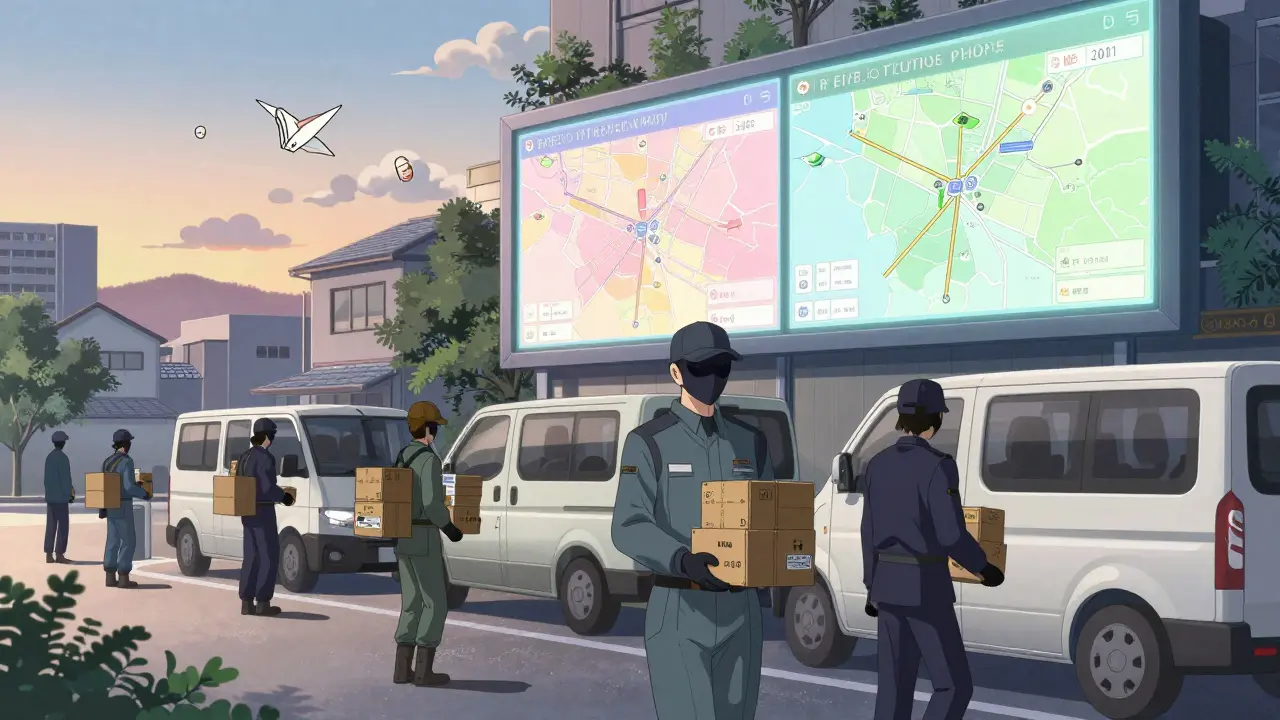
Five years ago, same-day delivery was a novelty. Now, it’s expected. Walmart expanded its same-day pharmacy delivery to 49 U.S. states in January 2025. Amazon plans to cover 45% of the country by the end of 2025. That’s not marketing fluff-it’s infrastructure.
But here’s the catch: same-day delivery doesn’t work well for all meds. If you need insulin or certain biologics, you still need cold-chain handling. That’s expensive. So most services reserve same-day for stable, non-refrigerated generics. If you’re on a simple regimen, you’ll get it fast. If you’re on complex meds, you’ll still get it-just not in three hours.
Don’t be fooled by flashy ads. Same-day doesn’t mean instant. It means your order is processed the same day, and delivered within 8-12 hours if you’re in a major city. Outside those areas? Expect 24-48 hours. That’s still faster than driving to the pharmacy.
What to Watch Out For
It’s not all perfect. Some services have trouble with insurance verification, especially for generics. If your plan has a high deductible or requires prior authorization, your order might sit in limbo for days. That’s not the delivery service’s fault-it’s the insurance system.
Also, not all platforms are created equal. Some apps are clunky. Others don’t support refill reminders. Some won’t deliver controlled substances like Adderall or oxycodone. Always check what’s included before signing up.
And don’t forget: if you need to talk to a pharmacist, make sure the service offers live chat or phone support. A lot of people still prefer to ask questions about side effects or interactions. If you’re switching from your local pharmacy, find out if they offer that.
How to Choose the Right Service
Start with your current pharmacy. Many local chains now offer delivery-sometimes even same-day. If they don’t, try one of these:
- Walmart Pharmacy: Free delivery on most generics, same-day in many areas, integrates with Walmart+.
- Capsule: App-based, great UI, delivers within hours in major cities, includes pill organizers.
- Alto Pharmacy: Focuses on chronic meds, offers 24/7 pharmacist access, ships nationwide.
- Amazon Pharmacy: Works with Prime, good pricing on generics, but limited same-day coverage.
Compare prices for your top three meds. Use GoodRx or SingleCare to check baseline prices. Then see what the delivery service charges after insurance. Often, the difference is just a dollar or two-but the convenience is priceless.
The Future: More Than Just Delivery
Prescription delivery isn’t stopping at shipping pills. The next step is integration. Services are now linking with telehealth apps so your doctor can e-prescribe, refill, and adjust doses-all in one place. AI tools are being used to predict when you’ll run out, based on your usage patterns. Some platforms even send out wellness check-ins: “How’s your blood pressure this week?”
This isn’t just about convenience anymore. It’s about keeping people healthy. And for generics, that’s the biggest win of all. They’re not glamorous. They don’t make headlines. But they keep people alive. And now, they’re just a click away.
Are generic medications safe to order online?
Yes, if you use a licensed pharmacy. Legitimate prescription delivery services work with U.S.-licensed pharmacies that follow FDA standards. Your meds are the same as what you’d get at CVS or Walgreens-just shipped to you. Always check that the website has a verifiable pharmacy license and a physical address. Avoid sites that sell meds without a prescription.
Can I get my controlled substances delivered?
Some services can, but with restrictions. Controlled substances like opioids, ADHD meds, or benzodiazepines require extra verification. You may need to sign for delivery, and the pharmacy might limit how often you can reorder. Not all platforms offer this. Check their policies before signing up.
How much money can I save with delivery?
For generics, you can save 30-50% compared to retail prices. A 90-day supply of metformin might cost $15 at your local pharmacy but only $5-$8 with delivery. Many services offer free shipping on 90-day refills, so you’re paying less per pill and avoiding trip costs. Over a year, that adds up to hundreds in savings.
Do I need a prescription to use these services?
Yes. All legal prescription delivery services require a valid, active prescription from a licensed provider. You can upload a photo, have your doctor send it electronically, or the service may contact your doctor directly. Never use a site that offers to sell prescription meds without one.
What if my delivery is late or damaged?
Most reputable services guarantee delivery or offer a refund. If your meds arrive damaged, missing, or past their expiration date, contact customer support immediately. They’ll usually send a replacement at no cost. For temperature-sensitive meds, check the packaging for signs of thawing. If in doubt, don’t take the pills and report it.
just got my metformin delivered last week. no more driving 20 mins in the rain. life changed. also saved $40 this month. wow.
It is imperative to underscore, from a pharmacoeconomic standpoint, that the systemic integration of generic medication delivery platforms constitutes a paradigmatic shift in therapeutic adherence infrastructure. The marginal cost-per-unit amortization, coupled with economies of scale in logistics, engenders a non-linear reduction in patient-reported non-adherence metrics. Furthermore, the confluence of automated refill protocols and real-time inventory synchronization with insurance adjudication systems represents a critical enabler of longitudinal clinical outcomes.
It is also noteworthy that the FDA-compliant sourcing protocols, as delineated in 21 CFR Part 211, are rigorously maintained by accredited pharmacy benefit managers (PBMs) operating within this domain. The absence of cold-chain requirements for most generics facilitates logistical scalability, thereby enabling nationwide distribution without compromising stability or bioequivalence.
Moreover, the predictive analytics engines deployed by platforms such as Alto and Capsule leverage machine learning algorithms to forecast refill intervals with >92% accuracy, thereby mitigating the risk of therapeutic gaps. This is not merely convenience-it is preventive medicine, algorithmically optimized.
One must also acknowledge the structural inefficiencies inherent in traditional brick-and-mortar pharmacy models: labor-intensive dispensing, inventory obsolescence, and patient transit costs. These are not trivial burdens-they are systemic barriers to equitable care.
Therefore, the expansion of same-day delivery networks, particularly in underserved rural corridors, should be prioritized as a public health imperative-not a commercial novelty.
Ugh. I can't believe people are this lazy. 🙄 You think it's 'convenient' to have your meds delivered? What's next? Someone feeding you your pills? 😒 I mean, seriously-get off the couch and go to the pharmacy. It's called responsibility. And if you're too busy to drive, maybe you need to reevaluate your life choices. 🤦♀️
OMG Nikki, chillllll 🙃 I’m 68 and I have arthritis. I can’t even open pill bottles without help. Delivery saved my life. And yes, I’m proud of it. 💖💊
Look, I don’t care what the fancy apps say-America still makes the best meds. If you’re ordering from some overseas site, you’re asking for trouble. Stick with Walmart or CVS. We got the FDA here. Don’t be some tech bro trusting a random app. This ain’t China.
For those managing chronic conditions, the reduction in cognitive load alone is transformative. The elimination of daily decision fatigue regarding refills, transportation logistics, and pharmacy wait times allows energy to be redirected toward health maintenance, not survival mechanics. This is not a convenience-it is a restoration of autonomy.
When a person with diabetes no longer has to choose between paying for gas or refilling insulin, the system has succeeded. That’s not market efficiency. That’s dignity.
As someone from India, I’ve seen how medication access can be a daily struggle-even for basic generics. The fact that this system works so smoothly in the U.S. is inspiring. I hope countries like mine can adopt similar models with local pharmacies and telehealth integration. Accessibility should not be a privilege.
The emphasis on generics is especially important. In many developing nations, brand-name drugs are unaffordable. This model proves that quality care doesn’t require expensive branding-just smart logistics and patient-centered design.
i used to be scared to order my anxiety meds online. felt like everyone would know. but now? no one even knows what i take. just a box on my porch. no judgment. no awkward smiles at the counter. just peace. thank you to whoever built this.
my dad got his blood pressure pills delivered last month. he forgot to take one last week and got a text from the app like ‘hey, you good?’ lol. i cried. this is what care looks like now.
I appreciate the convenience, but I still like talking to my pharmacist. They remember my name, my allergies, even what I had for lunch last time. Some services don’t offer that. If you’re switching, make sure they have real people on the line. Not just chatbots.