
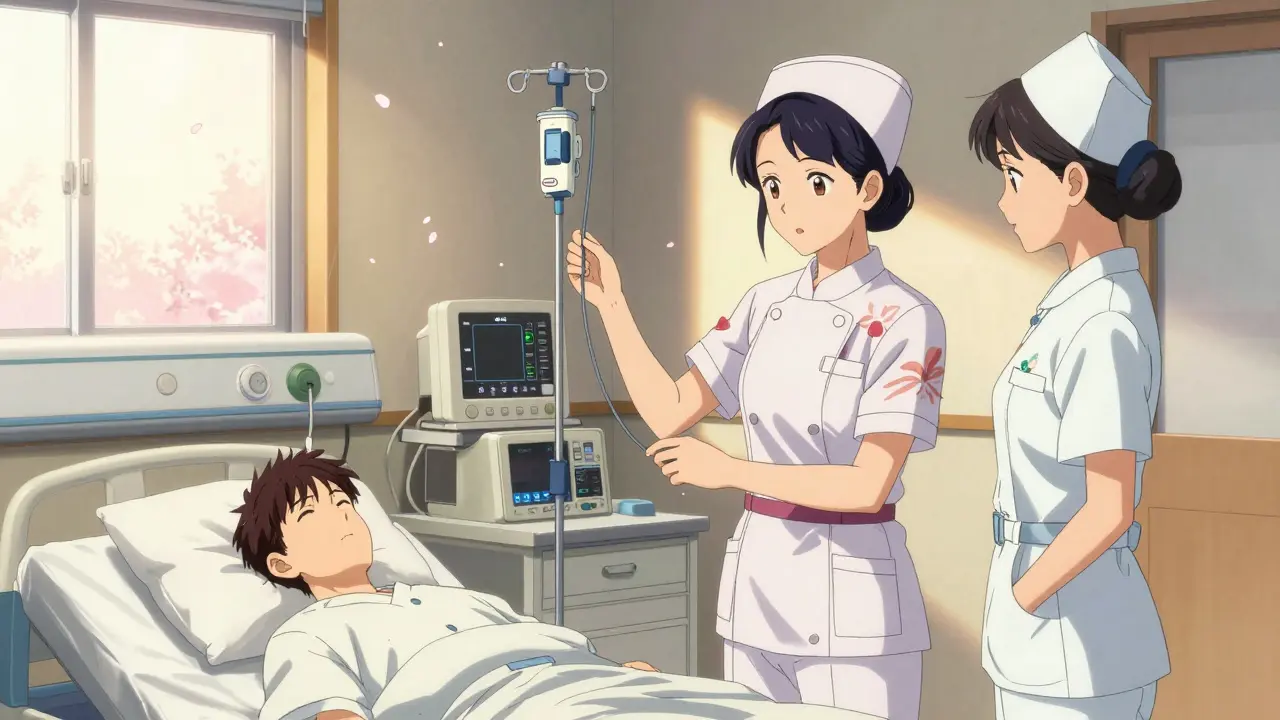
When a nurse walks into a patient’s room to give an IV dose of insulin or potassium chloride, they’re not just handing over a drug-they’re handling a potential life-or-death moment. These aren’t ordinary medications. They’re high-alert medications, and one wrong dose can kill. That’s why hospitals don’t rely on a single person to verify them. They require a second set of eyes-truly independent, not just a quick nod. But how do you know which ones demand this extra step? And how do you do it right so it actually works?
What Makes a Medication High-Alert?
Not all dangerous drugs are obvious. Some look harmless. A vial of clear liquid labeled "potassium chloride" might seem like just another electrolyte. But if it’s concentrated-1 mEq/mL or higher-and given too fast, it can stop a heart in minutes. The same goes for IV insulin: too much, and blood sugar plummets. Too little, and diabetic ketoacidosis sets in. These aren’t hypothetical risks. They’re real, documented, and preventable. The Institute for Safe Medication Practices (ISMP) has been tracking these drugs since 2001. Their 2024 list identifies 19 categories that require special safeguards. These aren’t random picks. They’re based on decades of error reports, near-misses, and autopsy data. Medications on this list share three traits: a narrow therapeutic window (the difference between a safe and deadly dose), complex preparation or administration, and a history of causing serious harm when misused.Which Medications Require a Double Check?
There’s no universal list every hospital uses identically, but most follow ISMP’s guidance with slight variations. Here are the most common ones that trigger a mandatory independent double check:- Insulin-especially IV infusions and push doses
- Potassium chloride concentrate (1 mEq/mL and above)
- Potassium phosphate concentrate (1 mEq/mL and above)
- Neuromuscular blocking agents (like succinylcholine or rocuronium)
- Intravenous heparin (including flushes over 100 units/mL)
- Chemotherapeutic agents (all forms, all settings)
- Injectable narcotic patient-controlled analgesia (PCA) pumps
- Continuous renal replacement therapy (CRRT) solutions (e.g., Prismasol)
- Total parenteral nutrition (TPN) and lipid infusions
- Direct thrombin inhibitors (argatroban, bivalirudin)
- Sodium chloride solutions above 0.9%
- Controlled substances (IV or oral) in many systems
What Does a Real Double Check Look Like?
A double check isn’t two people standing side by side reading the same label. That’s not independent. That’s just confirmation bias. A true independent double check (IDC) means two licensed clinicians-usually a nurse and another nurse or pharmacist-verify the medication alone, apart from each other. The VHA’s 2024 directive spells it out clearly: each person must check all five rights-right patient, right medication, right dose, right route, right time-without talking to the other until they’ve both finished. Then, and only then, they compare results. If they disagree, they stop. They don’t guess. They recheck the order, the label, the pump settings, the patient’s chart. They call the prescriber if needed. It’s not just about matching names. It’s about calculating doses. If the order says 10 units of insulin per hour, and the pump is set to 15, the second checker must recalculate it themselves. They don’t just glance. They verify the math. They check the concentration of the bag. They confirm the infusion rate matches the order. They look at the patient’s recent labs. Is this dose safe for someone with kidney failure? That’s part of the check too.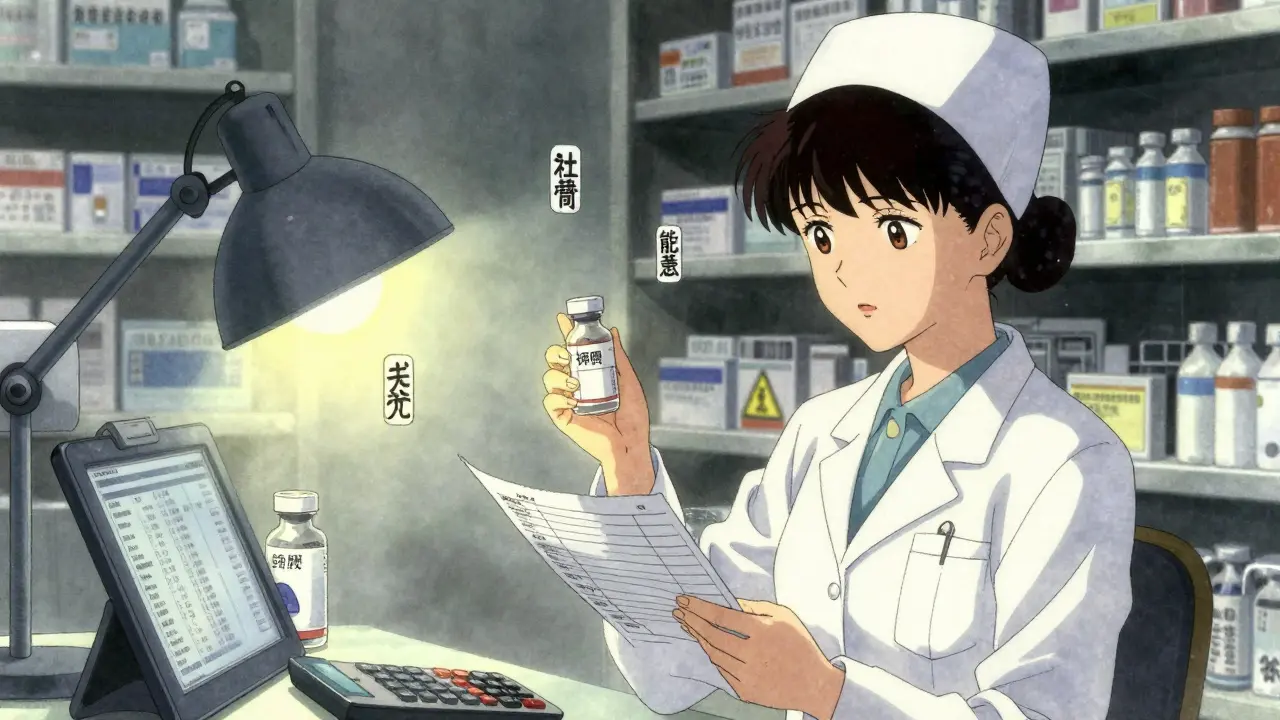
Why Most Double Checks Fail
Here’s the uncomfortable truth: in many hospitals, double checks are broken. A 2017 study in the Journal of Patient Safety found that when nurses performed "simultaneous checks"-meaning they checked together, talked through it, or watched each other-the error detection rate dropped from 87% to just 32%. Why? Because humans are wired to agree. If the first person says, "It looks right," the second person assumes they’re right too. They don’t question. They don’t recalculate. They just sign off. Another problem? Time. Nurses are stretched thin. In an emergency, finding a second nurse can take minutes. Some teams skip the check during code blues. Others rush it. One ICU nurse on Reddit shared that she caught three errors in six months doing real double checks-but saw 12 fake ones that missed mistakes. That’s not safety. That’s theater. Even the documentation can be flawed. Some eMAR systems let you click "double checked" without requiring two digital signatures. That’s not a double check. That’s a checkbox.What Works: Real Solutions That Reduce Errors
The best hospitals don’t just mandate double checks-they design systems to make them work. At Johns Hopkins, after implementing strict IDCs for IV heparin, dosing errors dropped from 12.7% to 2.3% in 18 months. How? They didn’t just add a step. They changed the culture. They trained staff for two hours on how to do true independent checks. They made sure a second nurse was always available during shift changes. They audited compliance monthly. Nurses resisted at first-adding 2-3 minutes per check felt like too much. But when they saw fewer patients go into cardiac arrest from potassium overdoses, they changed their minds. Mayo Clinic built double-check time into staffing ratios. They didn’t ask nurses to squeeze it in-they paid for it. Cleveland Clinic requires a 95% pass rate on annual competency tests for double checking. If you fail, you can’t administer high-alert meds until you retrain. Technology helps too. Smart infusion pumps that alert you if a dose exceeds safe limits cut errors by 63% when paired with targeted double checks. EHR systems that force dual electronic signatures-where both nurses must log in separately to approve-eliminate fake checks. Seventy-eight percent of Magnet-recognized hospitals now use these systems.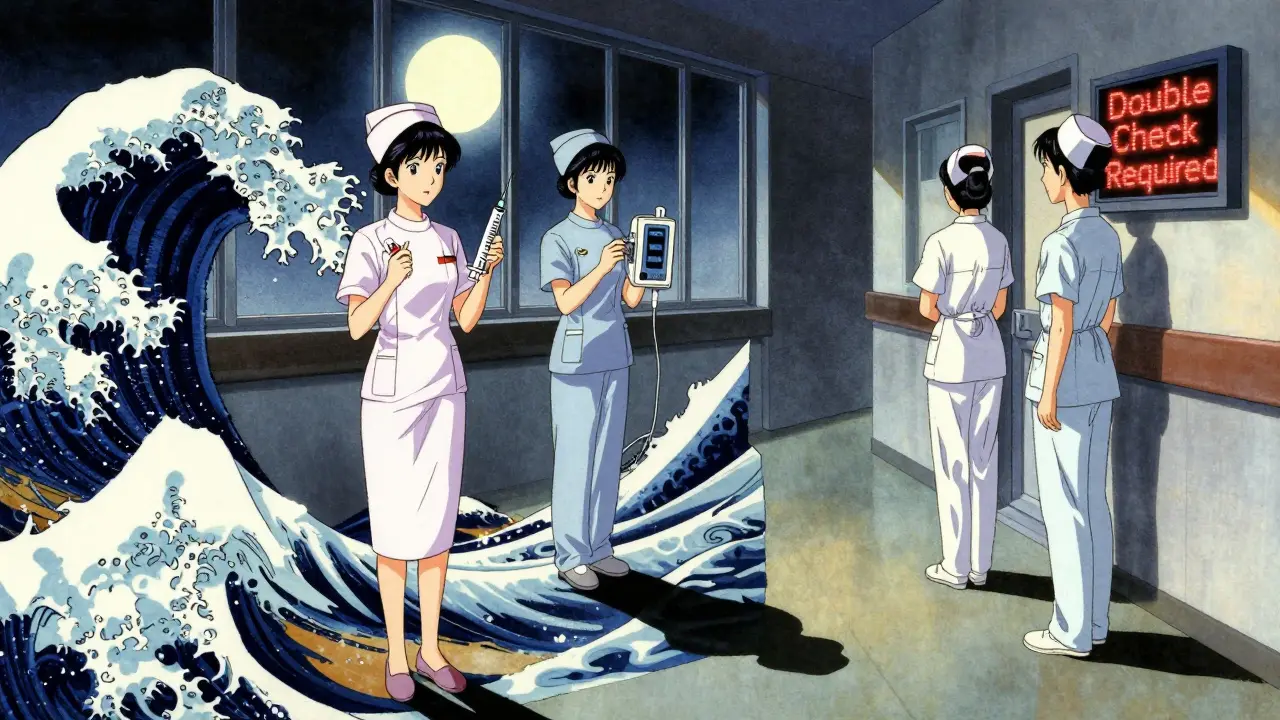
What to Avoid
Don’t double-check everything. ISMP warns against overuse. If every single med requires two people, you’ll burn out staff, delay care, and create complacency. The goal isn’t to check more-it’s to check smarter. Don’t let pharmacists do all the checks. Pharmacists are experts, but they’re not always at the bedside. The person giving the med must be part of the verification. That’s the whole point-someone who’s about to push the plunger must be involved. Don’t skip the check during emergencies. Yes, it’s hard. But there are protocols for this. Some hospitals pre-draw high-alert meds in the pharmacy with dual verification and label them as "ready-to-administer." Others use pre-filled syringes with barcodes. These reduce the burden without sacrificing safety.How to Start Getting It Right
If you’re in a hospital trying to improve, here’s a simple 4-step plan:- Identify which high-alert meds you use. Match them to ISMP’s 2024 list. Don’t guess. Look at your error reports.
- Define exactly what a double check means on your unit. Write it down: "Both nurses must independently verify all five rights, recalculate doses, and compare results after separate verification."
- Train everyone. Use real case studies. Show videos of bad checks vs. good checks. Make it mandatory. Test them.
- Monitor. Audit 10% of double checks monthly. Are they independent? Are they documented properly? Are errors going down?
What’s Next for Medication Safety
The future isn’t more paperwork. It’s smarter tech. AI tools are being tested in 12 academic medical centers to flag potential errors before they happen. Risk-based double checks are emerging-stricter checks for elderly patients with kidney disease, for example. The new High-Alert Medication Safety Coalition, formed in 2025 by ISMP, ASHP, AHA, and The Joint Commission, is pushing for national standards. But here’s the bottom line: no technology replaces a trained, alert human. Smart pumps can’t know if a patient’s condition changed since the order was written. They can’t ask, "Is this dose appropriate for someone who just had a heart attack?" Only a person can. That’s why, even as automation grows, independent double checks remain essential-for the most dangerous drugs, at the most critical moments.It’s not about checking boxes. It’s about saving lives. And that starts with knowing which meds demand your full attention-and having the courage to stop and verify, even when it’s inconvenient.
What are the most common high-alert medications that require a double check?
The most common high-alert medications requiring independent double checks include IV insulin, concentrated potassium chloride (1 mEq/mL or higher), neuromuscular blocking agents, IV heparin (especially flushes over 100 units/mL), chemotherapy drugs, patient-controlled analgesia (PCA) pumps with opioids, total parenteral nutrition (TPN), and CRRT solutions. These are listed in the 2024 ISMP High-Alert Medications List and are widely adopted by hospitals across the U.S.
Is a double check the same as a witness check?
No. A witness check is when two people are present but check together-often talking through the process. An independent double check requires two licensed clinicians to verify the medication separately, without communication, then compare results afterward. Only the independent version has been proven to catch errors effectively. Witness checks can create bias and miss mistakes.
Do all hospitals require double checks for the same medications?
No. While most follow the ISMP 2024 list, individual hospitals set their own policies based on risk assessments. The Veterans Health Administration (VHA) requires double checks for all high-alert meds. Some community hospitals limit them to only the top 5-7 highest-risk drugs. The key is that each facility must have a documented, standardized protocol approved by their pharmacy and therapeutics committee.
Can a pharmacist do the second check instead of a nurse?
Yes, but only if the pharmacist is present at the bedside and involved in the actual administration process. The goal of the double check is to catch errors just before the medication reaches the patient. If the pharmacist verifies the order in the pharmacy but doesn’t confirm it at the bedside with the nurse, it’s not a true independent double check. The person administering the drug must be one of the two verifiers.
What happens if you can’t find a second nurse during an emergency?
In true emergencies like cardiac arrest, hospitals have pre-prepared protocols. Many use pre-drawn, barcoded, dual-verified syringes from the pharmacy. Others use smart pumps programmed with hard limits that prevent overdose. The goal is to reduce the need for last-minute double checks during crises. However, if time allows-even in a code-the second person should still be called. Delaying a dose slightly is safer than giving a wrong one.
How do you know if your hospital’s double check process is working?
Track error rates before and after implementation. A successful program shows a 50% or greater reduction in high-alert medication errors within 6-12 months. Audits should also measure compliance: are checks truly independent? Are both clinicians signing off? Are documentation requirements met? If error rates stay flat or staff complain about "fake" checks, the process needs redesigning.



Y’all are still doing double checks with paper and pen? Come on. Smart pumps with AI alerts and mandatory dual e-signatures are the bare minimum now. If your hospital still lets nurses just ‘nod’ at each other, you’re not saving lives-you’re playing Russian roulette with IV bags.
I’ve been in ICU for 18 years and let me tell you the real problem isn’t the meds it’s the culture. Nurses get yelled at for taking 90 seconds to verify a dose so they start cutting corners. You don’t fix safety by adding more rules you fix it by trusting your team and giving them time. At my hospital we stopped counting checks and started counting near-misses caught. Guess what? Errors dropped 60% in a year. People aren’t the problem they’re the solution if you let them be.
Man I came from a rural hospital in Kerala where we didn’t even have barcode scanners but we had something better-respect. Every nurse knew if they messed up someone’s life was on the line. We didn’t need double checks because we checked ourselves. Now in the US it’s like everyone’s waiting for someone else to catch their mistake. Maybe the problem isn’t the system it’s the mindset.
So true. I caught a 10x insulin overdose last week because my partner actually recalculated. 🙌
They’re hiding something. The ISMP list was edited in 2024 right after Big Pharma lobbied to remove insulin glargine from mandatory double checks. You think that’s a coincidence? Hospitals are cutting corners because they’re being paid by the vial not by the life saved. The real danger isn’t potassium-it’s the corporate greed behind the protocol.
Ugh I’m so tired of nurses pretending they’re doing double checks. I’ve seen it a hundred times-two people standing there reading the same label like it’s a group meditation. If you’re not verifying the math independently you’re not doing it at all. And if your hospital lets you click a box without two digital signatures you’re part of the problem not the solution.
Why are we even talking about this? In America we don’t care about patient safety we care about liability. If someone dies from a potassium overdose the hospital gets sued. So they make you do a double check so they can say ‘we followed protocol.’ But nobody actually cares if it works. It’s theater. We’re all just actors in a bad medical drama.
Anyone else notice that the only people who ever do real double checks are the ones who’ve seen someone die from a mistake? I did. My cousin was a nurse. She saw a kid die from a mislabeled heparin bag. Now she won’t even hand a syringe to anyone unless they’ve stared at the label for 30 seconds alone. That’s not protocol. That’s trauma. And honestly? I think we need more of it.
Wow. Just wow. You people act like this is rocket science. It’s not. It’s basic. Read the label. Do the math. Don’t be lazy. If you can’t handle that maybe you shouldn’t be touching meds. I’m not saying this to be mean I’m saying it because someone has to.
Correction: The ISMP list does not include TPN as a mandatory double-check medication at the national level. It is recommended but not universally required. The post misrepresents this. Also ‘continuous renal replacement therapy solutions’ are not on the 2024 list-they’re grouped under ‘specialized infusions’ which vary by institution. Accuracy matters.
Let’s be clear here the entire double check paradigm is fundamentally flawed because it assumes human error is the primary vector when in reality it’s system design failure. The real issue is lack of standardized concentration protocols and absence of automated dose-limiting algorithms in infusion pumps. You can’t audit your way out of bad engineering. The focus should be on pharmacovigilance infrastructure not nurse compliance theater.
I’ve worked in Irish hospitals where we didn’t have double checks for insulin because we used pre-filled syringes from the pharmacy with tamper-proof seals. The system was designed to prevent error not to catch it after the fact. Maybe instead of adding more steps we should be removing the opportunities for mistakes. Less reliance on humans. More reliance on smart design. That’s not lazy. That’s engineering.
My sister’s a nurse in Chicago. She says the worst part isn’t the double checks-it’s when the pharmacy sends up the wrong concentration and everyone just assumes it’s right because ‘it’s from pharmacy.’ That’s the real gap. The system doesn’t trust the system. We need better communication between pharmacy and floor. Not more signatures. More connection.
just started my med surg rotation and this post made me cry. i want to be the nurse who catches the mistake. not the one who just clicks the box. 💙