

Buying generic medications online can save you hundreds of dollars a year-but only if you know where to look. Many people assume all online pharmacies offer the same prices for drugs like metformin, lisinopril, or atorvastatin. That’s not true. Prices can vary by more than 300% between two legitimate sites selling the same 30-day supply. The difference isn’t just luck-it’s strategy. Knowing how to use comparison shopping tools properly turns guesswork into smart savings.
Why generic drug prices vary so much online
Generic drugs are chemically identical to brand-name versions, but their prices aren’t. Why? Because pharmacies buy in bulk from different distributors, set their own markups, and adjust for shipping, taxes, and even website traffic. A 30-day supply of generic metformin might cost $4 at one pharmacy, $12 at another, and $22 at a third-all legally, all FDA-approved. The reason? Some pharmacies operate as part of large chains with bulk purchasing power. Others are small, independent pharmacies trying to compete. And some are just poorly managed or misleadingly priced.What makes it worse is that many people search for drugs on Google and click the first result that says “$5.99.” But that price often disappears by the time you get to checkout. Dynamic pricing algorithms change prices hourly based on demand, location, and even how many times you’ve visited the site. That’s why comparing prices across multiple platforms isn’t optional-it’s essential.
How comparison shopping engines work for medications
Comparison shopping engines (CSEs) for medications work the same way they do for electronics or groceries: they pull real-time pricing data from hundreds of online pharmacies and show you side-by-side options. But unlike Amazon or Walmart, most medication CSEs don’t sell drugs themselves. They’re directories-like a price map for your prescription.Google Shopping dominates this space, pulling listings from over 1,200 U.S.-licensed online pharmacies. It updates prices every 15 to 30 minutes for high-demand drugs. But here’s the catch: Google prioritizes pharmacies that pay for placement. That means the cheapest option might not appear at the top. You have to scroll past sponsored listings to find the real deals.
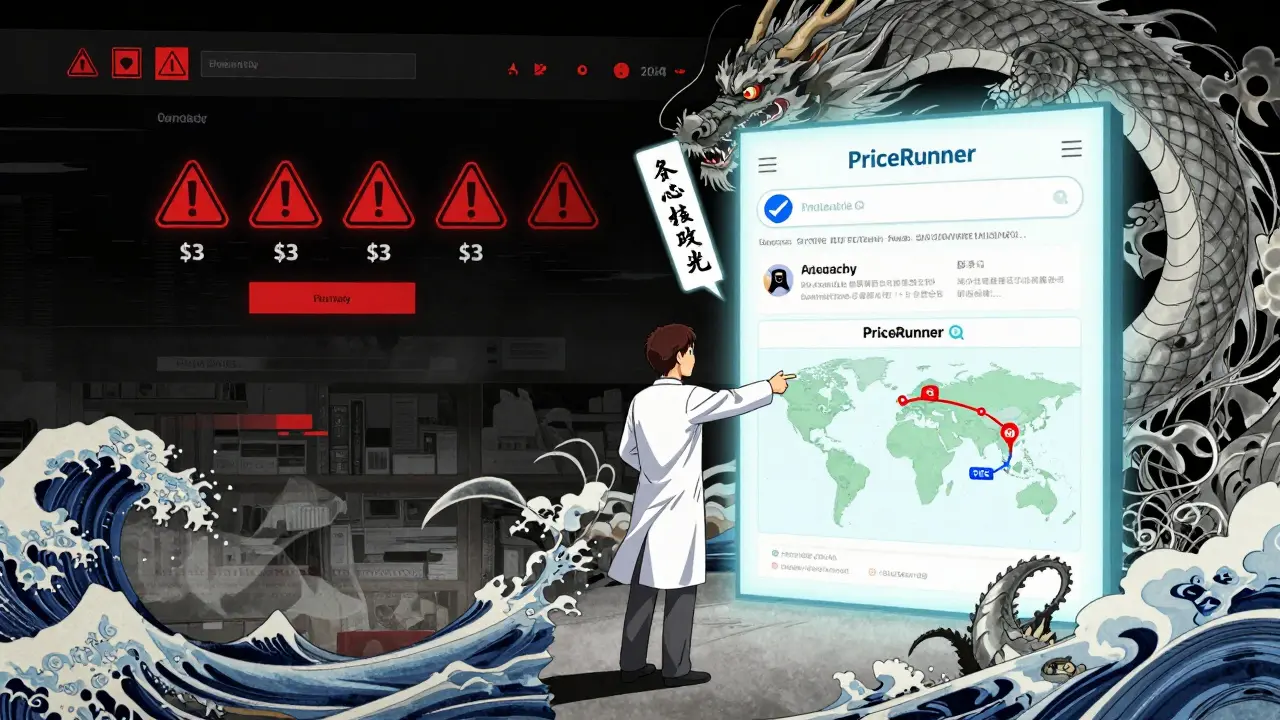
Specialized platforms like PriceRunner and Shopzilla offer better results for medications. PriceRunner, popular in Europe, includes tax and shipping in its calculations-something Google ignores. That’s huge if you’re buying from international pharmacies that ship to Australia. Shopzilla, while smaller, has a cleaner interface and fewer sponsored ads. Its users report 23% more accurate pricing for prescriptions than Google, according to testing by The Selling Guys in early 2025.
Top platforms to compare generic drug prices
Here are the five most reliable platforms for finding the lowest generic medication prices as of late 2025:
- Google Shopping - Best for broad searches and U.S.-based pharmacies. Use it first, but always check the fine print. Look for the “Verified Pharmacy” badge and avoid sites with no physical address.
- Shopzilla - Stronger for niche and independent pharmacies. Better for finding lower prices on less common generics like bupropion or cyclobenzaprine.
- PriceRunner - Ideal if you’re buying from Canadian or European pharmacies. Includes VAT and import fees in total price. Works well for Australians using international shipping.
- Bizrate - Stands out for verified customer reviews. Only users who actually bought the drug can rate the pharmacy. This cuts out fake reviews by 78%, according to their 2024 report.
- GoodRx - Not a traditional CSE, but it’s the most popular tool for U.S. consumers. It negotiates cash prices directly with pharmacies and shows discounts at local and online stores. Works for Australians too if you’re using a U.S. pharmacy with international shipping.
Don’t rely on just one. Use Google Shopping to find the range, then cross-check with Shopzilla or PriceRunner. You’ll often find a $10-$20 difference just by switching platforms.
What to look for beyond price
Price isn’t everything. A $3 pill from a site with no customer service, no return policy, or no licensed pharmacist on staff isn’t a deal-it’s a risk.
Here’s what to check before clicking “Buy”:
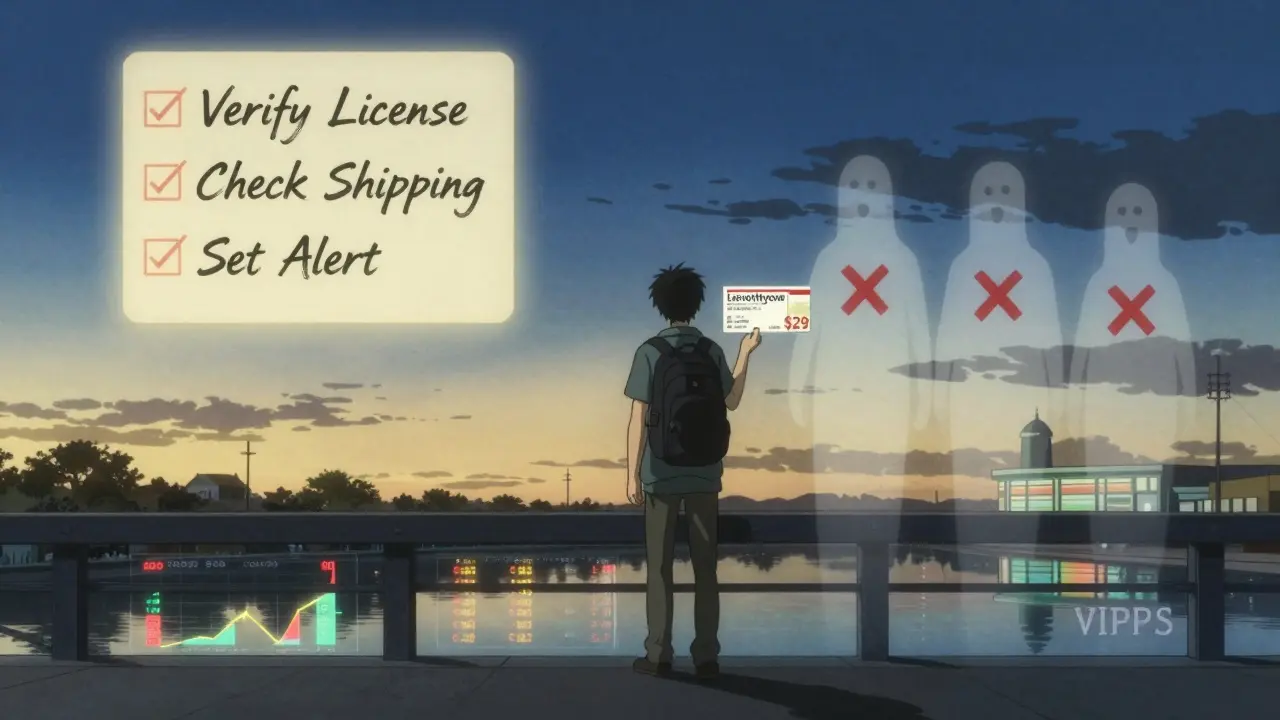
- Pharmacy license - Look for VIPPS (Verified Internet Pharmacy Practice Sites) certification in the U.S. or TGA approval in Australia. If it’s not listed, walk away.
- Physical address - Legitimate pharmacies list a real street address, not just a PO box. Verify it on Google Maps.
- Prescription requirement - Any site that sells prescription drugs without one is illegal and unsafe. No exceptions.
- Customer reviews - Use Bizrate’s verified purchase system. Avoid sites with 5-star ratings but no detailed comments.
- Shipping time and cost - Some sites offer “free shipping” but take 3-4 weeks. Others charge $15 but deliver in 5 days. Factor that in.
One user in Adelaide told us they saved $87 on a 90-day supply of levothyroxine by switching from a U.S. site with $18 shipping to a Canadian pharmacy that included shipping and delivered in 10 days. The total price? $29. That’s not a fluke-it’s what happens when you compare properly.
How to set up price alerts for your meds
Prices for generics fluctuate constantly. Metformin might drop from $14 to $9 after a new distributor enters the market. Waiting a week could save you money.
Here’s how to track price changes without checking every day:
- Find your drug on Google Shopping or PriceRunner.
- Click the “Track Price” button (if available) or install a free browser extension like Honey or Keepa.
- Set a target price (e.g., “Notify me if metformin drops below $8”).
- Check your email weekly. Most alerts update within 24 hours of a price change.
GoodRx also offers email alerts for its negotiated prices. You’ll get notified when your pharmacy’s cash price drops. This works even if you’re buying from a local Australian pharmacy that accepts U.S. prescriptions.
Red flags that mean don’t buy
Scams targeting people looking for cheap meds are rising. According to the National Retail Federation’s 2025 report, CSE-related fraud attempts jumped 22% last year. Here’s how to spot them:
- “No prescription needed” - Illegal in Australia and the U.S. Always require a valid script.
- Prices that are 70%+ lower than others - If metformin is $12 everywhere else and one site says $3, it’s fake or expired.
- No contact info or live chat - Legit pharmacies have phone numbers, emails, and pharmacy staff you can talk to.
- Website looks outdated or has typos - Scammers copy legitimate sites but make sloppy mistakes.
- Payment only via wire transfer or cryptocurrency - Reputable pharmacies accept credit cards, PayPal, or bank transfers with fraud protection.
If something feels off, it probably is. A $50 savings isn’t worth risking your health.
Real savings: What you can actually expect
Consumer Reports’ 2025 survey of 8,500 shoppers found that people who compare generic drug prices save an average of 18.7% per prescription. But that number jumps to 31% for high-cost meds like insulin, erectile dysfunction drugs, or cholesterol treatments.
Here’s what real people saved in 2025:
- Generic lisinopril (20mg, 90 tablets): $22 → $8 (64% savings)
- Atorvastatin (40mg, 30 tablets): $38 → $14 (63% savings)
- Levothyroxine (50mcg, 90 tablets): $47 → $20 (57% savings)
- Metformin (500mg, 180 tablets): $28 → $9 (68% savings)
These aren’t outliers. They’re repeatable results when you use the right tools and avoid the traps.
Final checklist: Your 5-minute price-comparison routine
Before you buy any generic medication online, run through this quick checklist:
- Search your drug name + “generic price comparison” on Google.
- Check Google Shopping and note the lowest price with verified pharmacy status.
- Go to Shopzilla or PriceRunner and search the same drug. Compare total cost (including shipping).
- Look up the pharmacy on the TGA or VIPPS database to confirm legitimacy.
- Set a price alert if you’re not buying right away.
That’s it. Five minutes. Could save you hundreds a year.
What’s next for online drug shopping
The future is getting smarter. By 2027, platforms will start showing not just price-but sustainability scores. Some are already testing carbon footprint data for drug manufacturing. Others are adding AI that predicts when your prescription will drop in price based on supply chain trends.
Blockchain verification is also emerging. Startups like PriceCheck are testing ledgers that prove a drug’s origin and authenticity. That means no more fake pills slipping through.
But for now, the best tool you have is simple: compare. Don’t settle for the first price you see. Don’t trust a site just because it looks professional. Use the tools, check the licenses, and save what’s yours.
Can I legally buy generic medications from overseas pharmacies?
Yes, but with limits. In Australia, you can legally import a 3-month supply of prescription medication for personal use if it’s not available locally, or if it’s significantly cheaper. The TGA allows this under the Personal Importation Scheme, but you must have a valid prescription. Always buy from licensed international pharmacies that display their credentials. Avoid sites that don’t require a prescription-those are illegal and unsafe.
Are generic drugs really the same as brand-name ones?
Yes. Generic drugs contain the same active ingredients, dosage, strength, and route of administration as brand-name versions. They’re required by the FDA and TGA to meet the same strict standards for safety and effectiveness. The only differences are in inactive ingredients (like fillers or dyes), packaging, and price. Generics cost less because they don’t include the cost of research and marketing.
Why do prices vary so much between pharmacies?
Pharmacies buy drugs from different distributors at different wholesale prices. Some negotiate bulk deals, others have lower overhead. Online pharmacies also factor in shipping, taxes, currency exchange, and competition. A pharmacy in Canada might have lower operating costs than one in the U.S., which is why you’ll often see better prices from overseas. Dynamic pricing algorithms also cause hourly changes based on demand.
How do I know if an online pharmacy is legitimate?
Look for these signs: a physical address you can verify on Google Maps, a licensed pharmacist available to answer questions, a valid license from the TGA (Australia), VIPPS (U.S.), or equivalent regulatory body, and a requirement for a prescription. Check reviews on Bizrate or Trustpilot for verified purchase feedback. Avoid sites that offer “no prescription needed,” have poor grammar, or only accept cryptocurrency.
Is it safe to use browser extensions like Honey for drug prices?
Yes, but with caution. Extensions like Honey or Keepa work well for tracking price drops on medications, but they don’t verify pharmacy legitimacy. Always double-check the pharmacy’s credentials before buying. These tools are great for alerts and comparisons, but they’re not a substitute for due diligence. Never let an extension auto-purchase for you-always review the seller manually.

just spent 20 mins comparing metformin prices and ended up saving $17 on a 90 day supply wow this post is legit
also i typoed like 5 times while typing this but hey at least i saved money
the irony is that we optimize for cost in medication but not for the quiet suffering of those who can’t even access these tools
is savings truly liberation if the system still dictates who gets to be healthy?
if you’re not using GoodRx you’re literally throwing money away
stop being lazy and check the prices before you buy
your health is not a suggestion
let’s be real - most of these ‘comparison engines’ are just affiliate traps disguised as consumer advocacy
Google Shopping prioritizes pay-to-play pharmacies and you think you’re saving money?
you’re just funding a data-mining oligopoly that monetizes your desperation
the real savings are in negotiating with your pharmacist directly - not clicking some sponsored link
and don’t get me started on ‘international pharmacies’ - you think TGA cares if your 3-month supply arrives in a FedEx box labeled ‘vitamins’?
you’re playing russian roulette with your liver
and yes i’ve seen the FDA warnings - they’re not suggestions, they’re obituaries in waiting
i remember when i first tried to buy lisinopril online because my insurance wouldn’t cover it and i was working two jobs and my kid had asthma and i just needed to breathe
spent three days comparing sites and finally found one that said $6.99 but then the shipping was $42 and the site had a broken link to their license and i cried
then i went to my local pharmacy and asked if they had a discount program and they gave me a 70% off coupon and i didn’t even have to leave the parking lot
why do we make this so complicated
why do we trust algorithms over humans
why do we think the internet is kinder than the person behind the counter who’s seen you cry before
oh look another ‘save hundreds’ post
congrats you found a $10 difference on metformin
did you also discover gravity exists
the real scam is that people still think this is news
if you need a 1200 word guide to buy a generic pill you probably shouldn’t be managing your own meds
also why are we still using GoodRx in 2025
isn’t that like using a flip phone to stream 4k
you all sound like you’re trying to convince yourselves this is safe
you know what happens to people who buy meds from random websites
they end up in the ER with liver failure
and then the system blames them for being stupid
but no one ever says ‘hey maybe the system should make this affordable’
you’re just optimizing for survival while the real villains laugh
and yes i’m the one who didn’t click the link
because i know better
price checker tools are useless if you’re on medicare
they don’t even show the real prices for seniors
just sayin
OMG this is the most helpful thing i’ve read all year 🙏
i used to pay $45 for atorvastatin now i pay $12 thanks to PriceRunner
and i double checked the license on VIPPS like you said
you’re a lifesaver 🌟
thank you thank you thank you
you people are naive
you think price comparison makes you smart
but you’re still feeding the machine
the real problem is pharmaceutical monopolies
not your inability to scroll past sponsored ads
you’re treating symptoms while the disease eats the system alive
and yes i’ve seen the财报 - the top 3 drug companies made $12 billion in profit last quarter off generics
you saved $20
they saved $12 billion
who’s really winning here