
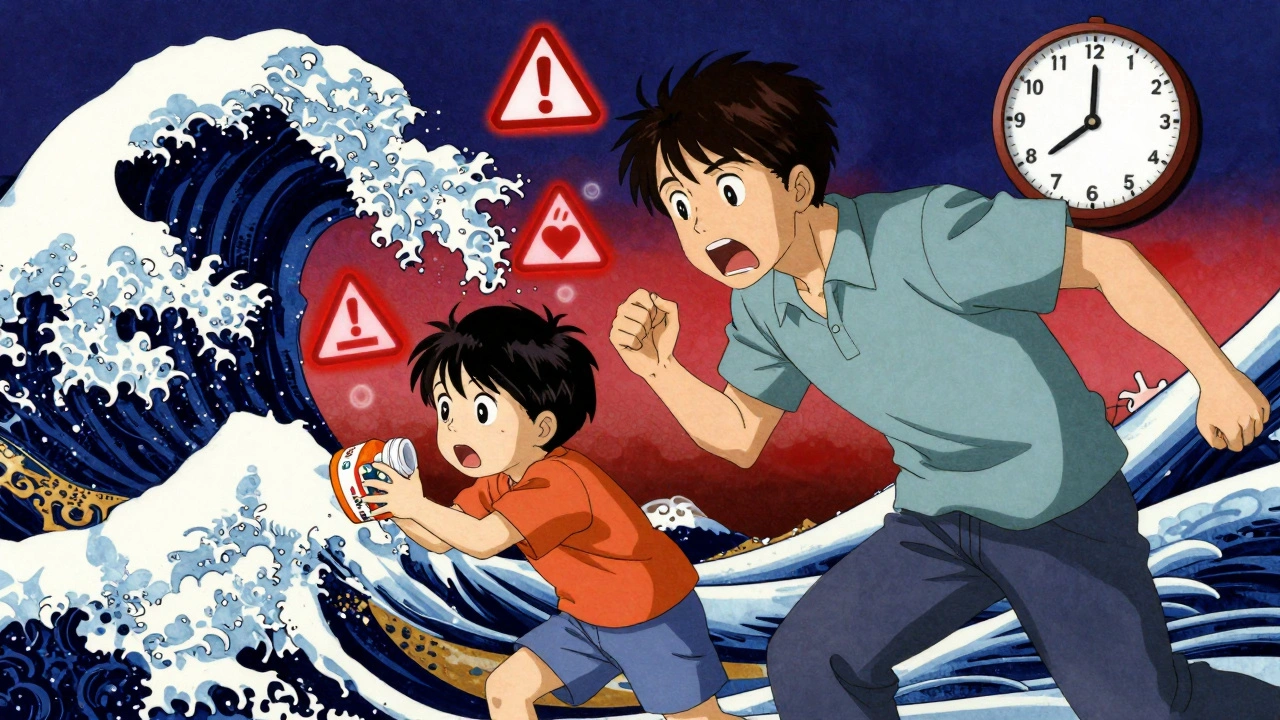
Antihistamine Overdose Risk Calculator
Assess Your Emergency Situation
This tool helps you determine if a potential antihistamine overdose is dangerous based on dosage, patient age, and medication type. Remember: For any overdose, always call poison control immediately (1-800-222-1222 in US, 13 11 26 in Australia).
When a child swallows a handful of Benadryl pills, or an adult takes double the dose thinking it’ll help them sleep, the consequences can turn deadly within hours. Antihistamine overdose isn’t just about feeling drowsy-it can shut down your heart, stop your breathing, or send you into a seizure. The good news? If you act fast, survival rates are nearly 100%. But every minute counts. This is not a situation to wait and see. Here’s exactly what to do in the first critical minutes after an overdose.
Recognize the Signs Before It’s Too Late
Not all antihistamine overdoses look the same. First-generation drugs like diphenhydramine (Benadryl), chlorpheniramine, and promethazine are the most dangerous. They cross the blood-brain barrier and block acetylcholine, causing a cascade of anticholinergic effects. Second-generation antihistamines like cetirizine (Zyrtec) and loratadine (Claritin) are far safer, but even they can cause trouble in massive doses. Watch for these warning signs:- Extreme drowsiness or inability to wake up
- Racing heart (over 120 beats per minute)
- Blurred vision or dilated pupils
- Flushed, dry skin
- Difficulty urinating
- Confusion, hallucinations, or agitation
- Seizures or unresponsiveness
Do Not Induce Vomiting
It’s tempting. You want to get the pills out. But forcing someone to throw up is one of the worst things you can do. If the person is drowsy or unconscious, vomit can go into their lungs and cause pneumonia-or worse, suffocation. The American Association of Poison Control Centers and Mayo Clinic both warn against this. Even if the person is awake, vomiting doesn’t reliably remove the drug and can delay proper treatment. Instead, remove any remaining pills or liquid from their mouth. Keep them sitting up if possible. Don’t give them food, water, or anything else unless instructed by poison control.Call Poison Control Right Away
In Australia, call 13 11 26 (Poisons Information Centre). In the U.S., dial 1-800-222-1222. These lines are staffed 24/7 by toxicology nurses and pharmacists who know exactly what to do. They don’t just give generic advice-they ask for specifics: what drug was taken, how much, when, and the person’s weight and age. Many parents think they should drive to the ER first. But poison control can tell you whether it’s safe to monitor at home or if you need to rush to the hospital. For example:- For a child under 6: Under 7.5 mg/kg of diphenhydramine? Often safe to observe at home.
- For an adult: Under 300 mg? May not need hospitalization.
- Over those amounts? Go to the ER immediately.
Bring the Medication Container
When you head to the hospital, take the bottle with you. Not the box-the actual container. Why? Because different antihistamines need different treatments. Diphenhydramine can cause QRS widening on an ECG-meaning the heart’s electrical signal is slowed, which can lead to fatal arrhythmias. Cetirizine won’t. If you don’t know what was taken, doctors have to guess. That wastes time. If the bottle says “Diphenhydramine HCl 25 mg,” they’ll know to monitor for cardiac toxicity. If it’s “Loratadine 10 mg,” they’ll focus on milder symptoms like dizziness or tachycardia.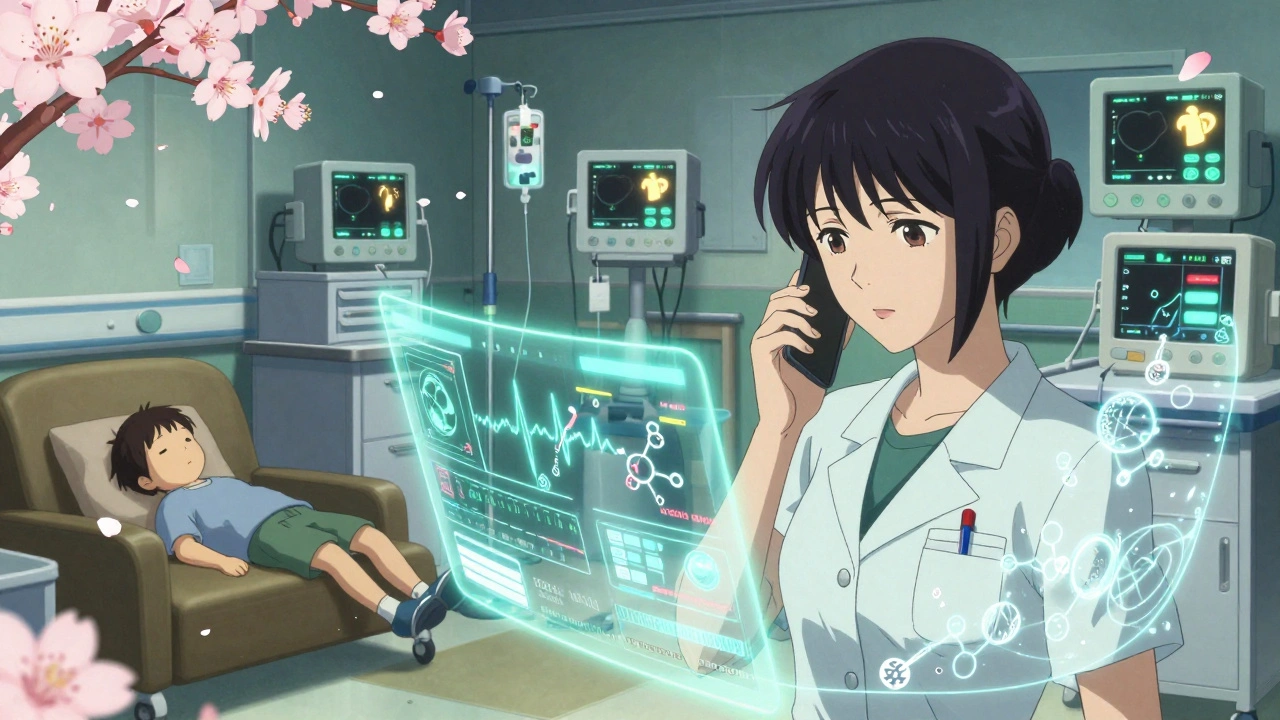
What Happens in the Emergency Room
If you’re sent to the hospital, here’s what you can expect:- Activated charcoal: Given within 1-2 hours of ingestion. It binds the drug in the gut and stops more from being absorbed. Dose: 25-100 grams for adults, 0.5-1 gram per kg for kids.
- ECG monitoring: Continuous heart tracing for at least 4-6 hours. If the QRS complex is wider than 100 milliseconds, it’s a red flag. Wider than 120? That’s a medical emergency.
- Sodium bicarbonate: If QRS widening is present and heart rate is over 120, doctors may give IV sodium bicarbonate to correct the electrical disturbance. Studies show it can reverse dangerous heart rhythms.
- Benzodiazepines: Used for agitation, seizures, or muscle rigidity. Not for sedation-because the person is already too sedated. These drugs calm the brain without worsening breathing.
- IV fluids: To support blood pressure and help flush out the drug, though the body can’t eliminate antihistamines quickly-they’re 70-95% bound to proteins and stored in fat tissue.
Why First-Generation Antihistamines Are the Real Danger
Not all antihistamines are created equal. Diphenhydramine is the #1 culprit in serious overdoses. It doesn’t just make you sleepy-it blocks sodium channels in the heart, like tricyclic antidepressants do. That’s why it can cause ventricular tachycardia or even cardiac arrest. A 2020 study of over 9,000 pediatric cases found that first-generation antihistamines caused serious outcomes (hospitalization, life-threatening events) in 1.8% of cases. Second-generation? Just 0.2%. And diphenhydramine alone was responsible for 83% of those severe cases in kids under 6. That’s why the FDA banned its use in children under 2 in 2008. And why the European Medicines Agency restricted its use for insomnia. Even in adults, taking 400 mg or more can trigger symptoms like blurred vision, urinary retention, and a heart rate of 130 bpm-exactly what one Reddit user experienced after accidentally taking 16 pills.Common Mistakes That Make Things Worse
People make the same errors over and over:- Dosing errors: 42% of pediatric overdoses come from misreading the dosing cup. Liquid Benadryl is 12.5 mg per 5 mL. One teaspoonful is not the same as one tablespoon.
- Combination products: Cold and flu meds often contain diphenhydramine. Someone takes a cold tablet, then a sleep aid-both have it. They double up without realizing.
- Waiting for symptoms: Symptoms can take 1-4 hours to appear. By then, the drug is already absorbed. Don’t wait.
- Using home remedies: Milk, charcoal from the grill, or syrup of ipecac? None of these help. Only medical-grade activated charcoal works-and only if given early.
How to Prevent This From Happening
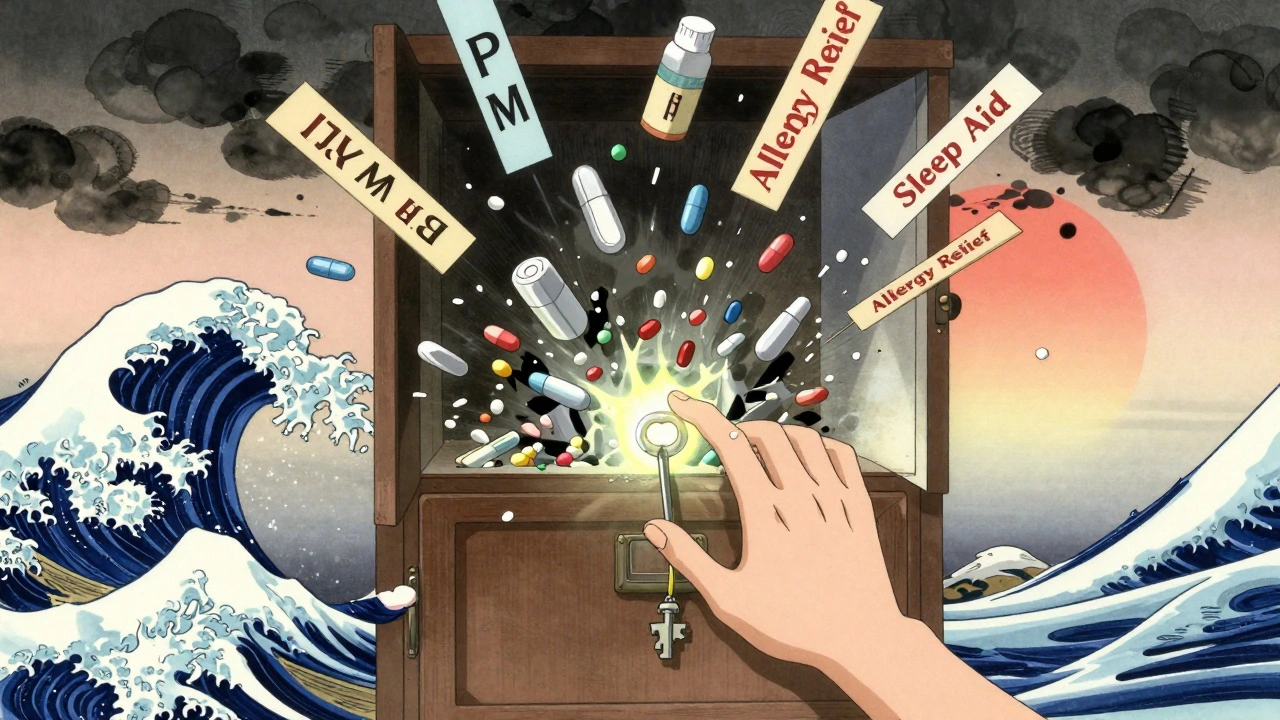
Prevention is the best treatment:- Keep all medications in locked cabinets-not on counters or nightstands.
- Use child-resistant caps, even if you think you’re “just quick.”
- Never use antihistamines to make a child sleep. It’s dangerous and ineffective.
- Read labels. If a product says “PM” or “Nighttime,” it likely contains diphenhydramine.
- Store different meds separately. Don’t mix allergy pills with sleep aids.
What Happens After the Hospital
Most patients who get timely treatment are discharged within 24-48 hours. But recovery isn’t instant. Fatigue, dry mouth, and blurred vision can linger for a day or two. Follow-up with a doctor is important, especially if there was cardiac involvement. For children, a social worker may be involved if the overdose was due to poor supervision. For adults, especially if it was intentional, mental health screening is standard. Suicide attempts make up only 18% of adult cases, but they still need support.Bottom Line: Time Is Everything
An antihistamine overdose isn’t a joke. It can kill. But it’s also one of the most treatable poisonings-if you act fast. The key steps are simple:- Call poison control immediately.
- Do not induce vomiting.
- Bring the medication bottle to the hospital.
- Expect cardiac monitoring and possible IV treatment.
- Never wait for symptoms to get worse.
What should I do if my child swallowed an antihistamine?
Call your local poison control center immediately. In Australia, dial 13 11 26. Do not make them vomit. Remove any remaining pills from their mouth. Bring the medication bottle to the hospital if you’re instructed to go. Even if they seem fine, monitor for symptoms like rapid heartbeat, flushed skin, or confusion. Many overdoses are not obvious right away.
Can I treat an antihistamine overdose at home?
Only if poison control says it’s safe. For small doses-under 7.5 mg/kg in children or under 300 mg in adults-home observation may be enough. But you must watch closely for symptoms like racing heart, trouble urinating, or extreme drowsiness. If any appear, go to the ER immediately. Never assume it’s harmless just because the person seems sleepy.
Is Benadryl more dangerous than Zyrtec or Claritin?
Yes, significantly. Benadryl (diphenhydramine) is a first-generation antihistamine that affects the heart and brain more than second-generation drugs like Zyrtec or Claritin. It can cause dangerous heart rhythm changes, seizures, and respiratory depression. Zyrtec and Claritin rarely cause serious effects unless taken in massive amounts-10 times the normal dose or more.
Why can’t they just pump the stomach or give a laxative?
Stomach pumping and laxatives don’t work well for antihistamines because these drugs are absorbed quickly-often within an hour. By the time you get to the hospital, most of the drug is already in the bloodstream. Activated charcoal can help if given within 1-2 hours, but after that, the body has to process it naturally. Antihistamines are also heavily bound to proteins, so dialysis or urine flushing won’t remove them.
How long does it take to recover from an antihistamine overdose?
Most people recover fully within 24 to 48 hours with proper care. However, symptoms like drowsiness, dry mouth, and blurred vision can last longer. Cardiac monitoring usually lasts 4-6 hours, but if there was heart rhythm involvement, hospital stays can extend to 24-48 hours. Full recovery depends on the dose, the type of antihistamine, and how quickly treatment started.
Can antihistamine overdose be fatal?
Yes, especially with first-generation antihistamines like diphenhydramine. Toxic doses can cause cardiac arrest, respiratory failure, or seizures. But with prompt medical care, the survival rate is over 99.9%. Deaths are rare and usually happen when treatment is delayed or the person is left untreated for hours.

Just wanted to highlight the ECG monitoring point-QRS widening beyond 100ms is a red flag, but beyond 120ms? That’s a full code blue scenario. In my ER rotations, we’ve seen diphenhydramine-induced arrhythmias resolve within minutes after sodium bicarbonate. Time is oxygen here. Don’t wait for the patient to crash before acting.
my cousin took 12 benadryl thinking it’d help her anxiety… she was fine. just super drowsy. why all the panic? 🤷♀️
Oh sweetie, you’re missing the point. It’s not about ‘she was fine’-it’s about the 1 in 500 who aren’t. You think you’re lucky? That’s called survivorship bias. Diphenhydramine blocks sodium channels like a tricyclic antidepressant. That’s not ‘sleepy’-that’s cardiotoxic. And if you’re casually dismissing this, you’re one bad batch of generic pills away from a funeral. 😒
Thank you for this!! I’m a nurse and I see this way too often. Parents think ‘it’s just allergy medicine’-nope. It’s a silent killer. Please, please, please lock it up. 💪❤️
The real tragedy isn’t the overdose-it’s the normalization of using sedating antihistamines as sleep aids. We’ve turned pharmacology into a blunt instrument. The body isn’t a machine you can force into rest. You’re not ‘tired’-you’re burned out. And reaching for diphenhydramine is just chemical avoidance. It doesn’t solve the problem. It just delays the reckoning.
Always call poison control. Do not delay. Even if child seems fine. Symptoms may appear after 2 hours. Bottle must be brought to hospital. This is life-saving knowledge. Thank you for sharing.
it’s funny how we treat meds like candy… we live in a world where you can buy a lethal dose at the corner store and no one bats an eye. we’re all just one bad decision away from becoming a statistic. 🤔
Why is this even a thing in America? In my country, you can’t buy diphenhydramine over the counter without a prescription. No one’s dying from Benadryl here because we don’t let idiots walk into CVS and grab 20 pills like it’s candy. You people treat your bodies like disposable toys.
Wait-so if someone takes 300mg of diphenhydramine, and they’re an adult, and they’re asymptomatic, and poison control says ‘observe at home’-then what exactly are the signs that say ‘go to ER NOW’? Because I’ve seen people ‘observe’ for 6 hours and then collapse. Is there a checklist? Please. I need this.
Ugh so many people are clueless. Just stop. You think you know what you're doing? You don't. End of story.
Thanks for the detailed breakdown. One thing I’d add: if you’re giving activated charcoal, make sure it’s medical-grade. The charcoal from your grill? Doesn’t work. And don’t give it if the person’s drowsy-risk of aspiration is real. 🙏