

What automated refills really do for your daily meds
If you take a generic medicine every day-whether it’s for high blood pressure, cholesterol, or diabetes-you’ve probably felt the stress of remembering to refill it. That little pill bottle runs out faster than you think. One missed refill, and suddenly you’re skipping doses, risking your health, and playing catch-up with your pharmacy. Automated refills fix that. They’re not magic. They don’t replace your doctor. But they do remove the biggest barrier to taking your meds: remembering to ask for them.
Here’s how it works: your pharmacy tracks when your prescription will run out. Five to seven days before you’re out, they automatically send a refill request to your doctor. Once approved, your pills are ready. You get a text, email, or app notification. You pick them up, or they’re delivered to your door. No calls. No online logins. No panic when you’re out.
It’s not new. CVS, Walgreens, and other big chains started offering this in the mid-2010s. But now, it’s smarter. Systems use your refill history to predict when you’ll need your next dose. If you usually refill on a Tuesday, they’ll time it for Monday. If you skip a refill once, they might nudge you sooner. This isn’t just convenience-it’s backed by data. A 2016 study showed patients on automatic refills took their statins 7.2% more often, RASA meds 3.9% more, and diabetes drugs 6.8% more than those who had to request refills manually.
Why generic medicines are the perfect fit
Automated refills work best with generic medicines. Why? Because they’re stable. Your doctor doesn’t change the dose often. You’re not switching brands every few months. Generic versions of drugs like lisinopril, metformin, or atorvastatin are chemically identical to the brand-name versions. They’re cheaper, widely available, and rarely recalled. That makes them ideal for automation.
When you’re on a long-term plan-say, taking a daily pill for 10 years-you don’t want to be stuck in a loop of calling your pharmacy every 30 days. That’s where automation shines. It handles the routine so you can focus on living. In fact, 63% of Medicare Part D plans now offer automated refills, and nearly half of commercially insured patients are enrolled. Most of those patients are on generics. The system was built for them.
Even subscription models like Amazon Pharmacy’s RxPass (launched in January 2023) focus on generics. For $5 a month, Prime members in 45 states get 60 common generic medications delivered automatically. No copay. No refill requests. Just pills arriving on schedule. JAMA Network Open reported a 18% increase in refills among users-proof that when you remove friction, people take their meds.
How it works behind the scenes
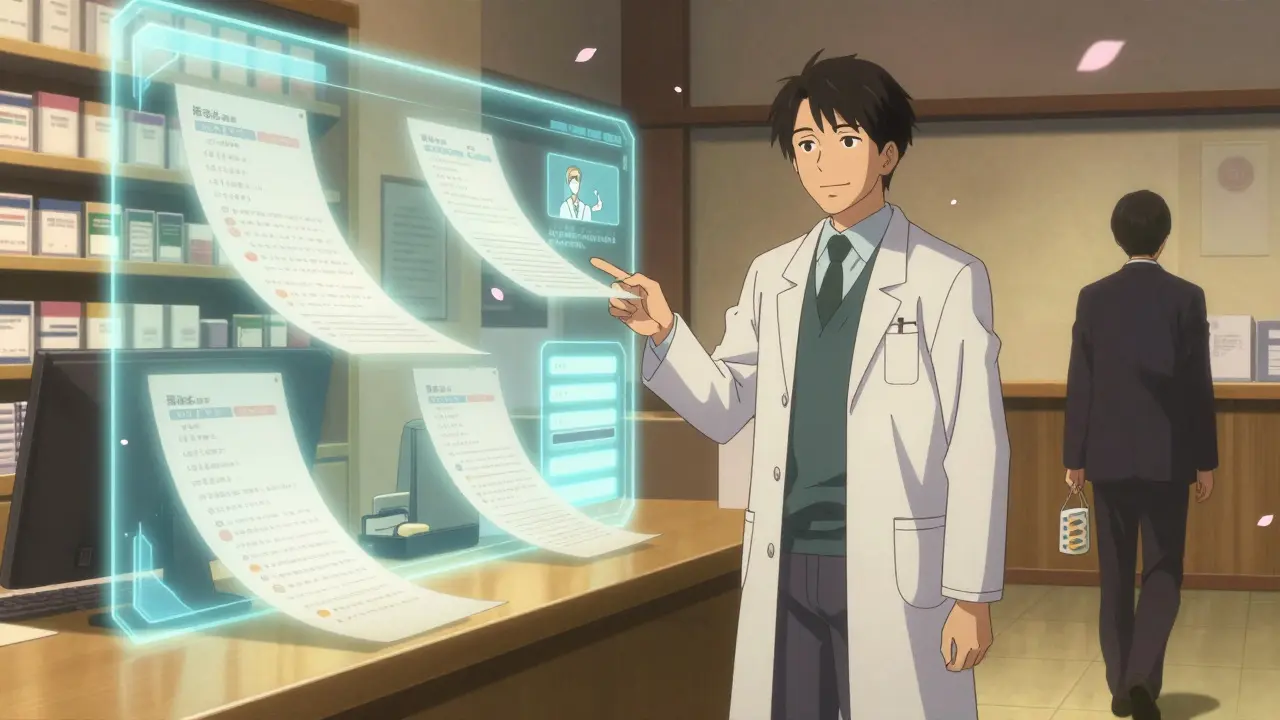
Automated refills aren’t just a button you click. They’re a system. Your pharmacy connects to your doctor’s electronic health record (EHR). When you sign up, you give consent. That’s required by HIPAA. Then, the system checks your prescription’s refill date. It doesn’t just count days-it looks at your refill history. Did you pick up your last three refills on time? Good. It’ll trigger the next one. Did you miss one? It might pause and send a reminder instead.
The pharmacy’s software sends an electronic refill request to your prescriber. Most doctors approve these automatically, especially for stable chronic conditions. Once approved, your meds are packed. You can choose pickup or delivery. Most systems send alerts via SMS, email, or app notifications. You can even sync your refill schedule with Apple Health or Google Fit. CVS Health added that feature in late 2023.
It’s not just about sending pills. It’s about reducing workload. Pharmacists used to spend hours fielding refill calls. Now, automated systems cut manual follow-ups by 37%, according to Clarity Ventures. That means pharmacy staff have more time to talk to you about side effects, answer questions, or check if you’re feeling okay. Automation doesn’t replace human care-it frees it up.
The real risks: dosage changes and silent errors
There’s a catch. Automation works great-until your doctor changes your dose.
Imagine you’re taking diltiazem 240 mg daily. Your doctor increases it to 360 mg because your blood pressure isn’t controlled. But your automatic refill system doesn’t know. It keeps sending the old dose. You keep taking it. You feel fine. Nothing seems wrong. But you’re not getting the right treatment.
This isn’t hypothetical. Consumer Medication Safety documented a case in December 2024 where a patient received the wrong dose for six weeks because the system didn’t sync with the updated prescription. The patient didn’t notice until they ran out and had to call the pharmacy.
That’s why you need to be proactive. Always confirm with your pharmacist when your dose changes. Ask: “Will this change affect my automatic refill?” Most pharmacies will pause the system temporarily and manually review the new prescription. But not all do. Independent pharmacies, especially, may not have the same tech as big chains. If you’re on a new dose, check your next refill. Make sure it matches what your doctor wrote.
Another risk? Medication waste. Some pharmacy benefit managers (PBMs) set refill triggers too early-like at day 60 of a 90-day supply-to boost revenue. You end up with pills you don’t need. CMS noticed this and proposed new rules in early 2024 to stop early refills that don’t match clinical need.
Who benefits the most?
Automated refills aren’t for everyone. But they’re life-changing for some.
Seniors with memory issues? They benefit. One user on Reddit said their 82-year-old mother, who has Alzheimer’s, hasn’t missed a dose in two years since enrolling. Her daughter gets alerts when refills are ready.
People with busy lives? Yes. Parents juggling jobs, kids, and appointments? Automated refills mean one less thing to remember.
People on multiple meds? Even better. If you take five or six generics daily, trying to track each refill schedule is impossible. Automation syncs them all. One Medical found that 78% of their patients who use home delivery also enroll in automated refills-because it eliminates the need to visit the pharmacy at all.
But here’s the truth: if you’re healthy, young, and take meds occasionally, you probably don’t need it. Automated refills are designed for chronic, daily medications. Not antibiotics. Not painkillers. Not as-needed drugs. Stick to manual refills for those.

How to sign up-and what to watch for
Getting started is simple. Most big pharmacies make it easy:
- Log into your pharmacy’s website or app (CVS, Walgreens, Walmart, Amazon Pharmacy).
- Find the “Refill Settings” or “Auto-Refill” section.
- Select the prescriptions you want to automate.
- Choose your notification method: text, email, or app.
- Confirm your delivery preference: pickup or home delivery.
It takes about 8 to 12 minutes. You’ll need your prescription number and a way to verify your identity-usually your date of birth or a security code.
But here’s what most people miss: automated refills are not automatic enrollment. You have to sign up. Some patients get confused when pills arrive unexpectedly. That’s not a glitch-it’s a sign they were enrolled without their knowledge. Check your account regularly. If you didn’t sign up and pills show up, call your pharmacy. You can opt out anytime.
Also, review your list every three months. If you stopped taking a drug, remove it from automation. Otherwise, you’ll keep getting pills you don’t need. That’s waste-and money down the drain.
What’s next for automated refills
The future is smarter. By 2026, two-thirds of pharmacy automation systems will use AI to adjust refill timing based on your behavior. If you usually refill on Friday but skipped last month, the system might nudge you on Tuesday instead. If you refill early three times in a row, it might flag that you’re running out faster-maybe your dose needs adjustment.
Integration with telehealth is growing fast. If you have a virtual visit and your doctor changes your prescription, that change should auto-sync with your refill system. Right now, that’s only true for about half of platforms. But by 2027, most will connect directly.
And the market is exploding. The global pharmacy automation market is expected to hit $12.3 billion by 2027. Why? Because it saves money-for patients, insurers, and hospitals. When people take their meds, they go to the ER less. Hospital stays drop. That’s why CMS ties pharmacy adherence to Medicare star ratings. Plans with higher adherence scores get bonus payments. That’s the real engine behind this tech.
But don’t let convenience blind you. The best automated refill system won’t help if you don’t understand your meds. Always talk to your pharmacist. Ask questions. Check your pills when they arrive. And never assume the system knows more than you do.
Frequently Asked Questions
Do automated refills cost extra?
No. Most pharmacies offer automated refills at no extra charge. You still pay your normal copay or insurance rate. Some subscription services like Amazon RxPass charge a monthly fee, but that’s for unlimited generics-not a refill automation feature. The automation itself is free.
Can I pause or cancel automated refills?
Yes. You can pause, cancel, or change your settings anytime through your pharmacy’s app or website. You can also call your pharmacy and ask them to stop the automation for a specific prescription. It’s your choice, and your rights are protected under HIPAA.
What if I switch pharmacies?
Automated refills don’t transfer. When you switch pharmacies, you’ll need to re-enroll. Your old pharmacy will stop sending refills once your prescription is transferred. Make sure to set up automation at your new pharmacy as soon as possible to avoid gaps in coverage.
Are automated refills safe for seniors?
Yes, but they need support. Many seniors benefit greatly from automation because it removes memory barriers. However, 83% of elderly patients need help enrolling. Family members or pharmacy staff can assist. Always ensure dosage changes are reviewed manually by a pharmacist after a doctor’s update.
Do automated refills work with mail-order pharmacies?
Yes. Mail-order pharmacies often have more advanced automation systems because they handle bulk refills. Many Medicare Part D plans require mail-order for 90-day supplies, and those are almost always automated. The key difference is delivery time-mail-order may take 5-7 days, while retail pickup is same-day.



I’ve been on auto-refill for metformin for 3 years now. Never missed a dose. My anxiety about running out just vanished. Life’s too short to stress over pill bottles.
Also, my dog doesn’t care if I’m late to the pharmacy. He just wants his walk.
my mom has alzheimers and this system saved her life. she forgets to eat but never forgets her meds now. i get texts when theyre ready and i pick them up. no more panic calls to the pharmacy. thank you for writing this. i cried reading it.
auto refills are fire for generics. no cap. i take 4 daily pills and i dont even think about them anymore. just got my box today. boom. done.
I love this so much but also... why do so many pharmacies still let refills go through without checking for dose changes? My uncle got the wrong strength for 6 weeks because the system didn’t update. He felt fine. No one noticed until his bottle was empty. We had to call 3 times. Pharmacies need better alerts. Not just tech. Human eyes too.
ohhh so THAT’S why my Amazon box showed up with 30 pills i didn’t order? thought i got hacked. turns out i was auto-enrolled and didn’t even know it. lol. thanks for the heads up. gonna go delete that now before i get 12 more bottles of lisinopril.
automated refills? 🤡
next they’ll feed me my pills through a tube while i sleep.
my grandma took her meds by hand for 50 years and never missed one. why are we outsourcing basic responsibility to robots?
also i hate texts. 📱❌
This is a classic case of corporate convenience masquerading as healthcare innovation. Let’s be real - these systems exist to reduce labor costs at pharmacies and increase PBM profits. They don’t care if you get the right dose. They care if you refill on schedule. And guess what? You’re paying for that ‘convenience’ with your health. I’ve seen too many patients get the wrong meds because ‘the system said so.’ This isn’t progress. It’s negligence dressed in a mobile app.
you people are so gullible. you let some app send you pills like you’re ordering pizza. what if your doctor changes your dose? what if your insurance switches? what if the system glitches? you’re not ‘saving time’ - you’re handing your health over to a bunch of coders who don’t know what metformin does. you’re not a customer. you’re a data point.
I love how people act like this is new. My mom in 1998 had her meds delivered every 30 days by mail. Same system. Just slower. And no emojis. 😒
Also - yes, dose changes are a risk. But that’s why you talk to your pharmacist. Not because the app told you to. Because you’re an adult. 🤷♀️
This isn’t about refills. It’s about dignity.
People who take daily meds for decades aren’t ‘inconvenienced’ - they’re carrying invisible weight. Automation doesn’t just make life easier. It gives back time. Time to sleep. Time to work. Time to be with family. Time to not be a prisoner to a pill schedule.
Yes, systems fail. But the alternative? Constant anxiety. Constant effort. Constant shame when you forget.
Let’s not pretend this is about tech. It’s about compassion. And if you think someone’s life is less valuable because they need help remembering a pill - you’re the one who needs a refill. Of humanity.
just signed up for RxPass 😍 got my 60 generics for $5 a month. my husband’s blood pressure meds, my thyroid, my anxiety stuff - all delivered. no more driving 20 mins to Walmart. we’re saving $300/month. this is the future and i’m here for it 🙌💊
I’m British, so I’m used to the NHS doing things properly - or at least, trying. But this? This is the kind of quiet innovation that changes lives without fanfare. No drama. No headlines. Just a quiet text saying ‘your meds are ready.’ And for someone with chronic illness? That’s not convenience. That’s peace. I wish we had this in the UK. We’ve got the tech. We just need the will.