
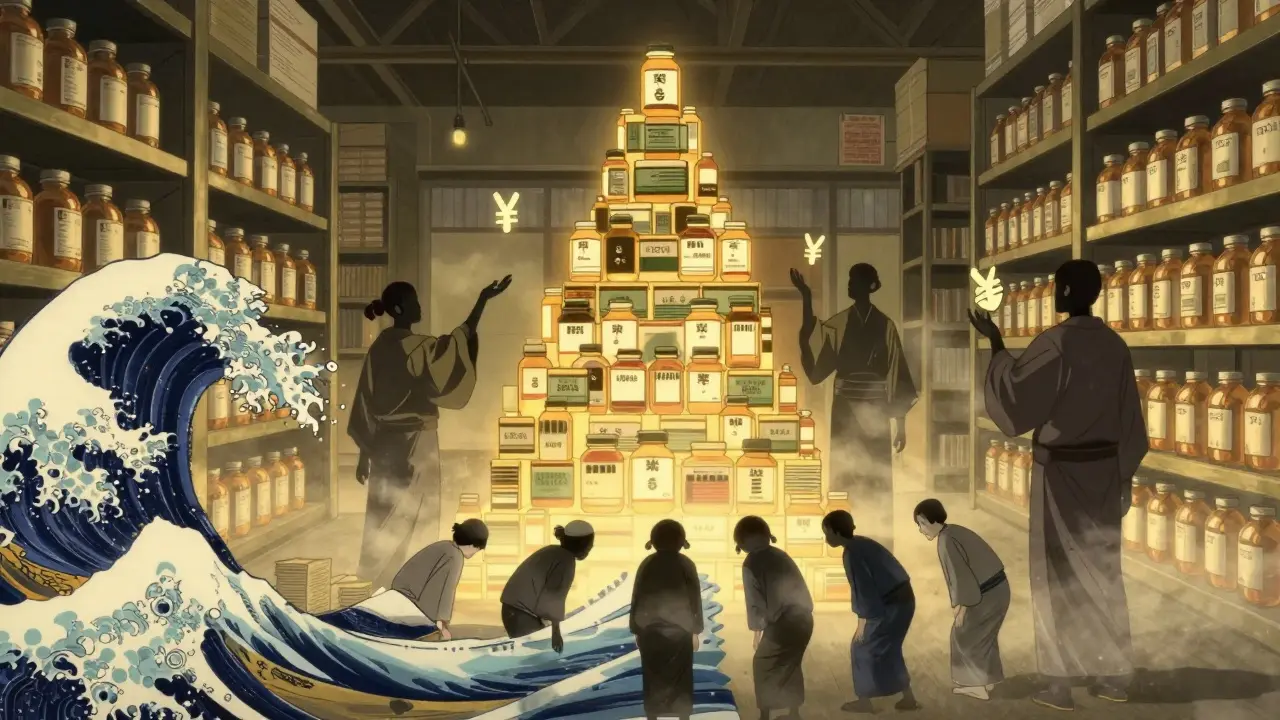
When you pick up a prescription for a generic pill at your local pharmacy, you probably don’t think about how it got there. But behind that $5 bottle of lisinopril or metformin is a complex, high-stakes economic system that moves billions of dollars every year - and where the real profits aren’t where most people expect them to be.
Who Really Makes Money on Generic Drugs?
Most people assume drug manufacturers make the biggest profits on generic medications. That’s not true. In fact, the opposite is happening. Generic drug makers have gross margins around 49.8%, which sounds solid - until you compare it to what happens downstream. Wholesalers, the middlemen who ship drugs from factories to pharmacies, make eleven times more profit per unit on generics than on brand-name drugs. Pharmacies make nearly twelve times more. That’s not a typo. For every dollar spent on a generic drug, wholesalers pocket about $32 in gross profit per unit, while brand-name drugs only net them $3. The manufacturer? They’re lucky to get $18 per unit.
This isn’t accidental. It’s built into the system. Generic drug manufacturers compete fiercely for shelf space. They bid low to win contracts with the big three wholesalers - AmerisourceBergen, Cardinal Health, and McKesson - who together control 85% of the U.S. market. To get their products distributed, manufacturers slash prices. That leaves wholesalers with massive spreads. They buy a bottle of generic at $0.10 and sell it to pharmacies for $0.50. The pharmacy then sells it to you for $5. The manufacturer gets pennies. The wholesaler gets the bulk of the profit.
The Three-Tier System That Controls Your Prescriptions
The modern system wasn’t always this way. Before 1987, drug distribution was messy. Anyone could buy and resell medications. The Prescription Drug Marketing Act changed that. It created the formal three-tier structure: manufacturer → wholesaler → pharmacy. This was meant to ensure safety and traceability. But it also locked in a profit model that favors intermediaries.
Wholesalers don’t just move boxes. They manage inventory, handle returns, track expiration dates, and coordinate with insurers and pharmacy benefit managers (PBMs). But their real power comes from volume. Because they handle such massive quantities, they can demand deep discounts from manufacturers. A manufacturer might sell 10 million tablets of generic metformin at $0.02 each. That’s only $200,000 in revenue - but if the wholesaler sells each tablet at $0.08, they make $800,000. That’s a 300% markup before even adding shipping or handling.
And here’s the twist: generics make up only about 9% of total drug revenue, but they account for 56% of wholesalers’ gross profits. Why? Because branded drugs have higher list prices, but lower margins for distributors. Generics are low-cost, high-volume, and the wholesalers get to keep nearly all the difference.
How Pricing Actually Works - It’s Not What You Think
There are four main pricing strategies used in generic drug wholesale:
- Cost-plus pricing - Add a fixed percentage (say 25%) to the cost of production and shipping. Simple, but ignores market pressure.
- Market-based pricing - Match what competitors charge. Common in saturated markets, but leads to race-to-the-bottom pricing.
- Value-based pricing - Charge more if the drug treats a hard-to-manage condition or has limited alternatives. Rare in generics, but growing in niche cases.
- Tiered pricing - The most common. The more you buy, the cheaper it gets. Buy under 100 units? $10 per bottle. Buy over 500? $7.50. This pushes pharmacies to order in bulk, which ties up their cash but lowers their per-unit cost.
Shipping costs are often buried in these prices. A wholesaler might list a drug at $10, but if shipping adds $2 per unit, they’re really charging $12 to break even. Many small pharmacies don’t realize this until they get the invoice. That’s why some pharmacies prefer direct-from-manufacturer deals - even if it means smaller orders and more paperwork.
Why Generic Prices Keep Changing - Even When Nothing Changes
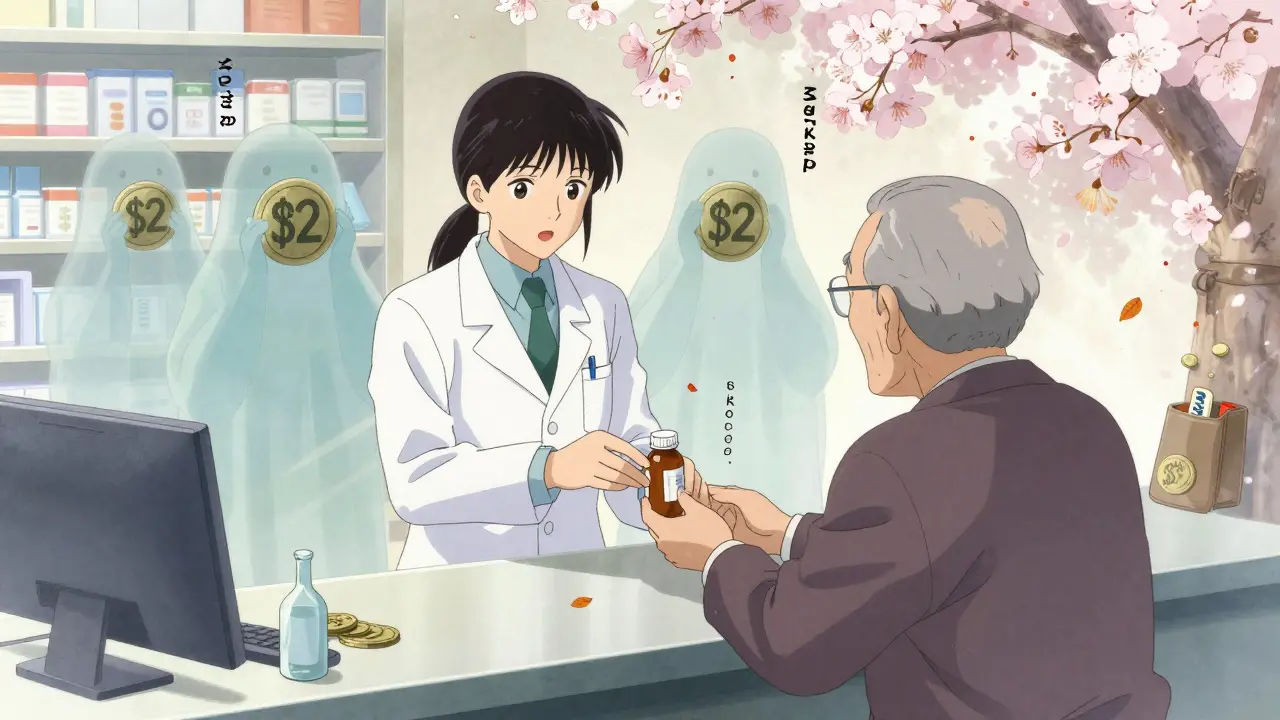
Generic drug prices aren’t stable. They swing wildly based on supply, not demand. In 2020, pandemic panic drove up prices. In 2021 and 2022, prices fell sharply as production ramped up and competition increased. But in 2023, shortages hit. A single factory shutdown in India or China can cause a drug to vanish from shelves. When that happens, prices spike - sometimes by 500% in weeks.
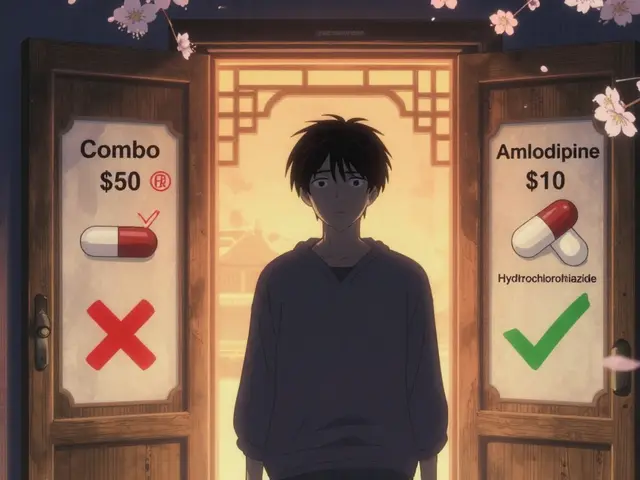
Take amlodipine, a common blood pressure pill. In 2022, it cost $0.03 per tablet. By late 2023, after a key manufacturer halted production, it jumped to $0.18. Pharmacies scrambled. Some switched to other brands. Others raised prices for patients. The wholesaler? They made a killing. They had stockpiled the drug before the shortage and sold it at triple the price.
This isn’t rare. The Commonwealth Fund found that wholesalers actively influence drug shortages - sometimes by limiting supply to certain pharmacies to push them into exclusive contracts. It’s legal, but it’s not transparent.
Why This System Is Broken - And Who Pays
Patients don’t pay the wholesale price. But they pay the final retail price - and insurers pay the difference. When a wholesaler hikes the price to a pharmacy, the pharmacy passes it on. Medicare, Medicaid, and private insurers absorb most of the cost. Patients with high deductibles pay the rest.
Meanwhile, manufacturers are squeezed. They’re forced to lower prices to stay in the game. Some small generic makers have gone out of business. That reduces competition, which gives the big wholesalers even more power. It’s a feedback loop: fewer suppliers → less competition → higher prices → more profit for wholesalers.
And it’s not just about money. When a drug becomes too expensive to distribute profitably, wholesalers stop carrying it. That’s how shortages start. A patient who needs a generic thyroid med might find it unavailable - not because there’s no supply, but because no wholesaler thinks it’s worth the hassle.
What Could Change - And What Won’t
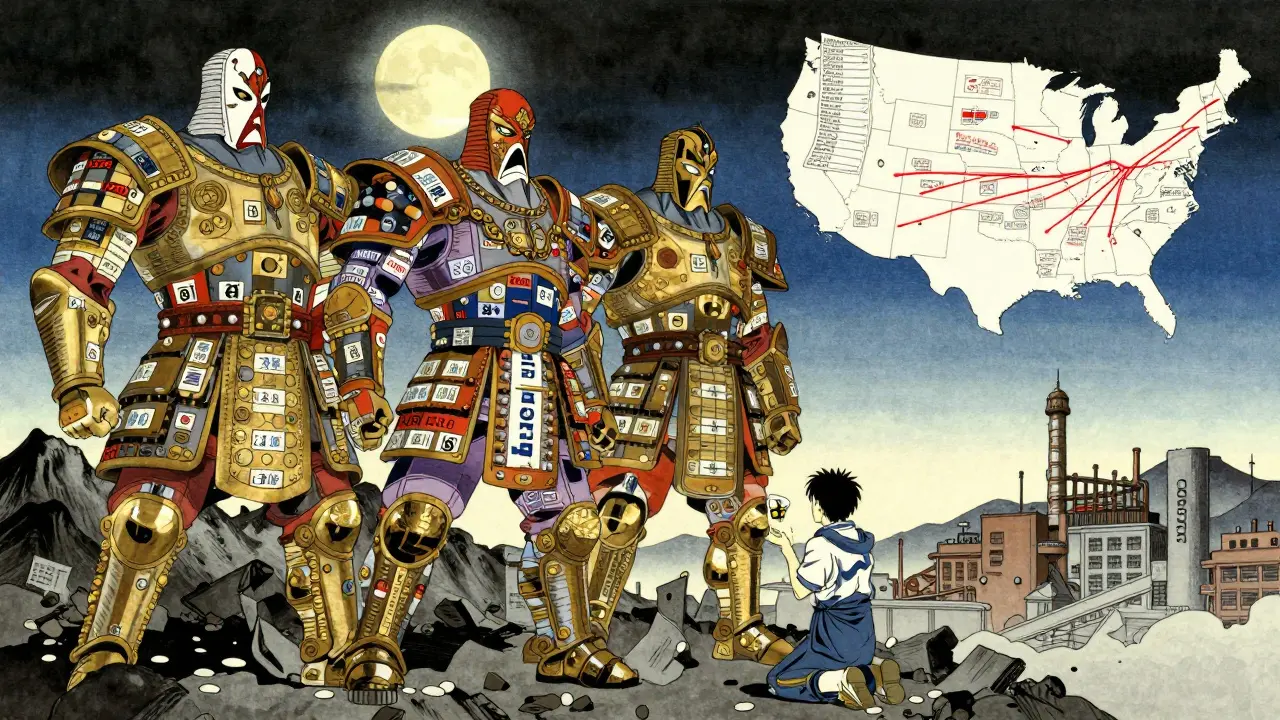
There are calls for reform. Some lawmakers want to force wholesalers to disclose pricing. Others want to let pharmacies buy directly from manufacturers. But the big three have deep lobbying power. They’ve fought every attempt at change for decades.
One real solution? More competition. New players are emerging - regional wholesalers, tech-enabled distributors, even some pharmacies forming buying cooperatives. In Australia and Canada, government price controls keep generic costs low. In the U.S., we’re stuck with a system that rewards volume over value.
Until that changes, the math stays the same: low-cost drug → low manufacturer profit → high wholesaler profit → higher patient cost. And the people who make the most money? The ones who never touch the pill.
What Patients and Pharmacies Can Do
Patients can ask their pharmacist: “Is this the lowest price available?” Many pharmacies can switch to a different wholesaler or manufacturer if prices are too high. Some online pharmacies offer direct generic pricing that bypasses traditional distributors entirely.
Small pharmacies should consider joining group purchasing organizations (GPOs). These collect orders from multiple pharmacies to get bulk discounts - cutting out the middleman. One pharmacy in Ohio saved 22% on its generic inventory just by joining a regional GPO.
And if you’re a patient on a fixed income? Ask about patient assistance programs. Many generic manufacturers offer them - even if the drug is cheap, the out-of-pocket cost can still hurt.

Man, I never realized how much of a black box this whole system is. I just assumed the drug companies were raking it in, but now I see the real money’s in the middle. It’s wild how a pill that costs a penny to make ends up costing five bucks at the counter. Kinda makes you wonder who’s really profiting off sick people.
This is exactly why I started buying my meds through mail-order pharmacies. No middlemen, no markup drama. I saved over $80 a month on my blood pressure meds alone. If you’re on a fixed income, don’t just accept what your local pharmacy says-ask them to shop around. They can! And they should.
It’s important to note that the three-tier distribution model was established under the Prescription Drug Marketing Act of 1987, precisely to prevent counterfeit and adulterated pharmaceuticals from entering the supply chain. While profit margins are indeed skewed, eliminating wholesalers would introduce significant regulatory and logistical risks. The FDA’s track record on direct-to-consumer drug distribution is nonexistent, and the potential for contamination or diversion increases exponentially without centralized, auditable logistics. The system is flawed-but not because of the wholesalers’ existence. It’s because of the lack of price transparency and antitrust enforcement.
Oh, sweet mercy, Americans. You think this is bad? Try living in Canada, where the government negotiates prices like adults, and generic metformin costs $4 for a 90-day supply-no middlemen, no haggling, no ‘surprise shipping fees.’ Meanwhile, you lot are still gasping over $5 pills like it’s a heist. You voted for this. You cheered while the lobbyists danced. You’re not victims-you’re accomplices. And no, I won’t stop yelling about it until your ‘cheap generics’ cost less than your artisanal kombucha.
Wow, this is so eye-opening. I had no idea wholesalers made 11x more profit on generics than brand-name drugs. And tiered pricing? That makes so much sense now-why my pharmacy always pushes me to buy 90-day supplies. Also, I didn’t realize drug shortages were sometimes manipulated. That’s terrifying. I’m going to ask my pharmacist about GPOs next time. Thank you for this.
Let’s be crystal clear: the entire U.S. pharmaceutical supply chain is a rent-seeking oligopoly masquerading as a free market. The wholesalers are not distributors-they’re extraction engines. The manufacturers are coerced into predatory bidding wars, and the PBMs? They’re the silent co-conspirators. This isn’t capitalism-it’s corporate feudalism with a DEA badge. The only solution is nationalization of distribution infrastructure, or at the very least, a public option for generic procurement. Anything less is moral negligence.
It’s funny, isn’t it? We’ve built a system where the people who never touch the medicine-never prescribe it, never manufacture it, never even see the patient-are the ones who pocket the lion’s share. The pill becomes a symbol of everything wrong with modern capitalism: value is extracted, not created. The manufacturer’s labor is devalued, the pharmacist’s expertise is ignored, the patient’s need is commodified. And the wholesaler? They’re just… there. Holding the keys to the vault. The real tragedy? We’ve normalized it. We call it ‘the market.’ But markets aren’t natural-they’re designed. And this one? It was designed to fail us.
ok so like… i just looked up my metformin and it’s $3.50? but my friend in india pays like 20 cents?? like wtf? why are we even here??
So basically the whole system is rigged and we’re all just pawns? Cool. I’ll just stop taking my meds. Who needs to live anyway?
Wait wait wait-so if pharmacies can buy direct and save 22% like that one in Ohio… why don’t more do it? Is it just because they’re lazy? Or scared of the paperwork? I feel like this is the easiest fix and no one’s doing it. Someone needs to start a TikTok campaign: #FreeThePills. I’ll make the first video. I’m crying just thinking about it.