

Medication Food Timing Checker
Most people don’t think twice about popping a pill with their morning coffee or swallowing a pill right after lunch. But what if that habit is making your medicine less effective-or even dangerous? The truth is, food doesn’t just fill your stomach. It changes how your body absorbs drugs. And getting it wrong can mean your treatment doesn’t work the way it should.
Why Food Changes How Medicines Work
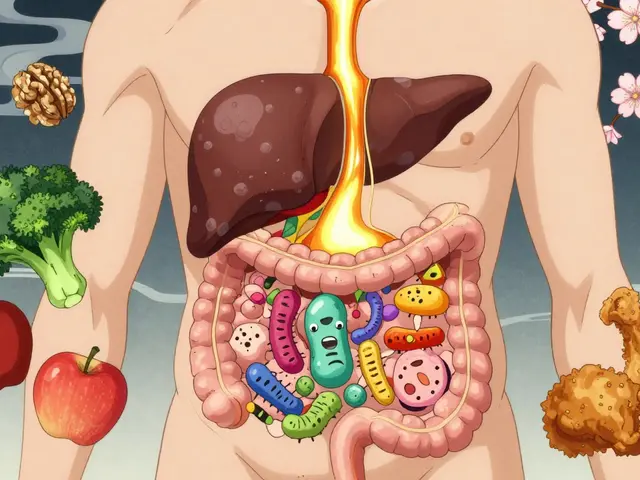
Your digestive system isn’t just a pipe for food. It’s a complex chemical environment that reacts differently depending on what’s in it. When you eat, your stomach acid drops from a strong pH of 1-2 to a much milder 3-5. That might sound small, but for some drugs, it’s enough to break them down before they can be absorbed. Food also slows down how fast your stomach empties. A high-fat meal can delay that process by up to two hours. And bile, released when you eat fat, helps dissolve certain medicines so your body can use them better. Some drugs need that acidic environment to dissolve. Others need fat to be absorbed. Some get blocked by calcium in milk or iron in your multivitamin. It’s not magic-it’s chemistry. And if you ignore it, you might as well be throwing money away.Medications That Must Be Taken on an Empty Stomach
These drugs lose effectiveness if taken with food-and sometimes, the drop is dramatic.- Levothyroxine (Synthroid): Used for hypothyroidism, this drug is absorbed 20-50% less when taken with food. A 2022 meta-analysis found that taking it with breakfast is like missing nearly a quarter of your daily dose. Many patients see wild swings in their TSH levels until they switch to taking it first thing in the morning, 30-60 minutes before anything else.
- Alendronate (Fosamax): This osteoporosis drug needs an empty stomach to be absorbed properly. Food cuts absorption by 60%. Even coffee, orange juice, or water with calcium can interfere. You must wait at least 30 minutes after taking it before eating or drinking anything besides plain water.
- Sucralfate (Carafate): This ulcer coating agent only works if it’s on bare stomach lining. Food blocks it from sticking where it’s needed. Take it 1 hour before meals.
- Ampicillin: A common antibiotic, it’s absorbed 35% less when taken with food. Peak levels drop, and total exposure (AUC) falls by 28%. Take it 30 minutes before or 2 hours after eating.
- Zafirlukast (Accolate): Used for asthma, this drug’s absorption drops 40% with food. The FDA label says: take at least 1 hour before or 2 hours after meals.
- Omeprazole (Prilosec) and Esomeprazole (Nexium): These proton pump inhibitors work by blocking acid production triggered by food. If you take them after eating, they’re too late. Take them 30-60 minutes before breakfast. (Note: Pantoprazole is an exception-it works fine with or without food.)
Medications That Need Food to Work Right
Some drugs don’t just tolerate food-they need it. Skip the meal, and you risk side effects or reduced benefit.- NSAIDs (Ibuprofen, Naproxen): These painkillers irritate the stomach lining. Taking them without food increases your risk of ulcers by 50-70%. The American College of Gastroenterology says up to 20,000 hospitalizations a year from NSAID damage could be prevented with simple food timing.
- Aspirin (high-dose): For pain relief, taking aspirin with food cuts stomach irritation from 25% down to 8%. That’s a huge difference if you’re on it regularly.
- Duloxetine (Cymbalta): This antidepressant causes nausea in many people. Taking it with food reduces nausea by 30%, making it easier to stick with the treatment.
- Atorvastatin (Lipitor) and Simvastatin (Zocor): These cholesterol drugs absorb better with food. But here’s the catch: grapefruit juice. It can spike statin levels by 300-500%, raising the risk of muscle damage (rhabdomyolysis) by 15 times. Avoid it completely.
- Griseofulvin: An antifungal, it needs fat to dissolve. Take it with a fatty meal-like peanut butter toast or cheese-to boost absorption by 50%.

The Science Behind the Rules
Why do these rules exist? It’s not random. Here’s what’s happening in your body:- Acid sensitivity: Penicillin V breaks down faster in higher pH levels. Food raises stomach pH, making it less effective.
- Chelation: Calcium, iron, and magnesium in food bind to tetracycline antibiotics, blocking absorption by up to 75%. Don’t take them with milk, yogurt, or iron pills.
- Gastric emptying delay: Fatty meals slow digestion. That’s bad for levothyroxine, which needs quick absorption. It’s good for drugs like griseofulvin, which need more time to dissolve.
- Bile stimulation: Fat triggers bile release. That’s why some drugs need a fatty meal-they dissolve better in bile-rich fluid.
What Happens When You Ignore the Rules
It’s not just about “not working.” Real harm happens.- A 2023 Drugs.com analysis of 12,450 patient reviews found that 37% of complaints about PPIs not working were tied to taking them after meals.
- In a 2022 Express Scripts survey of 10,000 people, 65% admitted ignoring food instructions. Of those, 41% reported reduced effectiveness, and 29% had worse side effects.
- Thyroid patients who took Synthroid with breakfast had TSH levels so high, doctors had to increase their dose by 30% just to reach normal levels.
- NSAID users who skipped food had stomach pain 73% of the time, leading to ER visits and missed work.
How to Get It Right Every Time
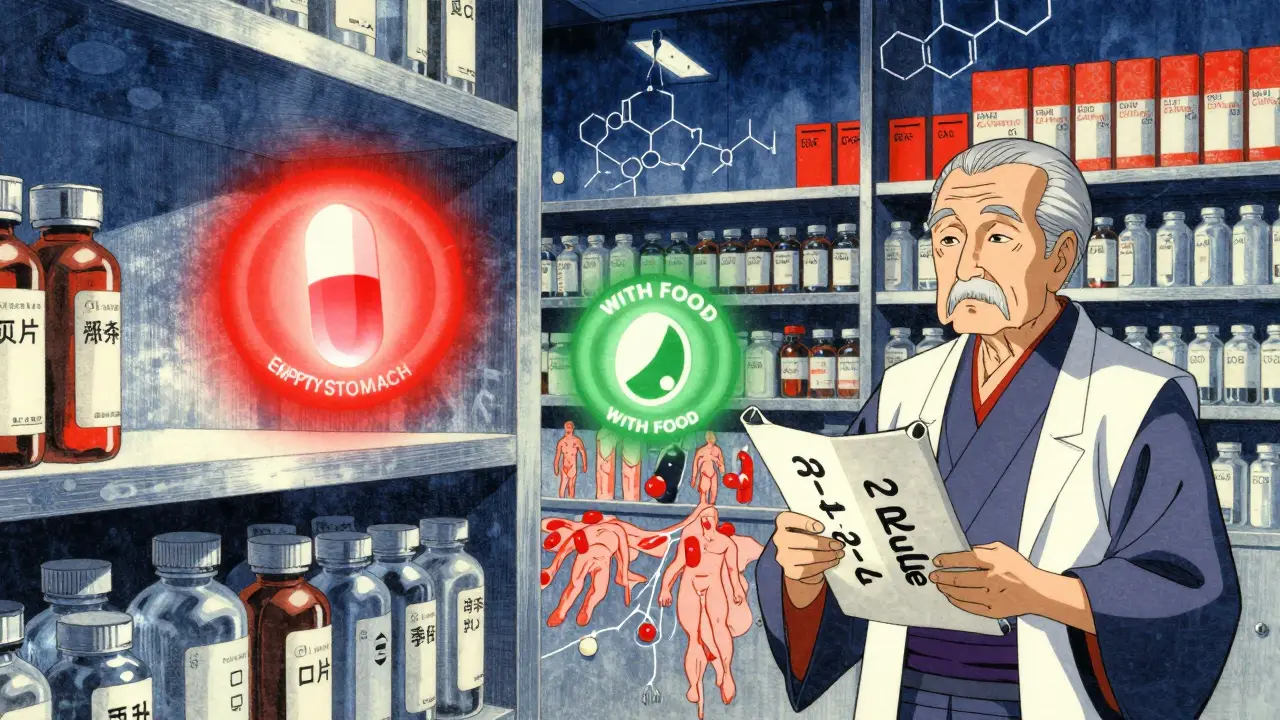
You don’t need to be a pharmacist to get this right. Here’s how:- Use the 2-1-2 Rule: For empty stomach meds, take them 2 hours after eating, or 1 hour before your next meal. If you’re unsure, wait 2 hours after eating.
- Label your pills: Use color-coded stickers-red for empty stomach, green for with food. A 2021 study showed this boosted correct use from 52% to 89%.
- Use a pill organizer: Separate AM and PM doses. Label each compartment: “Before Food” or “With Food.” One study found this improved adherence by 35%.
- Use apps: Medisafe and GoodRx now send alerts: “Take your Synthroid now-wait 60 minutes before coffee.” Users saw a 28% drop in errors.
- Stagger your doses: If you take both empty-stomach and food-required meds, space them out. Take Synthroid at 7 AM, then breakfast at 8 AM, then your ibuprofen with breakfast.
- Ask your pharmacist: Pharmacists are far more likely to explain food timing than doctors. One JAMA study found 92% of pharmacists gave clear instructions vs. only 45% of physicians.
What’s Changing in the Future
Science is catching up. New drug formulations are being designed to ignore food entirely.- Johnson & Johnson’s Xarelto Advanced uses a pH-sensitive coating that works the same whether you eat or not. It cuts variability from 35% to just 8%.
- University of Michigan researchers are testing nanoparticles that stick to the stomach wall, bypassing acid and food effects. Early results for levothyroxine show 92% consistent absorption.
- The FDA is considering dropping food-effect testing for 37% of generic drugs where data shows no real difference.
As one expert put it: “New tech helps, but knowing when to take your pill is still the most powerful tool you have.”
Can I take my medication with just a sip of water?
Yes-plain water is fine for almost all medications, whether taken with food or on an empty stomach. The issue isn’t water-it’s food, coffee, milk, juice, or supplements. Stick to water unless your doctor or label says otherwise.
What if I forget and take my pill with food?
Don’t panic. If you took a pill that should’ve been on an empty stomach, don’t double up. Wait until your next scheduled dose and go back to the correct timing. If you took a food-requiring drug without food, you’re likely fine for one dose-but make sure to follow instructions next time. Missing one dose won’t ruin your treatment-but doing it regularly might.
Does coffee interfere with medications?
Yes, especially with levothyroxine. Coffee-even black coffee-can reduce absorption by up to 30%. Cream, milk, or sugar make it worse. Wait at least 60 minutes after taking Synthroid before drinking coffee. For other meds, check the label, but if in doubt, wait.
Can I take vitamins with my medications?
Not always. Calcium, iron, magnesium, and zinc can block absorption of antibiotics like tetracycline and thyroid meds. Take vitamins at least 2 hours before or after your medication. If you’re on multiple prescriptions, ask your pharmacist for a timing schedule.
Are there any medications that don’t care about food?
Yes. Many common drugs like acetaminophen (Tylenol), most antihistamines, and some blood pressure pills work fine with or without food. But never assume. Always check the label or ask your pharmacist. The only safe assumption is that you don’t know-until you check.
Final Takeaway
Food isn’t the enemy. It’s a partner in your treatment. Getting the timing right doesn’t require a science degree-just attention. Your pills aren’t just chemicals. They’re tools. And like any tool, they work best when used the right way.Next time you reach for your meds, pause. Ask: “Should I take this before, with, or after food?” A 30-second check could mean the difference between feeling better-and feeling nothing at all.



Okay but let’s be real-how many of us actually read the tiny print on the pill bottle? I took my Synthroid with my oat milk latte for three years until my TSH spiked to 18. My endo looked at me like I’d just admitted to feeding my cat Xanax. Now I drink water, wait an hour, then enjoy my coffee like a free person. Also, why is coffee the villain here? It’s just beans. 😭
Food rules are for people who dont know what theyre doing
I appreciate how this breaks down the science without making you feel dumb. My grandma takes six different meds and I used to just hand her the pill organizer with no context. Now I explain why her blood pressure med needs food and her thyroid med needs fasting. She says it’s like teaching her to ride a bike again-but she’s finally feeling better. Small wins.
Wow. So the entire pharmaceutical industry is just… waiting for someone to write this? Like, I get it’s chemistry but why is this not on every prescription label in neon lights? I took my Zafirlukast with a bagel for six months and thought I was just ‘bad at asthma’. Turns out I was just bad at reading. Also, who wrote this? I’m in love.
America always overcomplicating simple things. In Nigeria we just swallow pills with water and pray. No labels no apps no stickers. You think your body is weak? Maybe you need to stop being so soft.
This is just pharmacokinetics 101 but dressed up like a self help book. You're not special. Your body isn't a magic box. The data is clear. Stop romanticizing adherence.
Just wanted to say I’ve been taking my Lipitor with peanut butter toast for years and never knew why. I thought it was just ‘better with food’ like a vitamin. Turns out it’s because of bile. I just learned something that could’ve saved me from muscle pain. Thanks for the clarity.
Good info. Simple. Clear. No fluff. I used to take my ibuprofen on an empty stomach because I was in a rush. Got stomach cramps every time. Now I eat a banana first. No more ER trips. Just do the thing. It’s not hard.
OMG YES!! I started using those color-coded stickers-RED for empty stomach, GREEN for with food-and my life changed. I even made a little chart for my fridge. My husband laughs but now he reminds me when I’m rushing out the door. I’ve never felt this in control of my meds. Also-please tell me I’m not the only one who cries when the pill organizer doesn’t fit? 😭🫂
It’s funny how we treat medicine like it’s magic, but ignore the most basic physics of absorption. The body doesn’t care about your schedule-it cares about pH, bile, and chelation. We’ve outsourced our biology to convenience. Maybe the real problem isn’t the pill-it’s that we expect our bodies to adapt to our chaos, not the other way around.
I take my levothyroxine with water but I always forget if I should wait before coffee or after or if coffee even matters and now I'm just confused again
Thank you for this 🙏 I’ve been taking my Cymbalta with toast for months and didn’t realize it was cutting the nausea. Also-grapefruit juice is a demon 🍊☠️ I just threw out my whole jug. You just saved me from a hospital trip. 🫶
So you’re saying the reason your meds don’t work is because you’re lazy? Congrats. You’ve discovered that people who don’t follow instructions have worse outcomes. Groundbreaking. Meanwhile, my insurance won’t cover the fancy pH-coated version, so I’ll just keep dying quietly.
Wait-so you’re telling me I can’t take my Synthroid with my morning kombucha? That’s not water, that’s a cult beverage. 😭 I’ve been doing this wrong for years. I think I just broke my thyroid.