
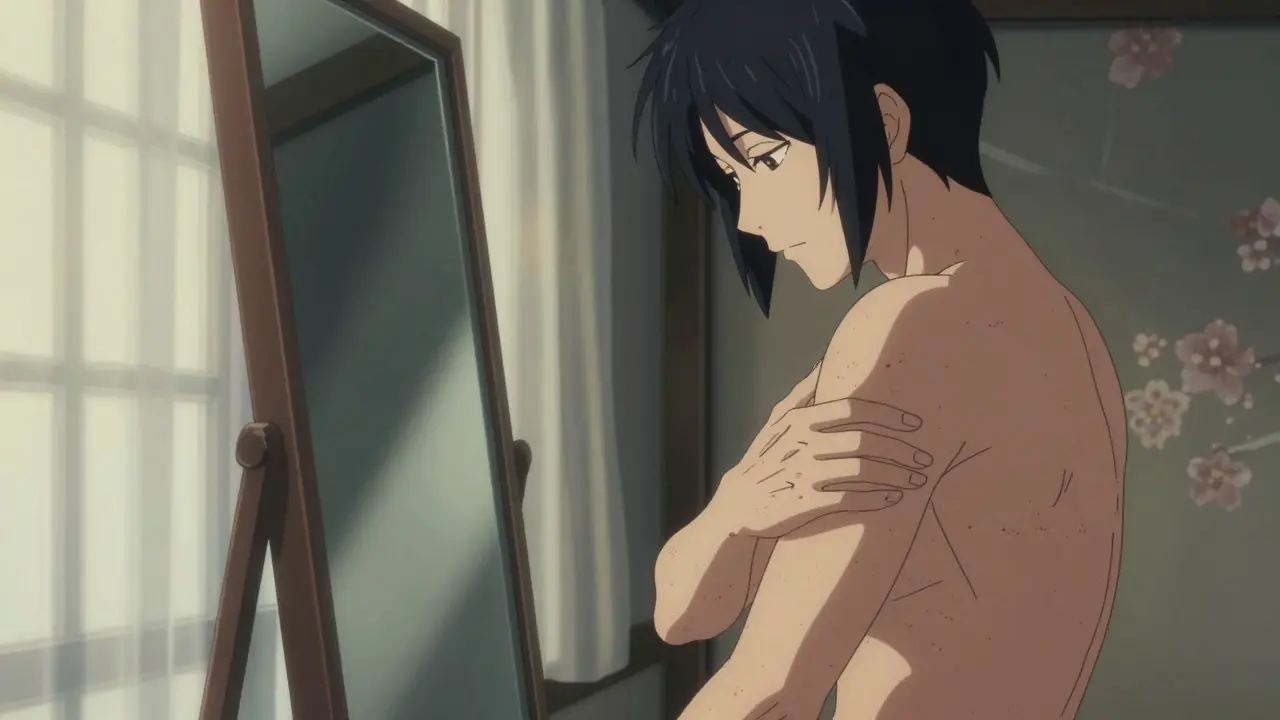
Think your skin just has bad luck? Those tiny, rough bumps on your upper arms or thighs aren’t dirt, acne, or allergies. They’re keratosis pilaris-a harmless but stubborn condition that affects up to 70% of teens and 40% of adults. It’s not contagious. It won’t turn into cancer. But it can make you feel self-conscious, especially in shorts or swimsuits. The good news? You can manage it. Not with magic, but with science-backed steps that actually work.
What Keratosis Pilaris Really Is
Keratosis pilaris (KP) happens when your skin makes too much keratin-the protein that protects your skin-and it gets stuck in hair follicles. Instead of flaking off naturally, it builds up into tiny plugs. Each bump is about the size of a pinhead, feels like sandpaper, and often looks skin-colored, red, or brown. It’s not an infection. It’s not eczema. It’s a genetic skin quirk. You’ll most often see it on the backs of your upper arms. About 92% of people with KP get it there. Thighs and buttocks are next. It’s rare on the face, but possible. The bumps don’t hurt, but they can itch slightly, especially in dry weather. And yes, they’re why so many people call it “chicken skin.” It usually starts in childhood, gets worse in puberty, and often fades by your 30s. But for 3 in 10 people, it sticks around. If you have eczema, you’re more likely to have KP-about half of eczema patients do. And if your mom or dad had it, you’ve got a 50-70% chance of getting it too. That’s because of a gene mutation called filaggrin, which weakens your skin’s natural barrier.Why Winter Makes It Worse
KP doesn’t care about seasons-until winter hits. When humidity drops below 40%, your skin dries out. That’s when those little bumps become more visible, rougher, and itchier. In Adelaide, where winter air is dry and indoor heating is common, many people notice KP flaring up from May to August. Hot showers make it worse. They strip natural oils and leave skin parched. Wearing tight synthetic fabrics rubs against the bumps and irritates them. And if you’re scrubbing with a loofah or harsh exfoliating glove, you’re not helping-you’re triggering inflammation that leads to darker spots.What Doesn’t Work (And Why)
Lots of products promise to “cure” KP. They don’t. There’s no cure. But some treatments are backed by real studies. Others are just marketing. Avoid these:- Harsh scrubs with walnut shells or sugar crystals-these tear the skin and cause more redness.
- Over-the-counter “miracle” creams that say “cure” or “remove in days”-the FDA has issued 17 warning letters to companies making these claims since 2022.
- Using acne treatments like benzoyl peroxide-KP isn’t caused by bacteria or oil, so these do nothing.
What Actually Works
You need two things: exfoliation and hydration. Not fancy. Not expensive. But consistent. Lactic acid (10-12%) is one of the most effective ingredients. It breaks down the keratin plugs gently. A 2023 Mayo Clinic review found 40-60% of users saw smoother skin after 4-6 weeks. AmLactin, a popular 12% lactic acid lotion, has over 1,200 positive reviews on Reddit’s skincare forums. Users report noticeable softening after 8-12 weeks of daily use. Urea (10-20%) pulls moisture into the skin and dissolves dead cells. Healthdirect Australia’s 2023 study showed 65% of users had less scaling after 8 weeks. CeraVe SA Lotion, which combines urea with salicylic acid and ceramides, has a 4.5/5 star rating from over 2,100 reviewers. People say it works best when applied right after showering. Glycolic acid (8-12%) is another alpha-hydroxy acid that sloughs off dead skin. Cleveland Clinic data shows 30-50% improvement after 12 weeks. Paula’s Choice 8% AHA Lotion is a top pick for its balanced formula and low irritation rate. Retinoids like tretinoin (0.025-0.1%) are powerful but tricky. They speed up cell turnover and can reduce bumps by 70% over 3-6 months. But 40% of users get redness, peeling, or burning at first. A 2023 survey of 450 KP patients found 73% quit within 6 weeks because of irritation-even though 85% would’ve seen results if they’d stuck with it.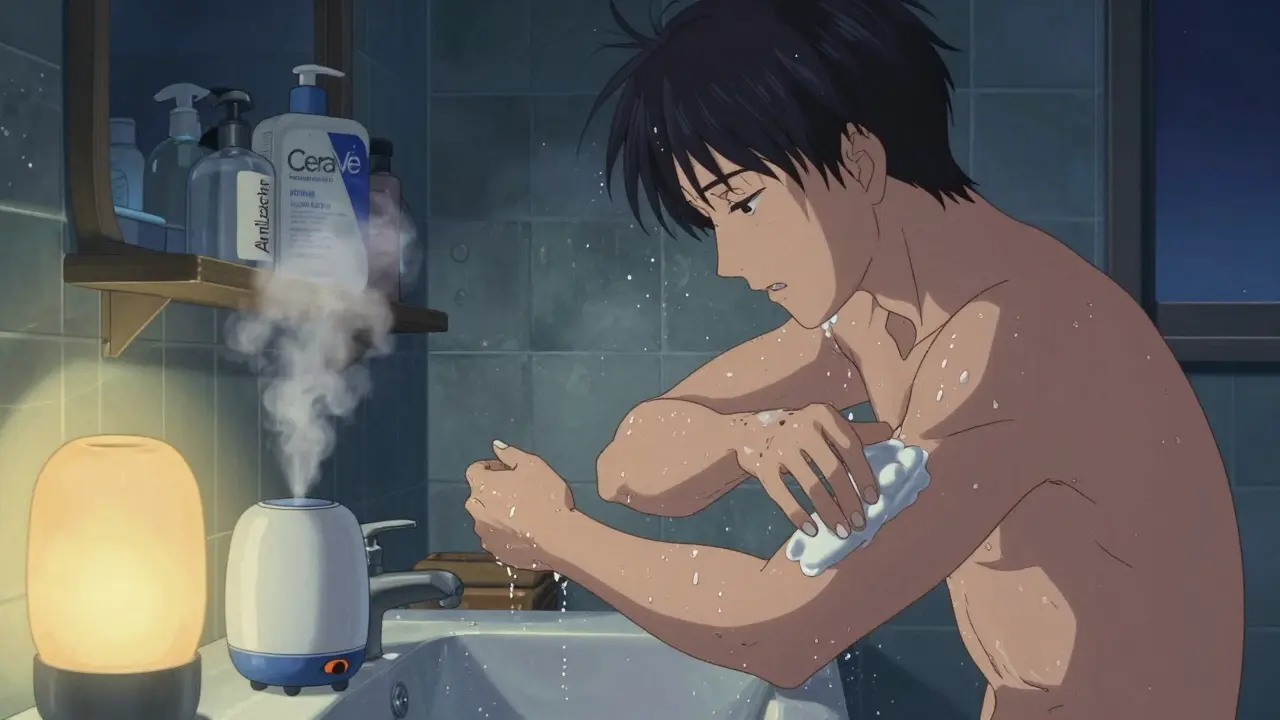
How to Apply Treatments Right
It’s not just what you use-it’s how you use it.- Apply exfoliants (lactic acid, urea, glycolic acid) once a day, in the evening.
- Shower with lukewarm water-not hot. Hot water dries you out.
- Pat skin dry, don’t rub.
- Apply your treatment to slightly damp skin within 3 minutes of getting out of the shower. That’s when your skin is 50% more absorbent, according to Mayo Clinic.
- Follow with a ceramide-rich moisturizer. Ceramides repair your skin barrier. Dr. Hadley King says this combo gives 30% better long-term results than exfoliants alone.
- Don’t skip days. Consistency matters more than strength. A 2022 study found only 38% of KP patients kept up twice-daily care after 3 months.
Laser and Other Advanced Options
If your KP is red and inflamed, pulsed-dye laser therapy can help. Heights Dermatology’s 2023 data shows it reduces redness by 50-75% in 80% of patients after 3-4 sessions. But it’s expensive-$300-$500 per session-and not covered by Medicare or NHS. It’s also not a cure. You’ll need maintenance. Newer options are coming. In early 2024, a study in the Journal of Cosmetic Dermatology found liposomal lactic acid (encapsulated to release slowly) improved tolerance by 40%. LED light devices cleared by the FDA in 2023 show promise, reducing follicle blockage by 35% in 8 weeks. And genetic testing for filaggrin mutations? Still in development, but could one day help personalize treatments.Realistic Expectations
Here’s the truth: You won’t get perfect skin. Not even close. Even with perfect care, only 28% of people clear KP completely by age 30. About 41% see big improvement. And 31% still need to manage it. Dr. Caroline Robinson from Chicago Cosmetic Surgery Center says it best: “The goal isn’t perfection. It’s comfortable, smoother skin.” If you’ve been trying for months and see no change, you’re not failing. KP is stubborn. But you’re not alone. Over 1.2 billion people worldwide have it. You’re managing a genetic quirk-not a disease.
Simple Daily Routine That Works
Here’s what to do every day:- Morning: Wash face and body with a gentle, fragrance-free cleanser. Pat dry.
- Morning: Apply a ceramide moisturizer all over arms, thighs, and buttocks.
- Evening: After a lukewarm shower, apply lactic acid or urea cream to damp skin.
- Evening: Within 3 minutes, follow with ceramide moisturizer.
- Weekly: Use a soft washcloth to gently glide over bumps-no scrubbing.
- Year-round: Keep indoor humidity at 40-50% with a humidifier, especially in winter.
- Wear loose, cotton clothes. Avoid synthetics.
What to Buy
You don’t need a pharmacy full of products. Stick to these proven options:- Lactic acid: AmLactin 12% Lotion ($18-$22 for 16 oz)
- Urea + salicylic acid: CeraVe SA Lotion ($15-$20 for 16 oz)
- Glycolic acid: Paula’s Choice 8% AHA Lotion ($32 for 8 oz)
- Ceramide moisturizer: CeraVe Moisturizing Cream or Vanicream Daily Facial Moisturizer
When to See a Dermatologist
You don’t need to see one unless:- Your skin is painful, bleeding, or infected.
- It’s spreading to your face or other unusual areas.
- You’ve tried everything for 3 months with zero improvement.
- You’re feeling anxious or depressed because of how your skin looks.
Final Thought
Keratosis pilaris isn’t a flaw. It’s just your skin doing its own thing. It doesn’t define you. But it can be managed-with patience, the right products, and realistic goals. You don’t need to be flawless. You just need to feel comfortable in your own skin. And that’s totally possible.Can keratosis pilaris be cured?
No, keratosis pilaris cannot be cured. It’s a genetic condition caused by excess keratin buildup in hair follicles. While treatments like lactic acid, urea, and retinoids can significantly improve skin texture and reduce bumps, symptoms typically return within 2-4 weeks if you stop using them. Most people see improvement, but long-term management is needed.
Is keratosis pilaris the same as acne?
No, keratosis pilaris is not acne. Acne is caused by clogged pores from oil and bacteria, leading to pimples and blackheads. KP is caused by keratin plugs blocking hair follicles. It doesn’t involve oil or infection. Treatments for acne, like benzoyl peroxide or salicylic acid cleansers, won’t fix KP. KP needs gentle exfoliation and hydration, not antibacterial or oil-control products.
Why does KP get worse in winter?
Dry air lowers humidity, which strips moisture from your skin. When skin dries out, keratin becomes harder and more likely to build up in follicles. Indoor heating makes it worse. In places like Adelaide, where winter humidity drops below 40%, KP bumps become more visible and rougher. Using a humidifier and moisturizing right after bathing helps reduce winter flare-ups by up to 60%.
Can I use scrubs or loofahs on KP skin?
Avoid harsh scrubs, loofahs, or exfoliating gloves. A 2022 American Academy of Dermatology study found that 68% of people who used aggressive physical exfoliation ended up with worse redness and dark spots from inflammation. Instead, use chemical exfoliants like lactic acid or urea. If you want physical exfoliation, gently glide a soft washcloth over bumps once a week-no scrubbing.
How long until I see results from KP treatments?
Most people see noticeable improvement in 4-12 weeks, depending on the product. Lactic acid and urea creams show results in 4-8 weeks. Glycolic acid takes about 12 weeks. Retinoids can take 3-6 months. The key is consistency. Stopping and starting makes it worse. Even after you see improvement, keep using your routine to prevent bumps from coming back.
Are expensive KP creams worth it?
Not usually. Many high-priced creams just repackage the same active ingredients found in affordable options. AmLactin (12% lactic acid) costs under $20. CeraVe SA Lotion (with urea and salicylic acid) is $15-$20. Both have strong clinical backing. Paying $50+ for a brand-name product rarely gives better results. Look for the active ingredient, not the label.
Will keratosis pilaris go away on its own?
For many people, yes-especially teenagers. About 28% clear completely by age 30. Another 41% see major improvement. But 31% still have noticeable bumps into adulthood. Even if it fades, it can come back if you stop skincare. Managing it with regular moisturizing and exfoliation gives you control, whether it clears on its own or not.



i’ve had kp since i was 12 and honestly? amlactin saved my life. not magic, not hype-just lactic acid and patience. i stopped scrubbing, started moisturizing right after showers, and now my arms don’t look like a lizard’s underpants. 🤷♀️
This post is just another corporate skincare scam. No cure? Of course not. Big Pharma doesn’t want you to fix it. They sell you lotion so you keep buying it.
I’m so glad someone finally broke this down without fluff! Seriously, the ‘lukewarm shower + damp skin application + ceramide seal’ routine? Game changer. I tried everything-scrubs, oils, expensive creams-and this is the only thing that didn’t make me want to scream. Consistency is everything. Don’t quit at week 2.
Urea works but retinoids are a nightmare. I lasted 3 weeks before my skin looked like a boiled lobster. Worth it? Maybe. Worth the burn? Not even a little.
kp is just evolution’s way of saying u r weak. my grandpa had it and he never used cream. he just lived. maybe u need less lotion and more grit
Mate, I’m from Adelaide and you nailed the winter thing. My arms turn into sandpaper every June. Humidifier + CeraVe SA = my new BFF. No drama, no magic. Just science. ☀️💧
I find it deeply concerning that people are being led to believe that ‘gentle exfoliation’ is a legitimate solution. This is a genetic disorder, not a skincare inconvenience. The normalization of cosmetic ‘management’ as a substitute for medical understanding is alarming.
Lactic acid? Urea? Please. I tried all that. Then I started drinking apple cider vinegar and my skin cleared in 3 days. Science is just a suggestion anyway.
This is why America is falling apart. We treat skin conditions like they’re fashion trends. In my country, we accept our bodies as they are. Not this ‘fix-it’ culture. Pathetic.
So we’re paying $20 for lactic acid because the skin industry told us to? Interesting. I wonder how many people would still use this if the word ‘keratosis’ was replaced with ‘normal human skin’.
I’m a dermatologist. Let me be clear: 90% of these ‘Reddit-approved’ routines are dangerously oversimplified. Lactic acid is fine for mild cases. But if you have red, inflamed, itchy KP, you’re not just ‘dry’-you’ve got underlying barrier dysfunction. Topical steroids sometimes needed. Don’t self-diagnose like you’re on TikTok.
I’ve been using this routine for 8 months and my skin still looks like a potato skin. I’m not broken. The world is. Why do we even care? Why does my arm texture matter more than my soul?
Thank you for this thoughtful, evidence-based breakdown. 🙏 Many people feel shame over KP-it’s not vanity to want comfort. Your tone is compassionate, your science is solid. This is exactly the kind of content the internet needs more of. Keep going!
The dermatologist comment is spot on. I tried the lactic acid for 2 months, then my skin started flaking like a snow globe. Went to a derm. She gave me a low-dose steroid cream for 2 weeks. My KP went from ‘ugh’ to ‘meh’ in days. Don’t be a hero. See a professional.
I’m the one who said ‘consistency is everything’-and I’m here to say: I didn’t quit. Even when my skin looked worse. Even when I wanted to give up. 14 weeks in, and I can wear sleeveless tops without anxiety. It’s not perfect. But it’s mine. And that’s enough.