
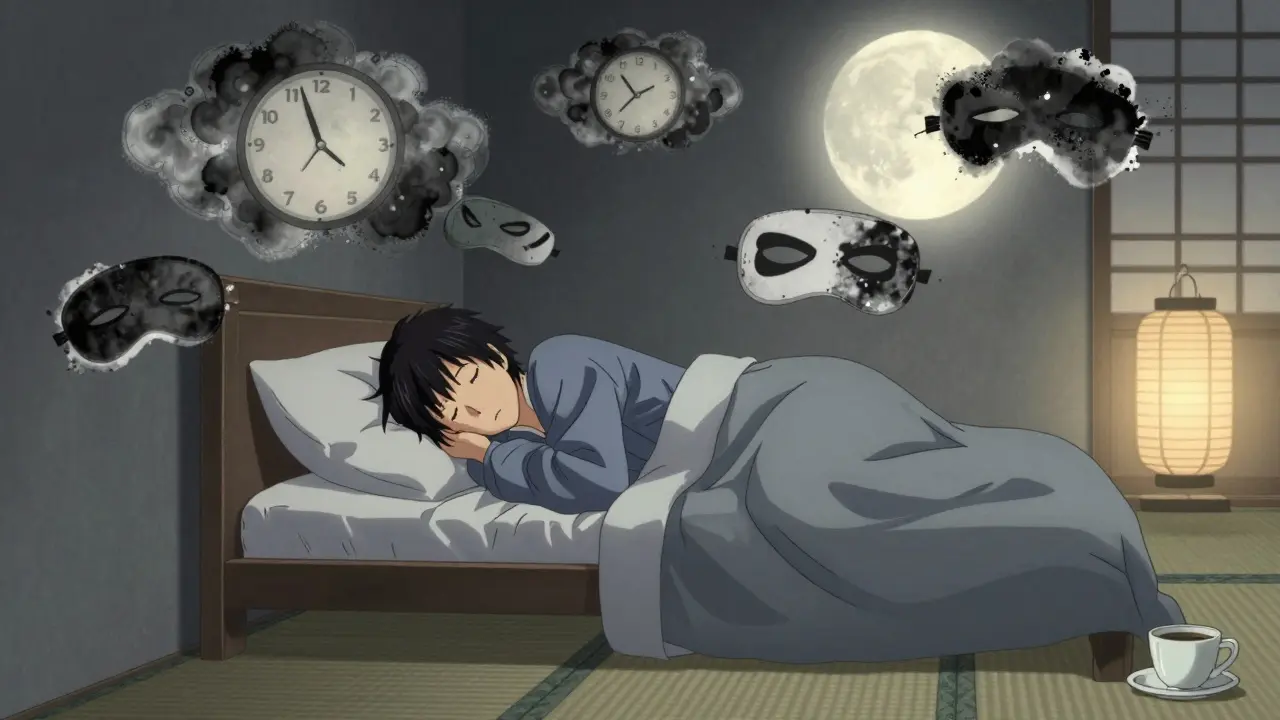
For millions of people, lying awake at night isn’t just frustrating-it’s exhausting. You count sheep, check your phone, toss and turn, and still wake up feeling like you didn’t sleep at all. If this sounds familiar, you’re not alone. Chronic insomnia affects about 1 in 3 adults, and most turn to sleep pills for quick relief. But here’s the truth most doctors won’t tell you: sleep medications don’t fix insomnia-they just mask it. And they come with risks you might not realize.
Why Sleep Medications Don’t Solve Insomnia
Medications like zolpidem (Ambien), eszopiclone (Lunesta), and zaleplon (Sonata) work fast. They help you fall asleep within 30 minutes. That’s why they’re prescribed so often-47% of all insomnia prescriptions in the U.S. go to zolpidem alone. But here’s the catch: they don’t teach your brain how to sleep. They just sedate it.Within weeks, your body builds tolerance. A 2021 FDA review found that 42% of users need higher doses after just 8 weeks to get the same effect. And when you stop? Rebound insomnia hits hard. You sleep worse than before. That’s why most people end up on these drugs for months or even years-trapped in a cycle of dependence.
Side effects are real too. Morning grogginess, dizziness, memory lapses, even sleepwalking. One 2023 study found that 1 in 5 users reported next-day impairment. For older adults, the risk of falls doubles. And while these drugs help you fall asleep, they don’t improve sleep quality. You might be in bed longer, but your deep, restorative sleep stays low.
What CBT-I Actually Does
Cognitive Behavioral Therapy for Insomnia, or CBT-I, is the opposite of a pill. It doesn’t force sleep. It rebuilds it. Developed in the 1980s and backed by over 100 clinical trials, CBT-I is now the gold standard recommended by the American College of Physicians and the American Academy of Sleep Medicine.It’s not just one technique. It’s a system. Five core parts work together to retrain your brain and body:
- Sleep Restriction Therapy (SRT): You limit time in bed to match how much you actually sleep. If you’re only sleeping 5 hours, you’re only allowed 5 hours in bed-even if you feel tired. Sounds cruel? It is. But within weeks, your sleep efficiency jumps. Studies show this single component accounts for 40% of CBT-I’s success.
- Stimulus Control Therapy (SCT): Your bed is only for sleep and sex. No reading, no scrolling, no watching TV. If you can’t fall asleep in 20 minutes, you get up. You don’t go back until you’re sleepy. This breaks the mental link between your bed and wakefulness.
- Cognitive Restructuring: You challenge thoughts like, “If I don’t sleep 8 hours, I’ll fail at work.” These thoughts create anxiety, which keeps you awake. CBT-I teaches you to dispute them with evidence, not fear.
- Relaxation Training: Breathing exercises and muscle relaxation lower your body’s stress response. Polysomnography data shows a 27% drop in hyperarousal markers after just 6 weeks.
- Sleep Hygiene: Not just “avoid caffeine.” It’s about consistent wake times-even on weekends-light exposure, and temperature control. This isn’t about willpower. It’s about biology.
Most people do CBT-I over 6 to 8 weekly sessions. You track your sleep in a diary. You adjust based on real data, not guesses. And the results? Lasting.
The Numbers Don’t Lie: CBT-I vs. Medication
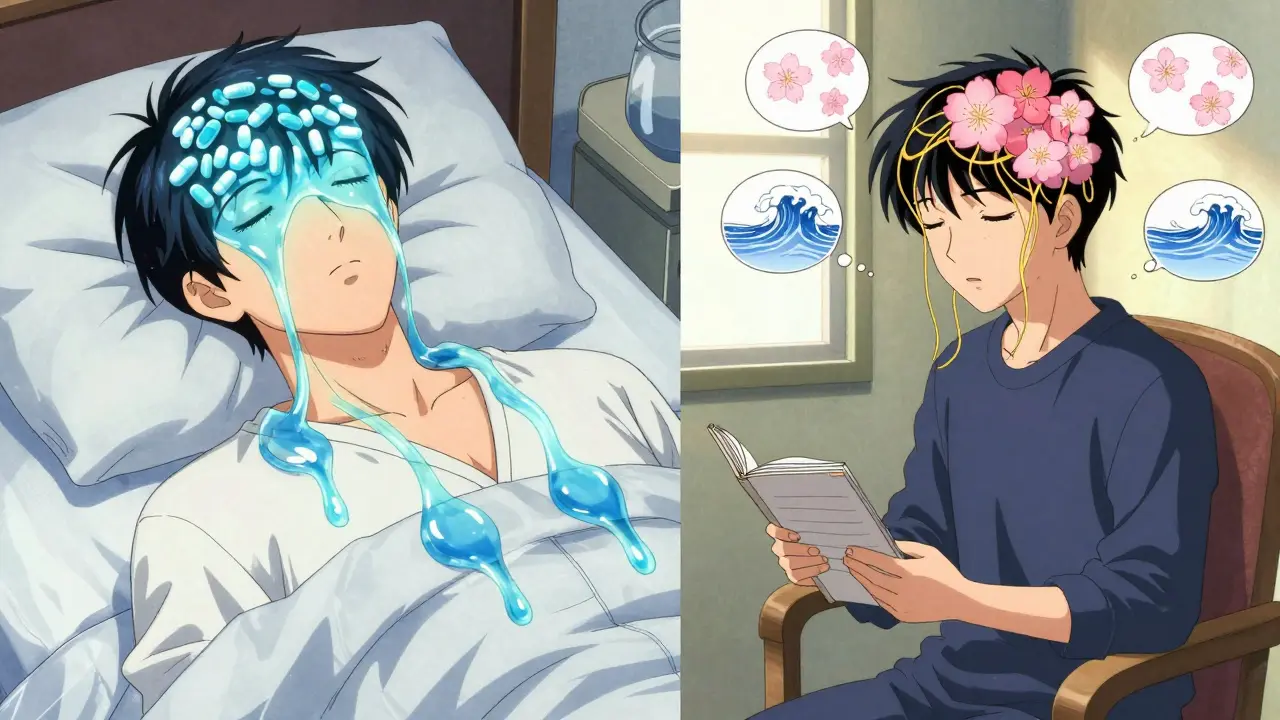
A 2023 JAMA Network Open study followed over 4,000 people with insomnia. Those who did digital CBT-I improved 3.2 points more on the Insomnia Severity Index than those on medication alone. That’s not subtle. That’s meaningful.At 3 months? CBT-I still wins. By 12 months, 68% of CBT-I users were still sleeping well. Only 32% of medication users were. That’s more than double the long-term success rate.
And here’s the kicker: combining CBT-I with medication gives the best short-term results. But even then, when the meds are stopped, the CBT-I group keeps sleeping well. The medication group? Back to square one.
A 2024 study in Nature Digital Medicine found that patients who completed at least 80% of the cognitive restructuring exercises saw a 62% greater drop in insomnia severity than those who didn’t. This isn’t placebo. This is rewiring.
Why CBT-I Feels Hard-And Why It’s Worth It
Let’s be honest: CBT-I isn’t easy. Sleep restriction feels brutal. For weeks, you’re tired. You’re irritable. You wonder if it’s working. Reddit user u/SleepWarrior89 said: “After 6 weeks of strict sleep restriction, my sleep efficiency jumped from 68% to 92%. The hardest part was sticking to the fixed wake time on weekends.”That’s the turning point. You’re not fighting sleep-you’re rebuilding trust in it. Your body learns: “If I’m in bed, I’m sleeping.” Your brain learns: “I don’t need to panic about not sleeping.”
41% of people quit early because of the initial discomfort. But those who stick with it? 72% say they’d recommend CBT-I to a friend. Why? Because they wake up without pills. Without grogginess. Without fear.

Accessing CBT-I Today
You don’t need a therapist in a clinic. Digital CBT-I platforms like Sleepio and Somryst are FDA-cleared as prescription digital therapeutics. They’re structured, evidence-based, and available 24/7. A 2023 review found 65-70% completion rates-comparable to in-person therapy.Medicare started covering dCBT-I in 2022. UnitedHealthcare now covers it for 28 million members. In Australia, private insurers are starting to follow. The cost? Often less than a month’s supply of zolpidem.
And it works for everyone. Older adults? A 2024 study showed 82% of those aged 65-85 completed digital CBT-I with minimal help. Teens? CBT-I improved their sleep onset by nearly 30 minutes and added 45 minutes of total sleep. Cancer survivors? Pregnant women? The same principles apply.
The Real Barrier Isn’t Effectiveness-It’s Access
Only 15% of U.S. primary care doctors feel trained to deliver CBT-I. Insurance reimbursement is uneven. Many therapists don’t offer it. That’s why most people still get pills.But the tide is turning. The global CBT-I market is growing at 24.3% per year. Fortune 500 companies are adding it to employee wellness programs. And research keeps proving one thing: CBT-I doesn’t just help you sleep better. It helps you live better.
One 2023 study tracked people 10 years after CBT-I. Their insomnia severity scores were still 56% lower than before treatment. That’s not a temporary fix. That’s a permanent reset.
Is CBT-I right for me if I’ve been on sleep meds for years?
Yes. Many people who’ve relied on sleep medications for years see better results with CBT-I than they ever did with pills. In fact, combining CBT-I with tapering off medication often leads to the most sustainable outcomes. You don’t need to stop meds cold turkey-work with a provider to reduce them gradually while starting CBT-I. The goal is to replace dependence with skills.
How long until I see results from CBT-I?
Most people notice small improvements within 2-3 weeks, especially in sleep efficiency. But the real changes-like falling asleep faster, waking up less, and feeling rested-typically take 4-6 weeks. Sleep restriction, the most powerful component, feels hard at first. Stick with it. The body adapts faster than you think.
Can I do CBT-I on my own without a therapist?
Yes, if you use a validated digital platform like Sleepio, Somryst, or the NIH’s free sleep education tools. These are structured, step-by-step programs based on the same protocols used by clinicians. Self-guided CBT-I has been shown to be just as effective as in-person therapy for most people. The key is consistency-track your sleep, follow the rules, and don’t skip the exercises.
Why isn’t CBT-I more widely offered if it’s so effective?
The main barriers are training and reimbursement. Most doctors weren’t trained in CBT-I during medical school. And insurance pays more for a $15 pill than a $120 therapy session. But that’s changing. Medicare now covers digital CBT-I, and private insurers are following. As demand grows, so will access. You don’t have to wait for your doctor to offer it-start with a digital program today.
Does CBT-I work for shift workers or people with irregular schedules?
Yes, but it requires adaptation. CBT-I can be modified for shift work, jet lag, or irregular hours. The core principles-consistency, stimulus control, and cognitive restructuring-still apply. Instead of a fixed wake time, you anchor to your work schedule. For example, if you work nights, you maintain the same wake time after each shift, even on days off. A 2023 study in the Journal of Clinical Sleep Medicine confirmed CBT-I improved sleep quality in 71% of shift workers who followed a tailored protocol.




So let me get this straight... Big Pharma doesn't want you to sleep better because they make billions off pills?
Of course they don't teach CBT-I in med school. Why train doctors to fix problems when they can just write prescriptions?
They don't want you to know that a 6-week program costs less than a month's supply of Ambien.
And now Medicare's covering it? Bet that's because they realized how much they were spending on ER visits from people falling out of bed.
Don't be fooled. This is all a setup. Someone's pushing digital CBT-I apps because they own the patents.
Next thing you know, your sleep data gets sold to advertisers who target you with 'sleep aid' ads.
I've seen it before. They promise freedom then lock you into their ecosystem.
Just say no to corporate sleep. Go back to counting sheep. At least then you're not giving up your data.
I really appreciate this post. As someone from India who struggled with sleep for years, I tried everything from melatonin to Ayurvedic herbs.
What finally worked was a digital CBT-I program I found through a WHO-supported health initiative.
It wasn't easy - sleep restriction felt brutal at first. But after 5 weeks, I started waking up naturally without an alarm.
What surprised me most was how much my anxiety around sleep decreased. I stopped dreading bedtime.
It’s not magic. It’s science. And it’s accessible even without a therapist.
If you’re hesitant, just try one module a day. You’ve got nothing to lose but insomnia.
The evidence presented here is methodologically sound and aligns with current clinical guidelines.
The American College of Physicians’ 2016 recommendation for CBT-I as first-line treatment remains unequivocal.
Pharmacological interventions, while effective in the short term, carry significant risks including dependence, cognitive impairment, and increased mortality in elderly populations.
The 2023 JAMA study referenced demonstrates a clinically significant difference in ISI scores, with effect sizes exceeding conventional thresholds for therapeutic efficacy.
Furthermore, the durability of outcomes at 12 months underscores the neuroplastic changes induced by CBT-I, as opposed to the transient pharmacological modulation seen with sedative-hypnotics.
It is regrettable that access remains limited due to systemic barriers in healthcare delivery and reimbursement structures.
Standardization of digital platforms under regulatory oversight is a necessary step toward equitable implementation.
I read this and just... cried.
I’ve been on zolpidem for 7 years. Not because I wanted to - because I was terrified of not sleeping.
CBT-I felt impossible. Like asking someone who’s scared of water to swim.
But I tried the sleep diary. Just for one week.
And then I realized - I wasn’t failing sleep. Sleep was failing me because I was fighting it.
When I stopped trying to force it, when I stopped checking the clock... things changed.
It’s not about willpower. It’s about trust.
And I finally trust my body again. 🌙
I’ve been doing CBT-I for 4 months and I’m not even sure it’s working anymore. I’m still tired. I’m still waking up at 3am. I don’t know if I’m doing it right. Maybe I’m just broken. Maybe I’m not meant to sleep. I’ve tried everything. I’ve read every article. I’ve followed every rule. And I’m still here. Awake. Again. Just... awake.
Let’s be honest - this is just another wellness-industrial complex scam.
CBT-I is expensive, time-consuming, and requires emotional labor most people can’t afford.
Meanwhile, a $12 pill gets you to sleep tonight. Who cares if you’re dependent? At least you’re functional.
And don’t get me started on ‘digital therapeutics’ - those apps are just glorified chatbots with sleep diaries.
Real medicine is pharmaceutical. Real healing is chemical.
This sentimental nonsense about ‘rebuilding trust’? That’s therapy-speak for ‘you’re not trying hard enough.’
Stop romanticizing struggle. Sometimes, you just need a pill.
I’ve been researching this for 18 months now and I’ve dug into every study, every clinical trial, every FDA review - and here’s what they don’t tell you:
The entire CBT-I industry is being funded by venture capital firms that also own sleep-tracking apps and wearable tech companies.
Think about it - if everyone started sleeping better naturally, who buys the $300 smart mattresses? Who subscribes to the $15/month sleep analytics platform?
The FDA cleared digital CBT-I? Sure. But who wrote the guidelines? People with stock in Somryst.
And don’t forget - zolpidem’s patent expired years ago. Now they’re pushing CBT-I to replace it with a subscription model.
It’s not about health. It’s about monetizing sleep.
I’ve seen the data. I’ve cross-referenced the funding sources. This isn’t medicine. It’s capitalism dressed in mindfulness pajamas.
And the worst part? People are falling for it. They think they’re being ‘empowered’ when they’re just being sold a new kind of dependency.
I did CBT-I after my son was born and I hadn’t slept through the night in 11 months.
It felt impossible. But I stuck with sleep restriction - even though I was a zombie.
Week 3, I woke up at 6:30am without an alarm.
Not because I wanted to. Because my body knew it was time.
That’s the thing no one talks about - it’s not about sleeping more. It’s about trusting your rhythm again.
It’s quiet. It’s simple. And it works.
America’s got it backwards. We’d rather pop a pill than fix our damn lifestyle.
People are on their phones till 2am, chugging energy drinks, and then wonder why they can’t sleep.
CBT-I isn’t the problem - our culture is.
Stop treating symptoms and start treating the root.
And for god’s sake, stop using your bed for Netflix.
It’s not rocket science. It’s basic biology.
And if you can’t follow a 6-week program, maybe you’re not ready to be an adult.