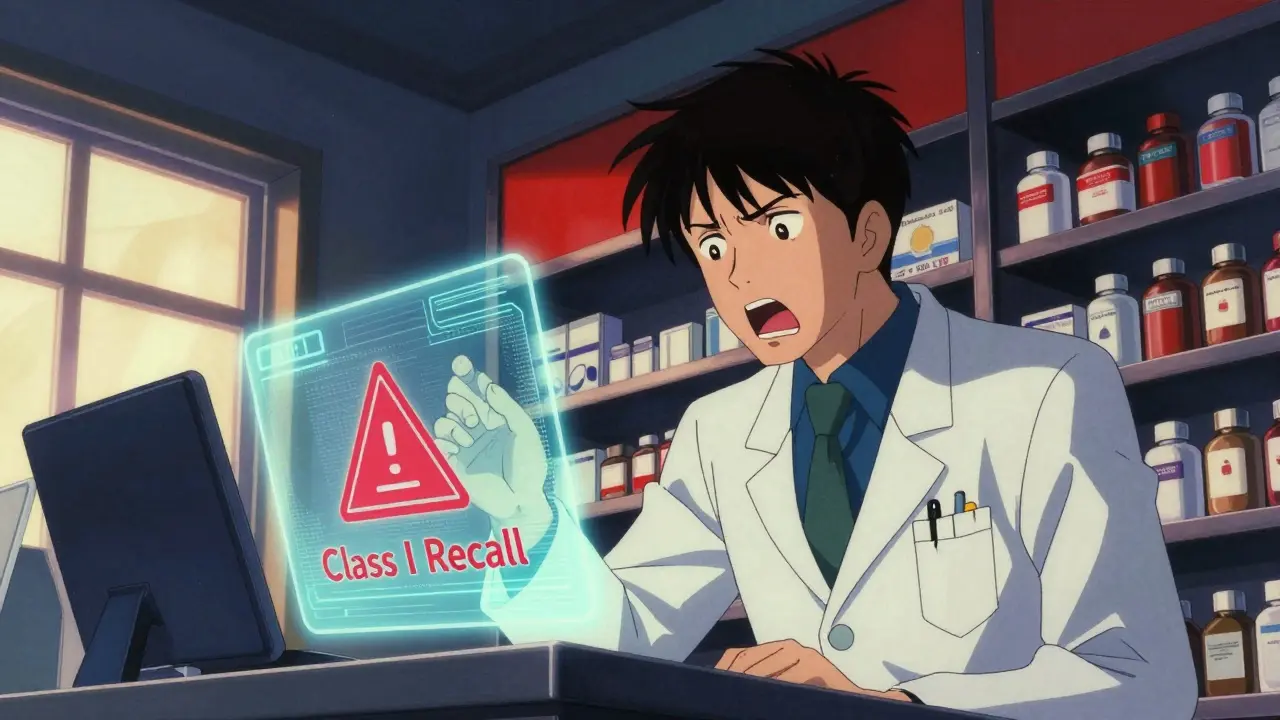
Imagine finding out that a medication you've been taking for months was recalled three weeks ago, but your pharmacy never mentioned it. It's a terrifying thought, but it happens more often than you'd think. Drug recalls aren't just a "manufacturer problem"-they are a critical safety bridge that must be crossed by the pharmacy before the medicine reaches your cabinet. Whether you are a pharmacy professional trying to tighten your safety protocols or a patient wanting to know how your local chemist handles these alerts, understanding the pharmacy recall notifications system is vital for preventing medication errors.
When a drug is found to be defective, contaminated, or mislabeled, the manufacturer or a regulatory body triggers a recall. This isn't a one-size-fits-all alert. Depending on the risk, some recalls require immediate action within hours, while others are simply a "heads-up" about minor packaging errors. The goal is simple: stop the bad batch from ever touching a patient.
The Hierarchy of Drug Recalls
Not every recall is an emergency. The FDA is the U.S. Food and Drug Administration, the federal agency responsible for protecting public health by ensuring the safety and efficacy of drugs. They categorize recalls into three levels based on the severity of the risk to the patient.
- Class I: These are the red alerts. There is a reasonable probability that use of the product will cause serious adverse health consequences or death. These require the fastest response, often demanding a total inventory check within 24 hours.
- Class II: These are more common (making up about 67% of notifications). They involve products that might cause temporary or medically reversible adverse health consequences.
- Class III: These are low-risk. The product is unlikely to cause adverse health consequences, but it might violate a regulation or have a minor labeling flaw.
For a pharmacist, the difference between a Class I and a Class III recall is the difference between a midnight emergency meeting and a routine Tuesday morning paperwork update.
How Pharmacies Actually Get the News
You might think it's just one email, but relying on a single source is a dangerous gamble. Experts suggest a "redundant" strategy-meaning pharmacies should have at least three different ways to hear about a recall. If one system fails, the others act as a safety net.
Most pharmacies use a combination of the following channels:
- Integrated Pharmacy Management Systems: Software like PioneerRx or QS/1 can pull direct data feeds from regulators. This is the gold standard because the system can automatically cross-reference the recalled lot number against the pharmacy's current stock and patient history.
- FDA MedWatch: This is the primary reporting system for serious adverse events. Pharmacies subscribe to MedWatch email alerts to get real-time updates on safety issues.
- Wholesaler Notifications: Big distributors (like McKesson or Cardinal Health) send alerts to their contracted pharmacies. Since they know exactly which batches they shipped to which store, these alerts are highly specific.
- Enforcement Reports: Published weekly, these are the official lists of all recalls. While comprehensive, they are often too slow to be the primary source for Class I emergencies.
| Channel | Delivery Speed | Accuracy Rate | Best For... |
|---|---|---|---|
| Integrated Systems | Instant (Real-time) | Very High | Automatic inventory matching |
| MedWatch Email | Fast | High | General safety awareness |
| Wholesaler Alerts | Fast | Moderate (Some false positives) | Identifying specific shipments |
| Certified Mail | Slow (Days) | High | Legal documentation |

The Verification Process: From Alert to Action
Receiving the notification is only half the battle. The real work is the verification. If a pharmacist gets an alert for a specific NDC (National Drug Code), they can't just throw away every bottle of that drug. They have to find the specific lot number associated with the danger.
A typical professional verification workflow looks like this:
- Step 1: Classification. Within an hour, the pharmacist determines if it's Class I, II, or III. This dictates how fast they must move.
- Step 2: Inventory Scrub. They cross-reference the lot number against the shelves. If the lot isn't in the building, the danger is limited.
- Step 3: Patient Review. This is the hardest part. The pharmacy searches their records to see which patients received the affected lot. For Class I recalls, 100% of these patients must be notified.
- Step 4: Quarantine. Any affected stock is physically removed from the dispensing area and marked "Do Not Dispense" to avoid accidental use.
One major pitfall in this process is "medication synchronization" programs. If a patient received a six-month supply of a drug in one go, they might be using a recalled batch long after the pharmacy has cleared its own shelves. This is a gap that modern AI-powered systems are starting to bridge by tracking patient-level risk data.
Common Challenges in the System
Despite the technology, the system isn't perfect. Many independent pharmacies struggle with the cost of high-end software. Some pharmacists spend over three hours a week manually filtering through "general market" recalls that don't even apply to their specific inventory. It's a lot of noise for very little signal.
There's also the issue of data formatting. Until recently, manufacturers used different styles for lot numbers, making automated searches difficult. However, a push toward a 15-character standardized lot number is helping the industry move toward a more automated, blockchain-verified future where a drug can be traced from the factory floor to the patient's hand in seconds.

What You Should Do as a Patient
You don't have to be a passive participant in your own safety. While the pharmacy is responsible for notifying you, you can take a few proactive steps to ensure you're protected.
- Keep Your Records: Save your prescription receipts or keep a digital list of your medication's lot numbers (usually found on the bottle or box).
- Ask Your Pharmacist: During your next refill, ask, "How does this pharmacy handle recall notifications?" A pharmacy that can explain their redundant system is likely more diligent.
- Register for Alerts: If you take high-risk medications, you can sign up for FDA MedWatch alerts yourself to stay informed independently.
- Check the Label: If a bottle looks different or the packaging seems off, bring it back to the pharmacist for verification.
How fast should a pharmacy respond to a Class I recall?
For Class I recalls, which involve life-threatening risks, pharmacies are generally expected to complete the verification of affected inventory and initiate patient notifications within 24 hours of the alert.
Do all drug recalls require the pharmacy to call the patient?
No. The requirement varies by class. Class I recalls require 100% patient notification. Class II usually requires about 80%, and Class III may only require 50% or less, depending on the risk level.
What is an NDC and why does it matter in a recall?
The National Drug Code (NDC) is a unique 10 or 11-digit identifier for a drug. In a recall, the NDC tells the pharmacist exactly which drug and dosage are affected, while the lot number narrows it down to the specific batch.
Can I trust my pharmacy to notify me automatically?
Most pharmacies have systems in place, but errors occur due to workflow interruptions or software limitations. It is always safer to maintain your own record of medication lot numbers and check official FDA reports if you are concerned.
Where can I personally check if my medication has been recalled?
The most reliable source for consumers is the FDA's MedWatch page and the weekly FDA Enforcement Reports. You can also contact your prescribing physician or pharmacist directly.
Next Steps for Pharmacy Safety
If you are a pharmacy owner, the most immediate improvement you can make is moving away from mail-based notifications. Transition to an integrated data feed that connects your inventory to the FDA's XML data. If the budget doesn't allow for an expensive software upgrade, at the very least, create a designated "Recall Response Team" and run a quarterly drill to ensure everyone knows how to scrub the inventory quickly.
For patients, the best move is simple: communication. The more you engage with your pharmacist about how they manage safety, the more likely they are to be meticulous with your prescriptions. Drug safety isn't just about the chemicals in the pill; it's about the quality of the information flowing from the factory to your front door.