
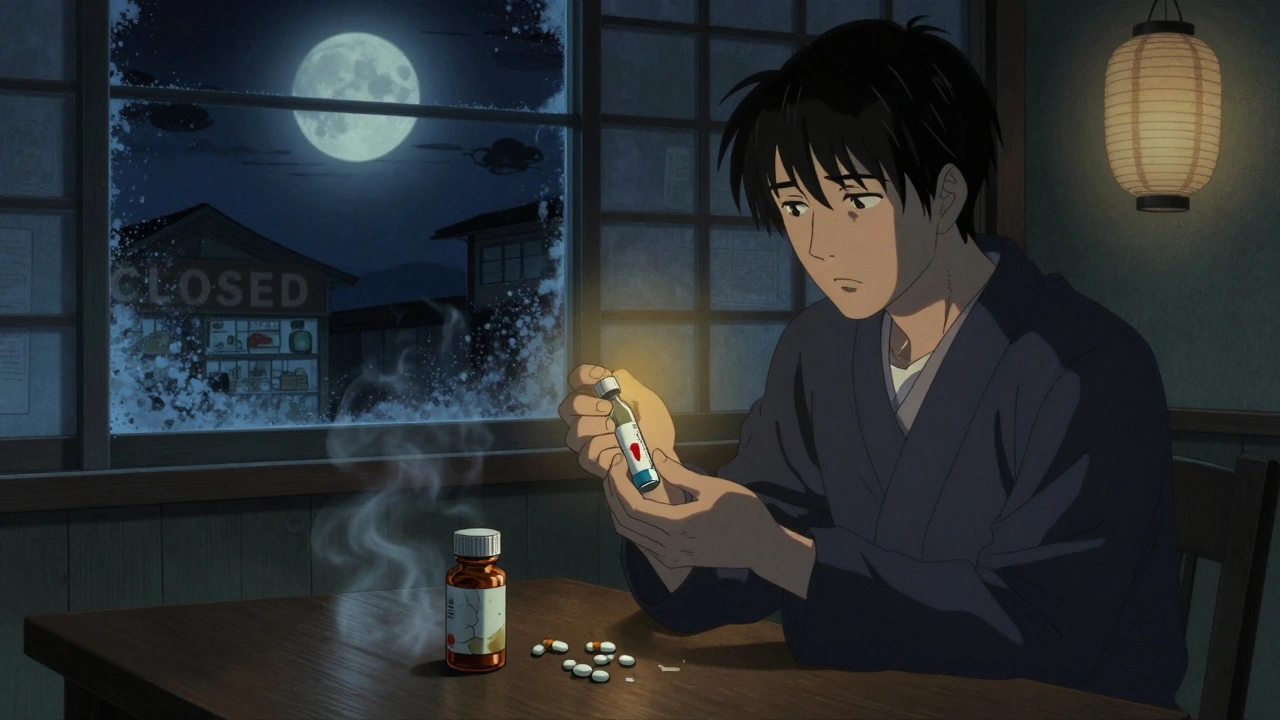
It’s December 2025. Your power’s out. The pharmacy is closed. Your insulin is gone. Your heart medication is two years past its date. You’ve got nothing else. What do you do?
Most people assume expired medication is just weak - maybe it won’t work as well. But that’s not the full story. Some expired drugs can be harmless. Others? They can kill you.
The expiration date on your pill bottle isn’t a suggestion. It’s the last day the manufacturer guarantees the drug will work as intended and stay safe. That’s based on federal law in the U.S. since 1979. But here’s the twist: many pills, especially solid tablets like ibuprofen or acetaminophen, don’t suddenly turn toxic on the date printed. They slowly lose strength. Some stay stable for years - if stored right.
Not All Expired Medications Are the Same
What matters most isn’t how long it’s been expired. It’s what kind of drug it is.
Never use expired insulin, thyroid meds, birth control, or blood thinners like aspirin or clopidogrel. These aren’t just risky - they’re dangerous. Insulin that’s lost potency can cause life-threatening blood sugar swings. Thyroid meds that are weak can throw your whole metabolism off. Birth control pills that don’t work? That’s not a mistake - it’s a pregnancy waiting to happen. And if you’re on an anti-platelet drug and it’s degraded, you could have a stroke or heart attack with no warning.
Then there’s the other end: antihistamines like Benadryl or Zyrtec. If your allergy’s acting up and you’ve got a bottle that’s six months past its date? It’s probably fine. It might not stop your sneezing as well, but it won’t hurt you. Same with pain relievers like Advil or Tylenol. If it’s been a few months past expiration and stored in a cool, dry place, it’s likely still safe - just less effective.
But here’s the catch: Tylenol loses about 20% of its strength after its shelf life ends. That means a 500mg tablet might only deliver 400mg. For a headache? Maybe enough. For a high fever in a child? Not reliable.
Storage History Matters More Than You Think
That bottle sitting in your bathroom cabinet? It’s been through hell. Humidity from showers, heat from the dryer, light from the overhead bulb - all of it eats away at medication. A 2024 study found that pills stored in humid environments degrade 37% faster than those kept in a dark drawer.
Think about where you keep your meds. If it’s the bathroom, the kitchen counter near the stove, or the glove compartment of your car - you’ve already compromised the drug’s stability. The expiration date assumes ideal storage: cool, dry, dark. Real life? Rarely matches that.
So if your medication has been in a hot, damp place for years, treat it like it’s expired yesterday - even if the date is still two months away.
Visual Inspection Is Your Only Tool
When you’re stuck with expired meds and no pharmacy nearby, you have to inspect what you’ve got.
- Look for discoloration. White pills turning yellow or brown? Don’t take them.
- Check for odd smells. If it smells like vinegar, mildew, or chemicals - toss it.
- Feel the texture. Tablets that are crumbly, sticky, or soft? Gone bad. Gel capsules that have leaked or melted? Dangerous.
- Look for particles. If you see anything floating or settled in liquid meds - antibiotics, eye drops, syrups - don’t use them. Bacteria can grow in them.
These signs don’t guarantee safety, but they do flag obvious danger. If it looks weird, it probably is.
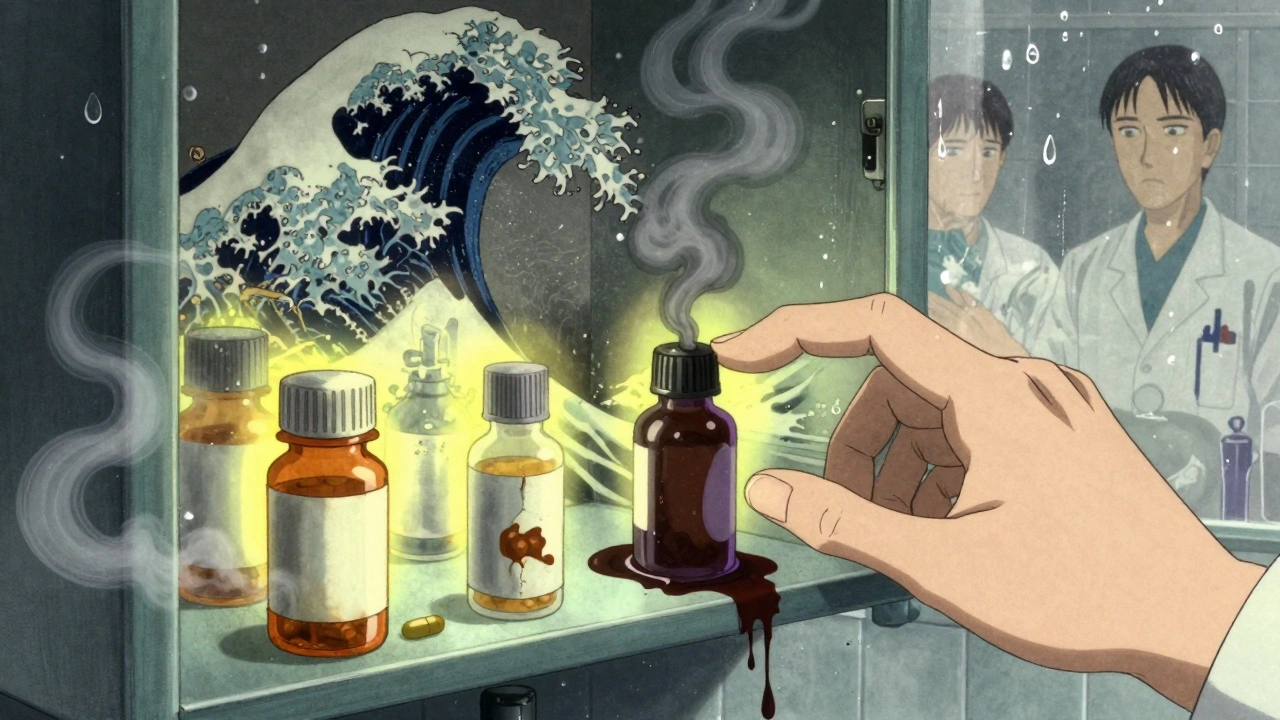
Liquid and Injectable Medications Are High Risk
Never, ever use expired liquids or injections - not even for a minor issue.
Why? They can grow bacteria. They can break down into toxic chemicals. The CDC warns that expired liquid antibiotics, eye drops, or insulin can cause serious infections or poisoning. Even if it looks clear, you can’t tell if it’s contaminated. No home test exists. No app can check it. No website can tell you.
And injectables? Even worse. If your epinephrine auto-injector (EpiPen) is expired and you’re having anaphylaxis, using it might save your life - but it might not. The dose could be too low. You’d be gambling with your airway. That’s not a risk you take.
Time Since Expiration: The Clock Is Ticking
There’s no universal rule. But here’s what experts agree on:
- Less than 6 months past expiration? For stable, solid oral meds (like painkillers or allergy pills), it’s often okay - if stored well and no signs of damage.
- 6 to 12 months? Proceed with caution. Only use if absolutely necessary and the drug isn’t critical.
- More than 12 months? Avoid unless it’s a last-resort emergency and the drug isn’t on the “never use” list.
But remember: the FDA says 90% of drugs are still safe up to 15 years past expiration - but only under perfect storage. That’s not your bathroom. That’s a military warehouse with climate control. You’re not in a lab. Your meds are not stored like the Pentagon’s.
When to Use Expired Meds - and When to Walk Away
Ask yourself these questions before taking anything expired:
- Is this for a life-threatening condition? (Heart attack, severe infection, anaphylaxis, seizures) → Don’t use.
- Is it insulin, thyroid, birth control, or blood thinner? → Don’t use.
- Is it a liquid, eye drop, or injection? → Don’t use.
- Does it look, smell, or feel wrong? → Don’t use.
- Is it for a minor issue? (Headache, mild allergy, heartburn) and it’s under 6 months expired and stored well? → Maybe okay, but use the lowest dose.
And here’s the hard truth: if you’re considering using an expired antibiotic, don’t. Sub-therapeutic doses don’t just fail to cure - they train bacteria to resist drugs. That’s how superbugs spread. You’re not just risking your health. You’re risking everyone else’s.

What About the Military’s 15-Year Stockpile?
You’ve probably heard the story: the U.S. Department of Defense tested thousands of drugs and found most still worked after 10-15 years. That’s true. But here’s what they don’t tell you: those drugs were stored in climate-controlled vaults, sealed in vacuum packs, and tested in labs. No humidity. No light. No heat spikes.
That’s not your medicine cabinet. That’s a government bunker. Don’t use that as your excuse.
What You Should Do Now - Before It’s an Emergency
The best way to handle expired meds isn’t to assess risk when you’re desperate. It’s to prevent it.
- Check your medicine cabinet every 6 months. Toss anything expired.
- Store meds in a cool, dry place - not the bathroom, not the kitchen, not the car.
- Buy only what you need. Don’t stockpile.
- Know your high-risk meds. Keep backups for insulin, heart meds, EpiPens.
- Use community disposal programs. Many pharmacies and fire stations take old meds safely.
Washington State’s 2023 data showed 82% of emergency visits involving expired drugs could’ve been avoided with simple rotation and disposal. You don’t need to be a hero. You just need to be smart.
What’s Coming Next
The FDA is researching portable devices that could test drug potency at home - like a breathalyzer for pills. But as of late 2025, none exist for consumers. Until then, your eyes, your nose, and your common sense are your only tools.
Don’t gamble with your health. Don’t trust a date on a bottle. Don’t assume old pills are harmless. And never, ever use expired insulin, thyroid meds, or antibiotics unless you have zero other choice - and even then, you’re taking a risk no one should have to face.
Is it safe to take expired painkillers like ibuprofen or Tylenol?
For solid tablets like ibuprofen or acetaminophen, it’s often safe if they’re less than 6 months past expiration, stored in a cool, dry place, and show no signs of damage. But they may be less effective - Tylenol can lose up to 20% potency after its shelf life ends. Never use them for serious pain, fever, or in children if alternatives exist.
Can expired antibiotics still work?
They might, but it’s dangerous to assume they will. Expired antibiotics often lose potency, which means they won’t kill all the bacteria - and the ones that survive become resistant. This contributes to antibiotic-resistant superbugs. Never use expired antibiotics, even for mild infections.
What happens if I take expired insulin?
Taking expired insulin can be life-threatening. It may not lower your blood sugar enough, leading to dangerously high levels - or it could degrade unpredictably, causing sudden drops. There’s no way to test its strength at home. Always use fresh insulin. If you’re out, seek emergency care - don’t risk it.
Are liquid medications more dangerous when expired?
Yes. Liquid medications - including syrups, eye drops, and injectables - can grow bacteria or break down into toxic chemicals. Even if they look clear, they may be contaminated. The CDC explicitly warns against using any expired liquids. Never take them, even if they’re only a few weeks past the date.
How do I properly dispose of expired medications?
Don’t flush them or throw them in the trash. Take them to a pharmacy drop-off, a police station with a disposal bin, or a community take-back event. Many cities offer free disposal programs. If none are available, mix pills with coffee grounds or cat litter in a sealed container before tossing - this makes them unappealing to kids or pets.
Can I extend the expiration date of my meds?
No. Pharmacists and doctors can’t legally extend expiration dates. Even though the military has proven some drugs last longer under perfect conditions, those standards don’t apply to home storage. There are no approved methods for consumers to safely extend expiration dates.
What should I do if I accidentally took an expired medication?
If it was a painkiller or allergy pill and you feel fine, you’re likely okay. Monitor for symptoms like nausea, dizziness, or unusual reactions. If you took insulin, antibiotics, or a heart medication - call poison control or go to the ER immediately. Don’t wait. Even if you feel fine, the effects could be delayed.
When you’re out of options, the safest choice isn’t always the obvious one. Sometimes, waiting for help - even if it takes longer - is the smartest thing you can do.


I keep my meds in a sealed container in the closet now. After reading this, I realized my bathroom cabinet was basically a science experiment. No more excuses.
My mum used to say if it looks funny don't touch it. Turns out she was right all along.
I’ve been a pharmacist for 22 years. The FDA’s 15-year data? That’s under controlled, lab-grade conditions. In real life? Moisture, heat, and light are the real enemies. If your pills are in the bathroom, they’re already compromised. And yes - liquid meds are absolute no-gos. Ever. I’ve seen the aftermath.
They’re lying about the military stockpile. It’s all a ploy to sell you new pills. The real truth? Big Pharma wants you scared so you keep buying. Your insulin’s fine. They just don’t want you to know you don’t need to replace it every year.
The real issue here isn’t expiration dates - it’s systemic healthcare failure. When people have to choose between rent and refilling prescriptions, they’re forced into these impossible decisions. The fact that we’re even having this conversation is a failure of policy, not personal negligence.
I used to think expired meds were harmless. Now I know better. I tossed my old Tylenol yesterday. Better safe than sorry.
I just checked my cabinet. Two expired ibuprofen and a bottle of Benadryl from 2021. Guess I’m doing a cleanout tonight 😅
The FDA’s data is statistically insignificant tbh. Most studies are funded by pharma giants who have vested interests in maintaining the expiration paradigm. You’re being manipulated by regulatory capture. 🤔
So what you’re saying is… if I’m dying and my EpiPen is 3 years out of date, I should just… wait? Cool. Cool cool cool.
Thank you for this comprehensive breakdown. While I appreciate the intent behind the post, I must emphasize that individual circumstances vary. For those without access to consistent healthcare, the burden of risk assessment falls disproportionately on the vulnerable. A systemic solution is required, not just personal vigilance.
The real MVP here is storage. I keep all my meds in a sealed glass jar in the basement. No humidity, no light, no drama. Even my 4-year-old aspirin is probably still good. 🧪
I’ve got a friend who’s diabetic and lives in a rural area with no pharmacy for 40 miles. She keeps a backup insulin in a cooler with ice packs. She’s not taking risks - she’s being smart. We should be talking more about access, not just expiration.