

When you pick up a prescription, you might see two names on the label: one you recognize from TV ads, and another that looks completely different but costs a fraction of the price. That’s the generic drug - and it’s not a cheaper copy. It’s the same medicine, approved by the FDA to work just as well. Yet, many people still wonder: Is it really the same? Should I stick with the brand name? The answer isn’t as complicated as you might think.
They’re the Same Medicine, Just Cheaper
Generic drugs contain the exact same active ingredient as their brand-name counterparts. That means if you’re taking lisinopril for high blood pressure, the generic version has the same chemical structure, strength, and dosage form as Zestril or Prinivil. The FDA requires generics to deliver the same amount of medicine into your bloodstream at the same rate. That’s called bioequivalence - and it’s not a suggestion. It’s a strict rule. For most drugs, the amount of medicine absorbed must be within 80% to 125% of the brand-name version. For drugs with narrow therapeutic windows - like warfarin or levothyroxine - the range is even tighter: 90% to 111%.Why Are Generics So Much Cheaper?
Brand-name drug companies spend years and billions of dollars developing a new medication. They run clinical trials, pay for marketing, and recoup those costs during their patent protection period, which usually lasts 12 to 14 years after approval. Once the patent expires, other companies can make the same drug without repeating those expensive studies. All they need to prove is that their version behaves the same way in the body. That cuts development costs dramatically. As a result, generics typically cost 80% to 85% less. On average, a generic prescription saves patients $313 per fill, according to University Hospitals data from 2022.What’s Different About Generics?
The only real differences between a generic and brand-name drug are in the inactive ingredients - things like dyes, fillers, and flavorings. These don’t affect how the medicine works. That’s why a generic pill might be a different color, shape, or size. U.S. trademark laws prevent generics from looking exactly like the brand-name version. Packaging may also be simpler. But here’s the key: those changes don’t change how the drug performs in your body.90% of Prescriptions Are Generic - But They Only Cost 25% of the Total
In 2023, generics made up 90% of all prescriptions filled in the U.S. That’s about 6 billion prescriptions a year. Yet they account for just 25% of total prescription drug spending. Why? Because brand-name drugs, though only 10% of prescriptions, make up 75% of the cost. That’s the power of generics. The FDA’s Orange Book lists over 10,000 generic versions of more than 2,000 brand-name drugs. For common conditions like diabetes, high cholesterol, or thyroid disease, generics are the standard. In fact, 97% of cardiovascular drugs prescribed are generics, and 94% of CNS medications.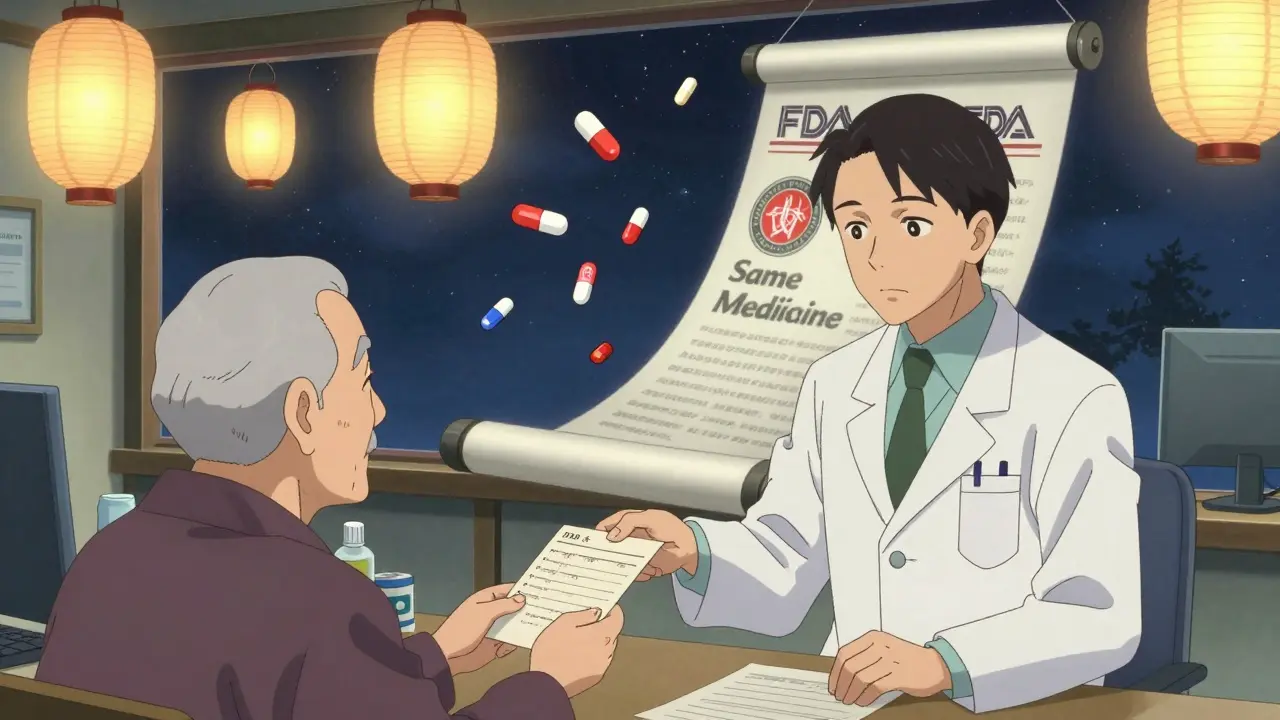
When Generics Might Not Be the Best Fit
Most people don’t notice any difference when switching from brand to generic. A 2023 Reddit thread with 147 comments showed 86% of users reported no change in effectiveness. But a small number - about 14% - reported issues. The most common examples involve drugs with very narrow therapeutic windows. For instance, some patients on levothyroxine (for hypothyroidism) or lamotrigine (for seizures) say they feel different after switching. That doesn’t mean the generic is unsafe. It means their body is extremely sensitive to tiny changes. The FDA requires tighter bioequivalence standards for these drugs, and studies like the 2019 JAMA analysis of 38,000 patients found no clinical difference between brand and generic levothyroxine. Still, if you’ve been stable on a brand-name drug and your doctor recommends switching, talk to them first. Consistency matters more than cost in these cases.What the Experts Say
The FDA is clear: “All drugs, including brand-name and generic, must work well and are safe.” The American Medical Association supports prescribing generics whenever appropriate to reduce costs without sacrificing outcomes. Pharmacists like Tattika Soreta from Cedars-Sinai confirm that generics go through the same rigorous testing and ongoing monitoring as brand-name drugs. Even Henry C. Burgess, PharmD, Chief Pharmacy Officer at University Hospitals, says generics meet the same standards for safety, quality, strength, and efficacy.How to Handle the Switch
In 49 states, pharmacists are legally required to substitute a generic unless the doctor writes “dispense as written” on the prescription. That means unless you tell your doctor otherwise, you’ll get the generic. If you’re concerned, ask your doctor to write “brand necessary” or “no substitution” on the script. Keep a list of your medications - both brand and generic names - so you know what you’re taking. Apps like GoodRx can help you compare prices and track changes. If you switch and notice something off - fatigue, dizziness, or a return of symptoms - contact your doctor. Don’t assume it’s “all in your head.”



Generics are the unsung heroes of modern medicine. I’ve been on the same generic blood pressure med for five years-no issues, no drama, just steady results. My wallet thanks me every month.
Oh wow, another one of those ‘generic is just as good’ sermons. Let me guess-you also think tap water is just as good as bottled ‘artisanal alkaline’? The FDA doesn’t care how you feel, just that the pill passes a lab test. Real people? They notice differences. But sure, keep drinking the Kool-Aid.
i just switched to generic levothyroxine last year and honestly? i felt kinda off for a week. like, tired and foggy. called my doc, they said ‘wait a bit’-so i did. now i’m fine. maybe it’s just my body being weird. but i’m glad i didn’t panic. ps: spelling is hard, sorry.
As someone who grew up in a family that couldn’t afford brand-name meds, I’ve seen firsthand how generics save lives. My grandma took generics for diabetes for 18 years-lived to 94. No drama. No miracles. Just consistent, affordable care. This isn’t about ideology. It’s about access. And honestly? If you’re rich enough to pay $300 for a pill that’s chemically identical to a $20 one, you’re not saving money-you’re subsidizing corporate greed.
Let’s be real here-the whole ‘generic is identical’ narrative is a beautifully crafted illusion designed to make the public feel good about paying less while the pharmaceutical-industrial complex quietly shifts its profit margins. Sure, the active ingredient matches. But let’s not pretend the excipients don’t matter. Ever heard of lactose intolerance? Or gluten sensitivity? Generic manufacturers don’t care about your gut-they care about hitting the 80–125% bioequivalence window and moving on to the next patent cliff. And don’t get me started on the fact that 70% of generic active ingredients are now sourced from India and China, where regulatory oversight is… let’s say, ‘flexible.’ So yes, for most people it’s fine. But for the 14% who notice a difference? They’re not crazy. They’re just the canaries in the coal mine. And nobody’s listening.
Why are we even having this conversation? America spends more on meds than the rest of the world combined-and we’re still arguing about whether a $5 pill works? We’ve got billionaires flying to space while people choose between insulin and rent. If you’re mad about generics, go yell at the CEOs who price a 30-day supply of insulin at $900. Not the pharmacist who gives you the cheaper version. This isn’t about pills-it’s about a system that’s broken beyond repair.
My dad’s on a generic statin. He’s got zero side effects, his cholesterol’s down, and he says he feels better than he has in 10 years. I told him he’s a hero for choosing the smart option. No fanfare. No drama. Just good sense.
Okay, I’ve got to say-I used to be one of those people who refused generics because I thought they were ‘inferior.’ Like, I’d literally ask for the brand name even if it cost $200 extra. Then I switched to generic sertraline last year after my insurance forced it. And guess what? Nothing changed. Not my mood, not my sleep, not my anxiety. I was so convinced I’d crash and burn, but I didn’t. Honestly? I felt a little silly for being so paranoid. And now I’m the one telling everyone else to just try it. It’s not magic, it’s science. And science doesn’t care what your brand loyalty is.
How quaint. You all speak as if this is some grand democratic victory for the masses. But let us not forget: the FDA’s bioequivalence standards are not a guarantee of therapeutic equivalence-they are a statistical minimum, a legal loophole masquerading as science. And you, dear commenters, are the unwitting pawns of a pharmaceutical oligarchy that has perfected the art of selling the same molecule under two different names-while you cheer the ‘savings’ as if they were a moral triumph. The real tragedy? You believe you’re being empowered, when in fact, you are being manipulated into accepting mediocrity disguised as affordability. I, for one, refuse to be complicit in this charade. The body is not a lab rat. And neither are you.