
When a drug turns out to be dangerous, people assume the FDA just pulls it off the shelves. That’s not how it works. The FDA can’t force a company to recall a drug. Not directly. Instead, the agency asks-very firmly-to remove it. And in nearly every case, the manufacturer complies. But the legal reality behind that request is far more complex than most realize.
How the FDA Actually Removes Unsafe Drugs
The FDA’s power over drug recalls comes from the Federal Food, Drug, and Cosmetic Act (FD&C Act), passed in 1938. Under this law, the agency has no legal right to order a recall. It can only request one. This isn’t a loophole-it’s the law. The FDA doesn’t have the authority to seize pills from pharmacies or shut down production lines on its own. Instead, it uses pressure: public alerts, media coverage, legal threats, and the looming risk of court action. When a drug is found to be unsafe, the FDA contacts the manufacturer and says: “You need to recall this.” The company then has to decide whether to act. Most do-because refusing means the FDA can go to court. Under Section 304 of the FD&C Act, the agency can seek an injunction to stop the drug from being made or sold. That’s not a recall. It’s a legal shutdown. And no company wants that kind of public exposure or legal bill. So while you hear “FDA recalled X drug,” what really happened is: the FDA demanded action, and the company chose to comply. As Dr. Caleb Alexander from Johns Hopkins put it, “The manufacturer pulled the drug. The FDA made it impossible for them to keep selling it.”Class I, II, III: The Three Levels of Drug Recalls
Not all recalls are created equal. The FDA classifies them into three tiers based on how dangerous the drug is:- Class I: The most serious. Use of the drug could cause serious injury or death. Examples: pills contaminated with carcinogens like NDMA, or medications with wrong dosages that could kill.
- Class II: The drug might cause temporary or reversible health problems. This is the most common type-about 70% of all recalls. Think: mislabeled bottles, packaging errors, or minor contamination that’s unlikely to harm most people.
- Class III: The drug won’t hurt you, but it breaks labeling or manufacturing rules. These are often about incorrect expiration dates or missing inserts. No health risk, but still a violation.
Why the FDA Can’t Force Drug Recalls (But Can Force Device Recalls)
Here’s the twist: the FDA can force recalls for medical devices. Under 21 CFR 810, if a device poses a serious risk to health, the agency can legally order a recall. No request. No negotiation. Just an order. Why the difference? It comes down to history. The FD&C Act of 1938 gave the FDA limited power over drugs. But the Medical Device Amendments of 1976 gave it much stronger tools for devices, because devices-like pacemakers or ventilators-can fail instantly and kill. Drugs, by contrast, were seen as slower-acting, with more time to react. That logic doesn’t hold up today. Biologics, generics, and complex manufacturing mean drug risks can be just as sudden. Dr. Sidney Wolfe of Public Citizen testified in 2019 that the lack of mandatory recall power created dangerous delays. In the valsartan case, it took months for full market removal. Critics argue the FDA should have the same authority over drugs as it does over devices. The FDA disagrees. In a 2021 interview in JAMA Internal Medicine, Deputy Commissioner Janet Woodcock said 99.7% of drug recalls happen voluntarily within 10 days of FDA notification. She argues the current system works. But data shows that when manufacturers resist-like with contaminated heparin in 2008 or the 2022 fentanyl patch recall-delays happen. And patients pay the price.
The 2022 Law That Almost Changed Everything
In 2022, Congress came close to giving the FDA mandatory recall power. The FD&C Modernization Act included Section 604, which would have allowed the agency to order recalls of drugs and biologics when public health was at risk. It passed the House. But in committee, the provision was removed. Lobbying from PhRMA, the drug industry’s main trade group, played a big role. Their argument: voluntary recalls are 99.98% effective. Between 2012 and 2022, only 3 out of 15,241 drug recalls required FDA enforcement. But that statistic ignores the stakes. Three recalls out of 15,000 might sound low. But if one of those three is a contaminated insulin batch that kills children, does effectiveness matter? The FDA’s own data shows recall delays are growing. Supply chain issues from the pandemic increased drug recalls by 12.3% in 2022. Global manufacturing means more contamination risks-and more time lost waiting for foreign suppliers to act. Dr. Peter Lurie, former FDA official and now with the Center for Science in the Public Interest, called the lack of mandatory recall authority a “critical vulnerability.” He pointed to rising risks with biologics and compounded medications, where contamination can spread fast and be hard to trace.What Hospitals and Pharmacies Do When a Recall Happens
The FDA doesn’t handle the logistics. That’s up to hospitals, pharmacies, and distributors. The American Society of Health-System Pharmacists (ASHP) says 68% of hospital pharmacies struggle to identify recalled products because manufacturers use inconsistent lot numbering. One hospital might get a recall notice via email. Another might get it through a fax. Some don’t get it at all. ASHP recommends a 12-point system for hospitals:- Assign someone to monitor recall notices daily
- Keep a central database of all drug lots in stock
- Train staff on how to respond to recalls
- Notify patients immediately in Class I cases
- Document every step taken
What You Should Do If You’re Taking a Recalled Drug
If you’re on medication, don’t panic when you hear about a recall. Most are Class II or III. But here’s what to do:- Check the FDA’s recall website. Search by drug name or lot number.
- Don’t stop your medication without talking to your doctor. Suddenly stopping some drugs can be dangerous.
- Call your pharmacy. They should have recall alerts and can replace your prescription.
- If you’re on a Class I recall, contact your doctor immediately. Ask for an alternative.
- Report any side effects to MedWatch, the FDA’s adverse event system. In 2022, it received 1.2 million reports-many led to recalls.
The Future: Will the FDA Get Power to Force Recalls?
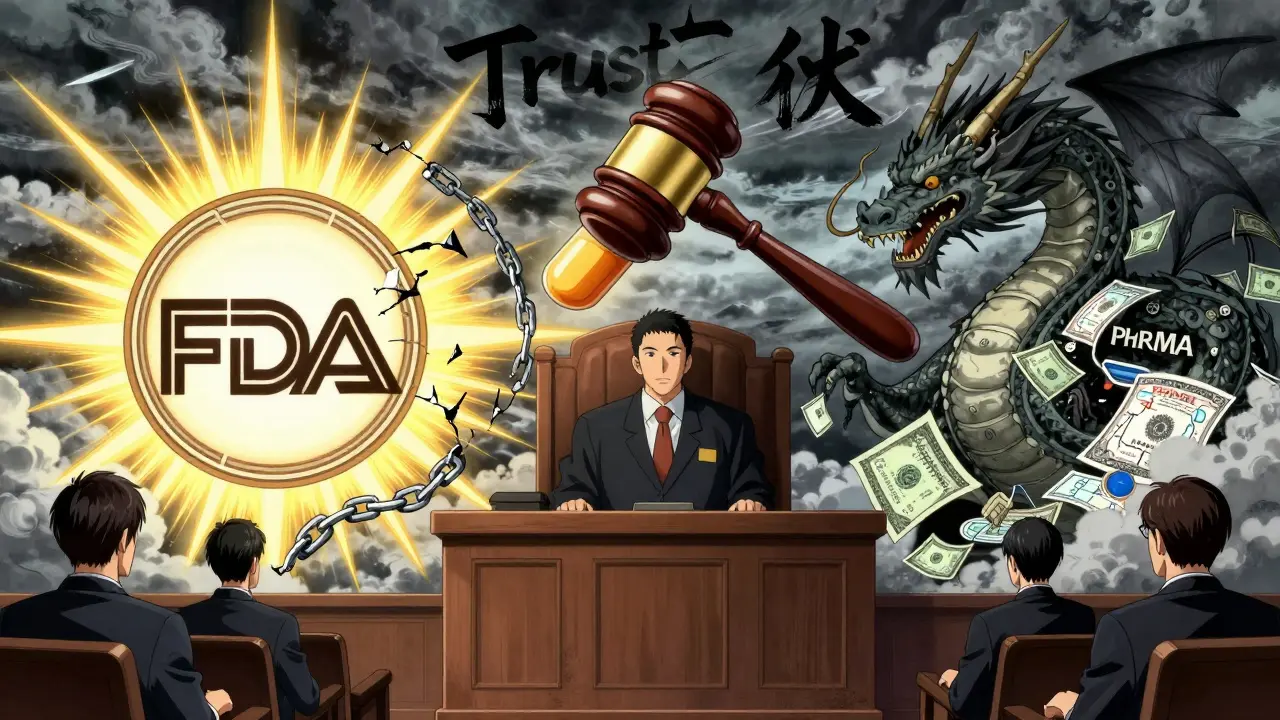
The PREVENT Pandemics Act, introduced in 2023, includes a provision (Section 3103) that would give the FDA explicit authority to order mandatory drug recalls. It’s still in committee. PhRMA spent $8.2 million in Q2 2023 lobbying against it. The industry argues the system works. Public health experts say it’s too risky to wait. Right now, the system depends on trust. Trust that manufacturers will act fast. Trust that distributors will communicate. Trust that pharmacies will follow through. And for most drugs, that trust holds. But when it doesn’t-when a batch of pills kills someone because no one acted quickly enough-that’s when the law fails. And the FDA, despite its power to warn, can’t force a single pill to be pulled.Can the FDA force a drug company to recall a medication?
No, the FDA cannot directly force a recall of most drugs. Under the Federal Food, Drug, and Cosmetic Act, the agency can only request a recall. Manufacturers voluntarily remove unsafe drugs in nearly all cases. If a company refuses, the FDA must go to court to get an injunction to stop distribution.
What’s the difference between a Class I and Class III drug recall?
A Class I recall means the drug could cause serious injury or death-like pills with deadly contaminants or incorrect dosages. A Class III recall means the drug isn’t dangerous but violates labeling or packaging rules-like wrong expiration dates or missing inserts. Class I is the most urgent; Class III is mostly administrative.
Why can the FDA force recalls for medical devices but not drugs?
The Medical Device Amendments of 1976 gave the FDA legal power to order mandatory recalls for devices that pose serious health risks. The original 1938 FD&C Act, which governs drugs, never included that authority. That’s why the FDA can shut down a faulty pacemaker recall but must ask a drug maker to pull a contaminated blood pressure pill.
How do I know if my medication has been recalled?
Check the FDA’s official recall website, which updates daily. You can search by drug name or lot number. Your pharmacy should also notify you if your prescription is affected. Never rely only on news reports-some recalls are small and local. Always verify with the FDA or your pharmacist.
Should I stop taking a recalled drug right away?
Not always. Stopping some medications suddenly-like blood pressure or seizure drugs-can be dangerous. Contact your doctor or pharmacist first. They’ll tell you whether to stop, switch, or continue while waiting for a replacement. Never self-discontinue without medical advice.
Are drug recalls becoming more common?
Yes. In 2022, there were 4,312 drug recalls-a 12.3% increase from the year before. This rise is linked to global supply chain issues, more complex manufacturing, and increased scrutiny of foreign API producers. The FDA expects this trend to continue as more drugs are made overseas.


I can't believe we still rely on trust for life-saving meds 😭 My grandma took a recalled blood pressure pill and nearly died. The FDA should have power to pull it instantly. Why are we still playing Russian roulette with pharmaceuticals?
USA always thinks its system perfect but its just corporate puppet show
I get why people are upset but honestly the system works 99.7% of the time. If we gave the FDA mandatory recall power, we'd have half the drugs off the market because someone in a lab mislabeled a bottle. Chill out. 😌
Lmao so the FDA can't force a recall but can force a device recall? That's like saying you can't make someone stop eating poison but you can make them stop using a broken toaster. Logic? What's that?
The FDA is basically the world’s most polite bouncer. 'Sir, your drug is toxic. Could you please leave?' And the company says 'Sure thing, officer!' 🤡 Meanwhile, people are dying in the VIP section.
i just checked my meds and the lot number matches the recall... but my pharmacy said its fine? idk anymore
This isn't about laws or power. This is about the soul of capitalism. We let corporations decide who lives and who dies because profit > people. The FDA doesn't have the power? No. The people don't have the power. And until we fix that, no law will save us. We're not just failing regulation-we're failing humanity.
The structural asymmetry between drug and device recall authority is indeed concerning. While voluntary compliance remains high, the potential for catastrophic delay in global supply chains necessitates a reassessment of regulatory efficacy. One must weigh systemic trust against emergent risk.
The fact that we're even having this conversation is a testament to how pathetically under-regulated the pharmaceutical industry is. The FDA's 'request' system is a joke. A 12-year-old with a spreadsheet could outmaneuver this bureaucracy. And don't get me started on the 2022 bill being gutted by PhRMA lobbyists. This isn't democracy. It's corporate feudalism.
USA always blame china for drugs but why they let their own pharma make pills in india and china? they just want to make money and blame others when people die
If you're taking medication, please don't panic-but do take action. Check the FDA site, call your pharmacy, and talk to your doctor. You're not alone in this. Many of us are learning together, and your safety matters more than you know.
I mean... the FDA can force recalls on devices? So if your pacemaker is faulty, they just say 'STOP' and it stops? But if your blood pressure pill has cancer in it? 'Please, kindly, maybe?' That's not a system-that's a farce. And don't even get me started on the fact that 70% of recalls are Class II-meaning we're freaking out over mislabeled labels?!?!?!?!
This post was so eye-opening! 🙌 I never realized how much depends on hospitals doing manual checks. I'm going to ask my pharmacist tomorrow if they have a recall alert system. Small steps, right? 💪 And thank you for the MedWatch tip-I'm signing up now!
The entire premise of this article is flawed. The FDA doesn't need more power-it needs more transparency. The real issue is that manufacturers hide contamination data for months. The FDA can't fix that. The market can. Let patients know exactly where their drugs come from. Let them vote with their wallets. That's real accountability. Not more bureaucracy.